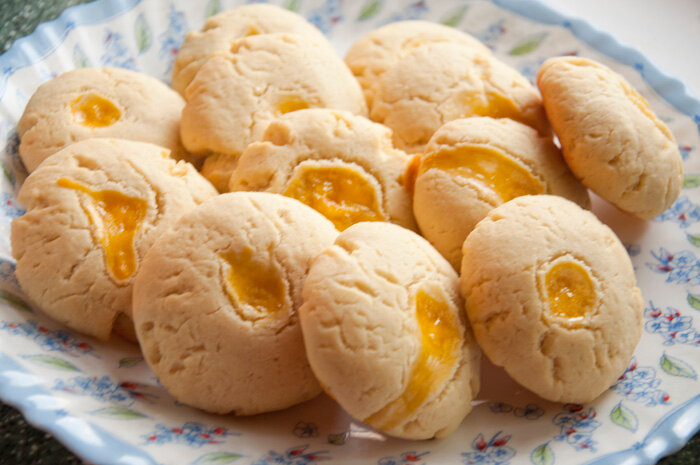
Shekerbura
Novruz pastry from Azerbaijan: crescent pies of milk-and-egg dough wrapped around ground walnuts, sugar and cardamom. With strong tea.
Overview
The crescent pastry that marks Novruz, the Persian new year celebrated across Azerbaijan in the third week of March, baked alongside two other ritual sweets (pakhlava and goghal). You make a short milk-and-egg dough and rest it for an hour, while you grind walnuts fine but not powdered (texture matters) and mix them with caster sugar and ground cardamom for the filling. The dough rolls thin to two millimetres, cuts into nine-centimetre circles, and gets a mound of filling on one half before the other half folds over to make a half-moon. The edge crimps with a fork or, traditionally, with a small pinching tool called a maqqaş that gives the rim a decorative wheat-sheaf pattern. Bake at 180°C for twenty-five minutes until pale gold, dust with icing sugar while still warm. Strong tea, a family table, the spring equinox in the air.
Ingredients
Dough
- 400 g plain flour
- 200 g unsalted butter (cold, cubed)
- 100 ml whole milk (cold)
- 2 egg yolks (large)
- 1 tablespoon caster sugar
- ½ teaspoon salt
Filling
- 300 g walnuts (or hazelnuts), ground medium-fine
- 150 g caster sugar
- 1 teaspoon ground cardamom
- 1 egg white (large, lightly beaten)
To finish
- Icing sugar (for dusting)
Method
Stage 1 - Dough
- In a wide bowl, rub the cold butter into the flour, salt and 1 tablespoon sugar until it resembles breadcrumbs.
- In a jug, whisk the milk and egg yolks.
- Pour into the flour; mix with a knife until just coming together.
- Tip onto a lightly floured surface; bring together as a smooth disc without overworking.
- Wrap; chill 1 hour.
Stage 2 - Filling
- Pulse the walnuts in a food processor to a medium-fine grind - finer than chopped, coarser than ground almonds.
- Stir in the caster sugar and ground cardamom.
- Drizzle in the lightly beaten egg white; mix until just clumpable (not wet, not crumbly).
Stage 3 - Cut and fill
- Heat the oven to 180°C (160°C fan).
- Line two baking trays with parchment.
- Roll the chilled dough on a lightly floured surface to 2 mm thick.
- Cut out 9 cm circles with a glass or cutter.
- Place a heaped tablespoon of filling on one half of each circle (leave a 1 cm clear border).
- Fold the other half over to enclose; press the edges to seal.
Stage 4 - Crimp
- With the tines of a fork or a flat pair of crimping tweezers, pinch a delicate pattern along the curved edge.
- Traditional patterns are dots, leaves or zigzag lines.
- Don't pinch through the dough - the goal is a decorative impression.
Stage 5 - Bake
- Arrange on the trays, 3 cm apart.
- Bake 22-25 minutes until the dough is pale gold (not browned - shekerbura should look creamy, almost ivory).
- Cool 5 minutes on the tray.
Stage 6 - Finish
- Dust generously with icing sugar while still warm.
- Cool fully on the rack before storing.
Notes
- Pale gold, not amber: shekerbura colour is the visual marker - over-browned and they read as a generic cookie. The low temperature and short bake protects this.
- Egg white binds the filling: without it the filling crumbles when the pastry is cut. Don't use a whole egg - the yolk muddies the flavour.
- Crimping is the signature: even simple fork tines transform shekerbura from a generic crescent into something recognisable. Press evenly.
Storage
- Keeps 1 week in an airtight tin at room temperature; the dough firms slightly over the first day and stays good.
- Freezes baked, 2 months. Re-dust with icing sugar after thawing.
- Don't refrigerate - the dough goes from delicately short to dense.
More like this
Pakhlava (Azerbaijani)
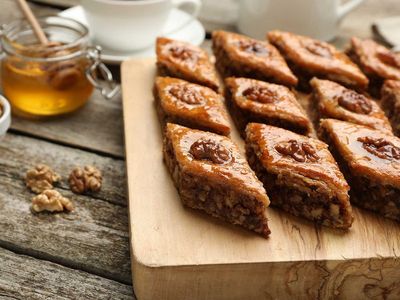
The Azerbaijani take on the pan-Caucasus pastry that goes by half a dozen names across the region. You make an enriched dough from flour, butter, milk, egg yolks and yeast, then roll it into eight layers stacked with a heavy filling of crushed walnuts spiced with cardamom and saffron between each one. The top gets scored in the traditional diamond pattern, brushed with saffron-tinted egg yolk so it bakes to a deep amber, and a single walnut pressed into the centre of each diamond as a marker. Forty-five minutes at 180°C, then a saffron-honey syrup poured generously over while it's still hot from the oven. The trick the recipe insists on is the overnight rest before slicing; that's when the syrup absorbs fully and the layers set so the diamonds cut cleanly. Eaten at Novruz, weddings and feast days, with strong black tea on the side.
Apfelstrudel
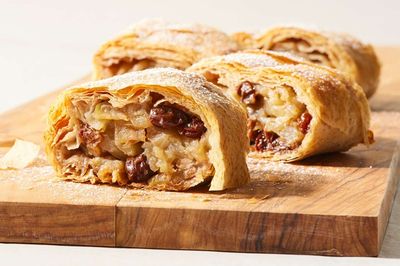
A simple flour-egg-oil dough kneads until silky, rests so the gluten relaxes, then stretches over a floured cloth until you can read newsprint through it. A filling of grated and sliced tart apples, sugar, cinnamon, raisins, lemon zest and butter-toasted breadcrumbs spreads across the dough. The cloth helps roll the whole thing into a long log. Bakes brushed with butter until shatteringly crisp.
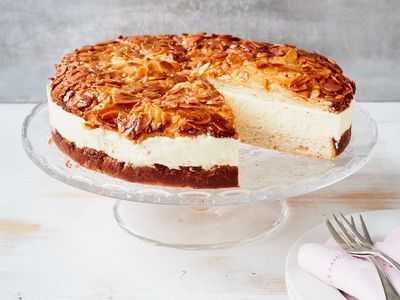
Bienenstich
A milk-and-butter enriched yeast dough proves to soft and pillowy. A honey-almond topping (butter, honey, sugar, cream, flaked almonds) cooks on the stovetop until thickly bubbling, then spreads on the proved dough and bakes together: the dough rises, the topping caramelises golden and chewy. Once cooled, the cake splits horizontally and fills with thick vanilla pastry cream (Konditorcreme) lightened with whipped cream.
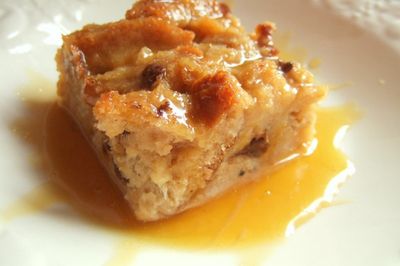
Bread Pudding with Bourbon Sauce
The New Orleans bread pudding, the warm dessert that lands on the table at the end of every Cajun Sunday lunch with a slug of bourbon sauce poured over it. You tear a French baguette or stale brioche into chunks and soak them in a custard of whole eggs, double cream, milk, brown sugar, vanilla, cinnamon and nutmeg until they're saturated. Raisins (often rum-soaked the night before) and toasted pecans fold in for sweetness and crunch. The pudding bakes in a buttered dish at moderate heat until the top has crisped to deep bronze and the middle is just set but still soft and quivering. While it bakes you build the bourbon sauce: butter, sugar, an egg yolk and a generous slug of bourbon whisked over low heat into a glossy, silky pour. Spooned hot over the pudding at the table, the sauce running down the sides and pooling on the plate. A small scoop of vanilla ice cream alongside if you're feeling ambitious.