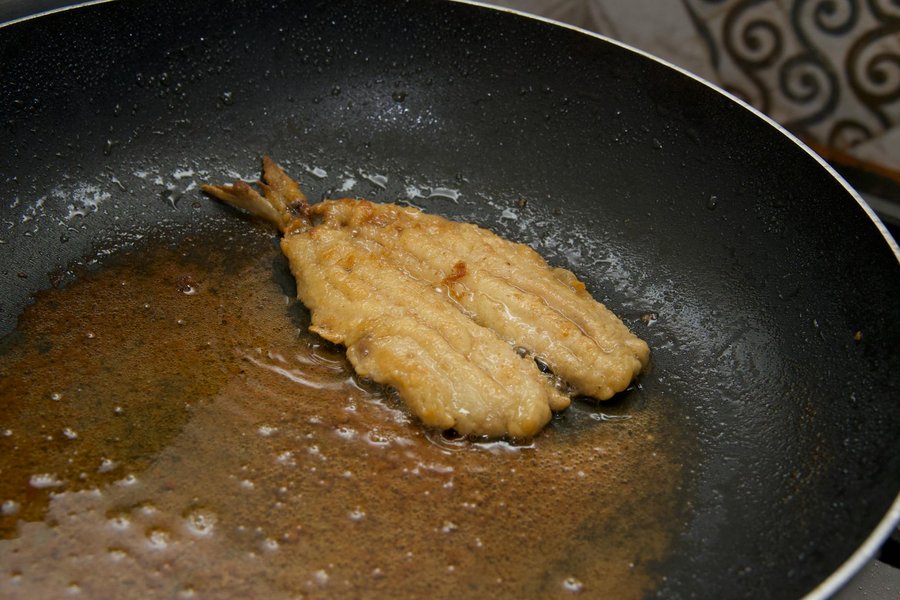
Pan-Fried Barramundi
Australia's pub-menu fish: skin-on barramundi fillets pan-fried to crackling crispness and served with lemon and parsley.
Overview
Australia's pub-menu fish, the one you order on a hot summer afternoon at a beachside bistro and follow with a cold glass of something white. The trick to crispy-skin barramundi is the trick to crispy-skin anything: very dry fillets, very hot oil, salt on the skin, fish pressed flat into the pan for the first thirty seconds, and the patience to leave it alone until the flesh is opaque most of the way through before you flip. Once you turn it, the second side needs only a minute. While the fish rests on a plate you make a brown butter, lemon and caper sauce in the same pan in the time it takes the fillets to settle. Sea bass, snapper or yellowtail kingfish all stand in beautifully if barramundi isn't on the slab. Plated with the crisp side up so every diner sees the skin, lemon and parsley scattered over, a glass of cold riesling on the table.
Ingredients
Fish
- 2 barramundi fillets, skin on (about 180-200 g each), pin bones removed
- 2 teaspoons flaky sea salt
- 2 tablespoons neutral oil (sunflower, grapeseed or rice bran)
- Freshly ground black pepper
Brown butter sauce
- 50 g unsalted butter
- 1 tablespoon small capers (drained, patted dry)
- 1 garlic clove (thinly sliced)
- ½ lemon (juice)
- 1 tablespoon chopped flat-leaf parsley
To serve
- 1 lemon (cut in wedges)
- Flaky salt
Method
Stage 1 - Dry the fish
- Lift the fillets out of the fridge 15 minutes before cooking; cold fish steams in the pan.
- Pat the skin and the flesh side aggressively dry with kitchen paper. Then pat again. Moisture on the skin is the only thing that stops it crisping.
- Sprinkle salt evenly over the skin side. Leave to sit 5 minutes; the salt will draw out a little more moisture, which you can pat off again right before cooking.
- Score the skin lightly in 3 diagonal cuts, just through the skin, not into the flesh. This stops the fillet from curling.
Stage 2 - Heat the pan
- Set a heavy frying pan (ideally cast iron or stainless steel, not non-stick) over medium-high heat.
- Pour in the oil and let it heat until the surface shimmers and is just starting to wisp. You want it hot enough that a flick of water dropped in spits at once.
Stage 3 - Cook the fish
- Pat the skin dry one final time.
- Lay each fillet into the pan skin side down, away from you to avoid splatter.
- Immediately press each fillet flat with a fish slice or the flat of a spatula for 30 seconds. The skin will try to buckle as it contracts; flattening it keeps it in full contact with the pan and is the difference between crisp and chewy.
- Lower the heat slightly to medium. Cook undisturbed for 4-5 minutes. Resist any urge to lift or poke. Look at the side of the fillet: the flesh will turn opaque from the bottom up, about ⅔ of the way through.
- Flip carefully with a fish slice. Cook the flesh side just 1 minute more.
- Lift the fillets out, skin side up, onto a warm plate. Grind a little pepper over.
Stage 4 - Make the brown butter sauce
- Pour off any oil from the pan and wipe lightly with kitchen paper, leaving any browned residue.
- Drop the butter in. Set heat to medium. The butter will foam, then the foam will subside and the milk solids will turn golden at the bottom of the pan; about 90 seconds. As soon as it smells nutty and the colour is hazelnut, not coffee, move fast.
- Toss in the capers and garlic. They will sizzle and the capers may pop; stir for 20 seconds.
- Off the heat, squeeze in the lemon juice. It will hiss; stir to combine.
- Stir in the parsley.
Stage 5 - Plate
- Set each fillet on a plate, skin side up.
- Spoon the brown butter, capers and lemon over and around the fish.
- Sprinkle a little flaky salt over the skin.
- Serve with a lemon wedge alongside.
Notes
- Substitute fish: Sea bass, snapper, yellowtail kingfish or even mahi-mahi work beautifully and use the same technique. The fillet should be 2-3 cm thick at its thickest; thinner fillets overcook before the skin crisps.
- Cast iron or stainless, not non-stick: Non-stick coatings cannot get hot enough to crisp fish skin properly. A heavy cast iron skillet is the right tool.
- The skin sticks until it does not: Skin glues itself to a hot pan and only releases when fully crisp. If you try to lift it after 2 minutes and it resists, leave it. Lift it after 4 minutes and it should release cleanly.
- Brown butter window is short: Butter goes from golden to burnt in about 15 seconds. Have the capers and garlic prepped and ready by the stove before you start it browning.
Variations
Asian-inflected: Replace capers and parsley with sliced ginger, spring onion and a teaspoon of soy sauce stirred in at the end. Bush-tucker twist: Sprinkle a pinch of native lemon myrtle over the brown butter, or finish with a small spoonful of bush-tomato chutney.
Serving
Serve with: A bowl of buttered new potatoes and a green salad with mustard vinaigrette, or a chunk of crusty bread to mop up the sauce. Steamed greens (broccoli, asparagus) sit well alongside. Garnish with: A wedge of lemon.
Storage
- Best eaten straight from the pan; skin loses its crispness within minutes of plating.
- Leftover cooked fish keeps 1 day refrigerated; eat cold, flaked over a salad. Do not reheat.
More like this
Shrimp Creole
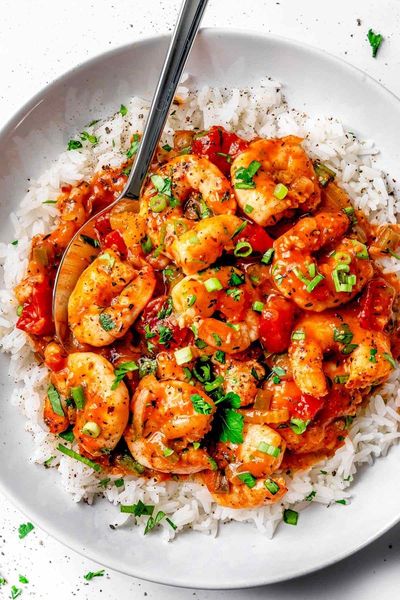
The trinity (onion, celery, green pepper) softens in butter; garlic, Creole seasoning and herbs join. Tomato paste deepens; chopped tomatoes and stock loosen; the lot simmers for 20 minutes into a thick sauce. Prawns drop in at the end and cook for 3 minutes, pink and just-set. Hot sauce, lemon and parsley to finish.
Crawfish Étouffée
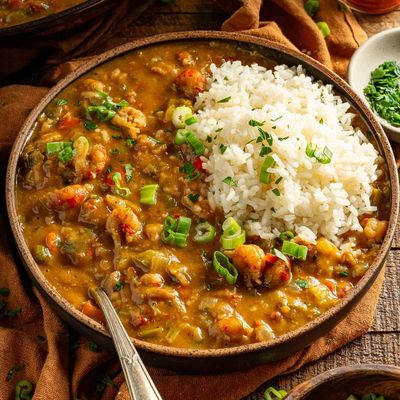
A Louisiana classic, the dish whose name means "smothered" in French, and that's exactly what's happening at the table: tender crawfish tails smothered in a rich gravy spooned over white rice. You start with a blond roux (butter and flour cooked just to the colour of peanut butter, lighter than gumbo's nearly-burnt mahogany), then soften the Cajun trinity of onion, celery and bell pepper in it until everything goes glossy. Tomato paste, Cajun spice and stock loosen the mixture, and the lot simmers down to a thick velvety gravy. Crawfish tails (or prawns if you can't find them) go in near the end and cook just briefly so they stay tender rather than turning rubbery. Spring onion and parsley scatter over at the finish. Ladled over white rice in a bowl, with crusty bread and a glass of cold beer alongside.
Miso Shrimp Scampi
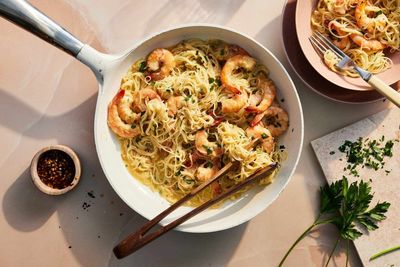
A clever, restrained twist on a familiar pan sauce. You keep the scampi method intact: butter foamed with shallot and a tower of garlic, deglazed with dry white wine and lemon juice, finished with a hit of chilli and parsley. The change is a couple of spoonfuls of white miso stirred into the sauce just before the shrimp return to the pan. The miso melts in without overpowering, lending a salty, umami round-out that intensifies the buttery base and gives the dish a "what is in this?" quality across the back of the palate. The shrimp themselves get Cajun-spiced before they ever touch the pan, which adds a low background warmth across the whole bowl. You cook them fast because shrimp turn rubbery in moments past doneness; pull them when they show an even pink and a tight C-curl. Serve three ways: over hot linguine with a splash of pasta water for gloss, ladled over white rice, or in a shallow bowl with torn crusty bread for mopping the sauce.
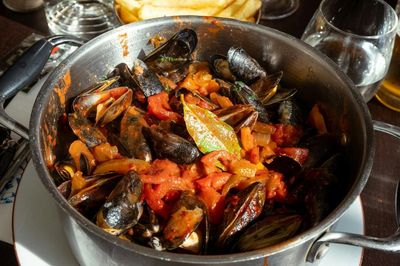
Moules Marinière
Cleaned mussels go into a hot pot with shallots, garlic, white wine and butter. The lid clamps on; high heat steams everything in 4-5 minutes; the mussels open. A handful of chopped parsley joins; the whole pot lands at the table. Bread on the side.