Areeka
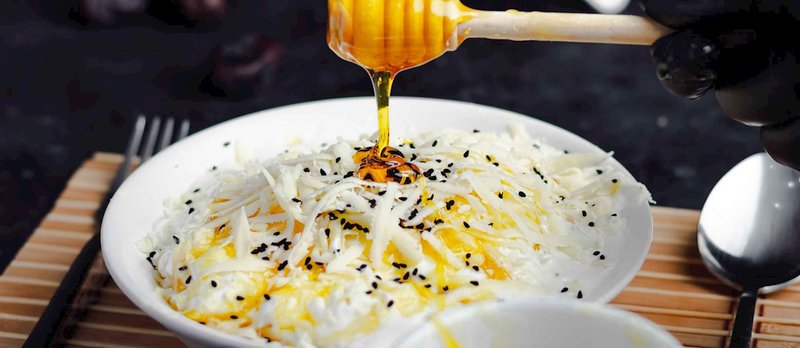
A Saudi date-and-bread sweet: toasted whole-wheat bread torn into a dish with pitted dates, drenched in melted samna, pressed lightly to soak.
Overview
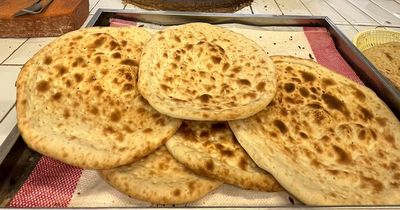
A Saudi sweet you can put together in five minutes from three ingredients you almost certainly have: bread, dates, samna. You tear soft, slightly toasted whole-wheat flatbread (khubz tameez works) into a heavy bowl, scatter pitted dates over it (medjool or kholas, the Saudi favourites), then press the mixture lightly with a wooden pestle or the back of a spoon while a generous pour of warm melted samna goes over the top. The dates collapse into the bread under the heat and the pressure, and the samna soaks through until you have a thick, buttery, intensely sweet mass that holds together in a spoon. Some versions add ground cardamom, a sprinkle of toasted sesame, or a final swirl of honey on top. Eaten warm with the fingers or a spoon, traditionally for breakfast or as the sweet course at the end of a heavy meal.
Ingredients
- 4 khubz tameez (medium, or other slightly toasted whole-wheat flatbreads)
- 250 g pitted dates (medjool, kholas, or ajwa)
- 80 g samna (clarified butter) or unsalted butter
- ½ teaspoon ground cardamom
- 1 tablespoon honey (optional)
- 1 tablespoon toasted sesame seeds (optional)
Method
Stage 1 - Warm the bread
- If the bread is room temperature, warm briefly under a grill or on a dry pan until just toasted at the edges and pliable. Tear into 3-4 cm pieces.
Stage 2 - Combine bread and dates
- Place the torn bread in a wide heavy bowl.
- Cut each date into 3-4 pieces (if very dry, soften in 1 tablespoon of hot water for 30 seconds first).
- Scatter the dates over the bread.
Stage 3 - Press and butter
- Melt the samna in a small pan over low heat until just warm.
- Pour over the bread and dates.
- With a wooden pestle (or the back of a sturdy spoon), press and stir the mixture together - the dates break down, the bread absorbs the butter, everything combines into a dense, buttery, brown-flecked mass.
- Stir in the cardamom and honey (if using).
Stage 4 - Serve
- Spoon into a wide shallow dish.
- Sprinkle with sesame seeds.
- Eat warm, with the fingers or a small spoon, alongside qahwa.
Notes
- Bread quality: A whole-wheat flatbread with a slight tooth is best. Sliced sandwich bread doesn't work - the structure collapses into wet mush.
- Date quality: Medjool dates are huge, soft, caramelly. Kholas are smaller, more wrinkled, deeply Saudi. Ajwa (from Medina) are highly prized but expensive. All work.
- Samna matters: Indian ghee is the closest substitute. Plain butter works but lacks the slightly nutty samna character.
Storage
- Best fresh, eaten warm. Keeps 1 day at room temperature.
- Don't refrigerate - the butter sets hard and the texture turns wrong.
More like this
Blue Corn Mush
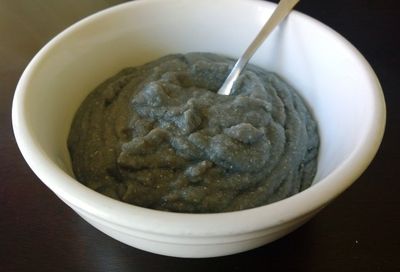
Cold water and a pinch of baking soda (standing in for juniper ash, the ash's alkali helps the corn release niacin and keeps the colour blue rather than grey) come to a simmer. Blue cornmeal whisks in steadily as the heat continues. The mush thickens over 10 minutes of stirring; salt seasons; it cooks another 3 minutes to lose any raw-flour edge. Served in bowls with honey or maple, toasted piñon nuts (or pumpkin seeds), dried cranberries or blueberries, and a splash of cream.
Baklava
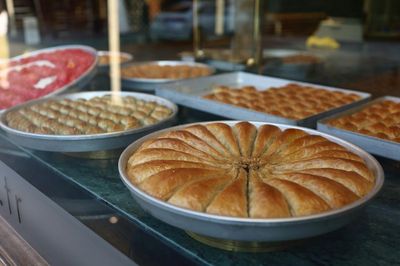
A Middle Eastern delicacy of honey-soaked, crispy-layered filo pastry studded with pistachios and warm spices, cut into diamonds and served at room temperature. This globally beloved pastry achieves its legendary texture through careful assembly and the crucial overnight soaking that allows the honey syrup to penetrate all layers while maintaining crispness.
Syrnyky
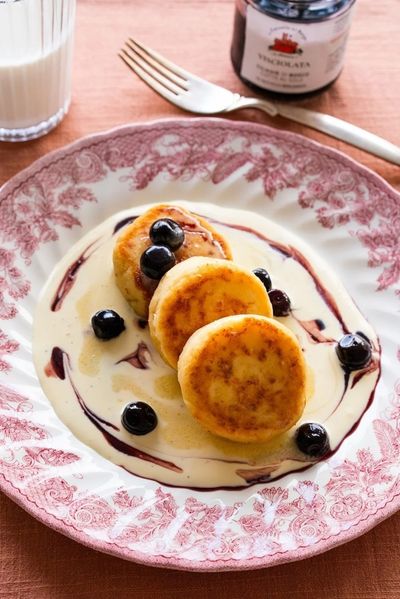
Drained dry cottage cheese (or quark, ricotta, farmer's cheese) mixes with eggs, flour, sugar and vanilla into a thick batter. Heaped tablespoons land on a buttered hot pan, flatten to 2 cm thick discs, and fry slowly to golden, the cheese cooks through, the surface crisps. Soured cream and jam on top.
Salata Hara
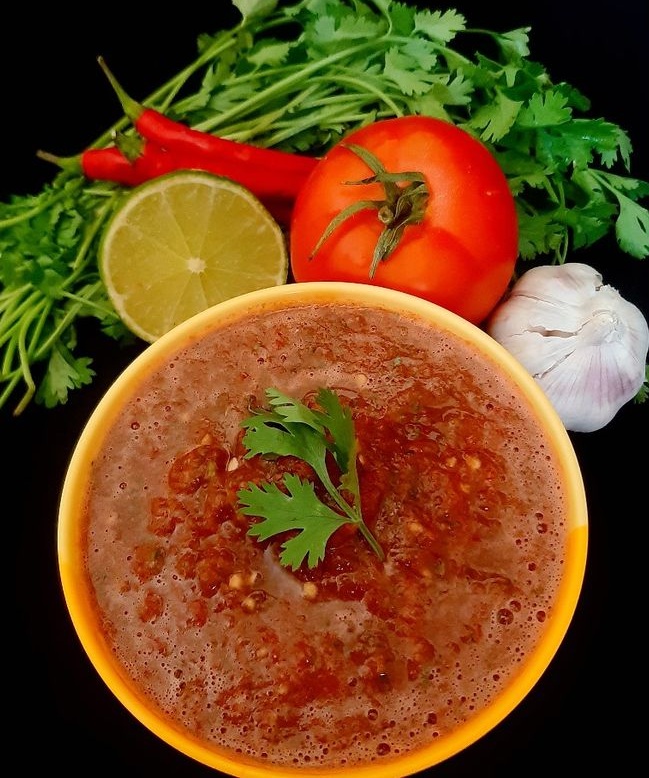
The chunky chopped salad that sits next to almost everything on a Saudi table: the relish that gives kabsa its bright counter, the cool against grilled meat, the freshness against rich rice. You chop tomato, cucumber and onion fine (the size matters: bigger than a salsa, smaller than a Greek salad), throw in parsley and a green chilli or two, and dress with lemon, olive oil, a pinch of cumin and salt. Five minutes' rest before serving lets the salt draw out a little tomato juice, which becomes the dressing the salad makes for itself. Vivid, crunchy, mildly hot, fast enough to put together while the kabsa rests under its lid. Eaten as a side dish, scooped with bread, or spooned over rice as you go.