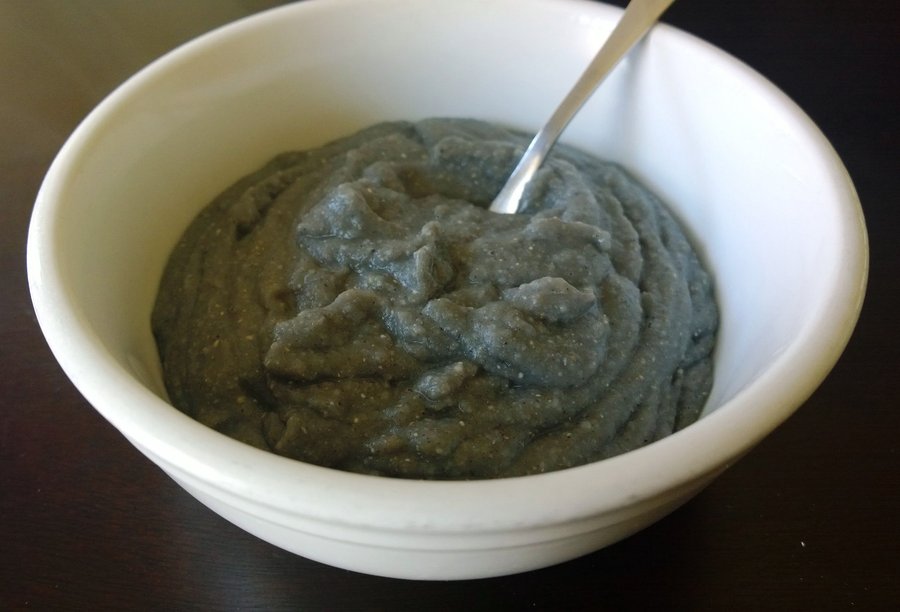
Blue Corn Mush
A Pueblo breakfast porridge: roasted blue cornmeal whisked into hot water with a pinch of ash, simmered thick. Topped with maple and piñon.
Overview
Cold water and a pinch of baking soda (standing in for juniper ash, the ash's alkali helps the corn release niacin and keeps the colour blue rather than grey) come to a simmer. Blue cornmeal whisks in steadily as the heat continues. The mush thickens over 10 minutes of stirring; salt seasons; it cooks another 3 minutes to lose any raw-flour edge. Served in bowls with honey or maple, toasted piñon nuts (or pumpkin seeds), dried cranberries or blueberries, and a splash of cream.
Ingredients
- 800 ml water
- ¼ teaspoon baking soda (or, traditionally, a pinch of culinary juniper ash if you have it)
- ½ teaspoon salt
- 200 g fine blue cornmeal (sold in many specialist or American shops; or order online)
- 30 g butter (optional, modern addition)
Toppings (per bowl)
- 1 tablespoon honey (or maple syrup)
- 1 tablespoon toasted piñon nuts (or pumpkin seeds or sliced almonds)
- 1 tablespoon dried cranberries (or blueberries)
- 1-2 tablespoons single cream (optional)
Method
Stage 1 - Boil
- Bring the water to a low boil in a heavy saucepan.
- Whisk in the baking soda and salt - the water will fizz briefly.
Stage 2 - Whisk in the cornmeal
- Reduce heat to medium-low.
- With the water at a gentle simmer, pour the cornmeal in a thin steady stream while whisking vigorously - this is critical to avoid lumps.
- Keep whisking 1 minute as it thickens.
Stage 3 - Cook
- Swap the whisk for a wooden spoon.
- Cook 10-12 minutes over low heat, stirring every 30 seconds to prevent scorching. The mush will thicken to a thick porridge consistency that holds a peak on the spoon.
Stage 4 - Finish
- Stir in the butter if using.
- Taste; add a pinch more salt if needed.
Stage 5 - Serve
- Ladle into warm bowls.
- Top each with a drizzle of honey or maple, a scatter of piñon nuts and dried berries, and a splash of cream.
Notes
- Why blue cornmeal: Blue corn is a Pueblo and Hopi heritage variety; the colour is from anthocyanins. Different in flavour from yellow - earthier, slightly more bitter, faintly smoky. White or yellow cornmeal makes a similar mush (atole), but the dish is properly blue.
- Baking soda or ash: The alkali isn't optional in the historical version - it's what makes the corn's niacin bioavailable (the Pueblo were spared the pellagra that plagued some other corn-eating cultures). Even in this short-cook version, a pinch keeps the colour blue.
- No lumps, no scorch: The two failure modes. Whisking constantly during the addition prevents lumps; stirring constantly during the cook prevents scorching.
Storage
- Best eaten hot. Refrigerated, it sets firm and can be sliced like polenta; reheat with a splash of water/milk.
- Fried slices of set mush (the next-day form) are a delicious second use.
More like this
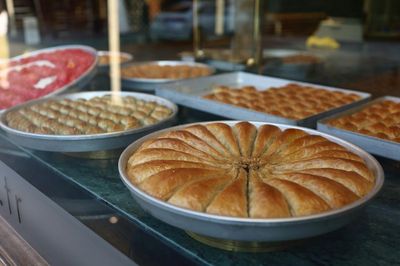
Baklava
A Middle Eastern delicacy of honey-soaked, crispy-layered filo pastry studded with pistachios and warm spices, cut into diamonds and served at room temperature. This globally beloved pastry achieves its legendary texture through careful assembly and the crucial overnight soaking that allows the honey syrup to penetrate all layers while maintaining crispness.
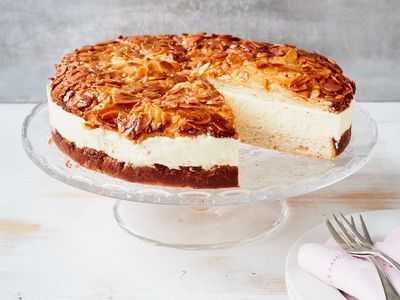
Bienenstich
A milk-and-butter enriched yeast dough proves to soft and pillowy. A honey-almond topping (butter, honey, sugar, cream, flaked almonds) cooks on the stovetop until thickly bubbling, then spreads on the proved dough and bakes together: the dough rises, the topping caramelises golden and chewy. Once cooled, the cake splits horizontally and fills with thick vanilla pastry cream (Konditorcreme) lightened with whipped cream.
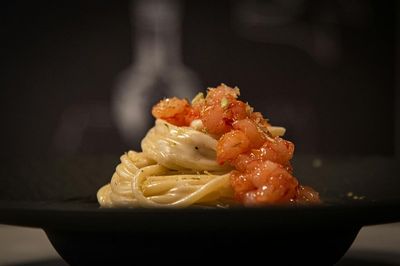
Tagliatelle with Prawns and Brandy Cream Sauce
This is Italian elegance designed for romantic dinners. Fresh prawns, cooked at precisely the right moment to preserve their tender sweetness, meet a luxurious brandy-cream sauce enriched with toasted walnuts and brightened by balsamic vinegar and cherry tomatoes. The sauce is silky, the flavor sophisticated, the preparation surprisingly quick. Restaurant quality achieved at home.

Sumac Lemonade
Two whole staghorn sumac drupes (or 3 tablespoons of dried, ground culinary sumac as a substitute) go into cold water for 20 minutes, never hot water, which extracts bitter tannins from the woody stems. The water steeps to a pale rose-pink with a tart citrus aroma. Strained twice through a coffee filter or fine muslin to remove the fine sumac hairs. Sweetened to taste with maple syrup; served over ice with a lemon wheel.