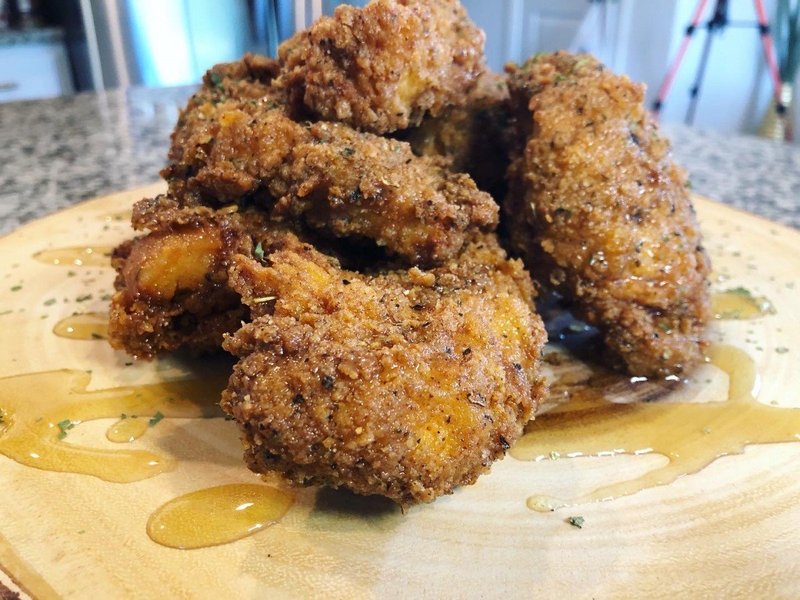
Super-Crunch Chicken Tenders with d'Ussé Honey Sauce
A competition-winning fried tender: chicken marinated in Buffalo-and-hot-sauce, dredged in clumpy seasoned flour and fried golden. Drizzled with cognac honey.
Overview
A competition-winning fried tender from chef Jessica Fulks where everything is built around a single textural trick: the dredge is intentionally lumpy, made by drizzling a small amount of buffalo-sauce marinade into the seasoned flour so it forms small craggy clumps the tenders pick up when coated. Those clumps fry up into a deeply uneven, shatter-crispy crust that you simply cannot get from a smooth flour dredge, this is the same technique Korean fried chicken uses, and it's the technique fast-food chains can't replicate at scale. Underneath, the chicken stays juicy because it brined briefly in a high-acid hot-sauce mix. The flour itself is heavily seasoned (salt, cracked pepper, garlic powder, cayenne, paprika, dried basil) so flavour penetrates every craggy edge. The honey-D'ussé sauce on top is the unexpected finish: warm honey thinned with cognac (D'ussé is the spec, but any cognac or brandy works), drizzled over the warm tenders so the alcohol carries the honey deep into the crevices. Smell is fried chicken with a faint burnt-sugar-and-spirits lift. Not hard but the clumpy-flour move is critical; smooth your dredge and you have ordinary tenders. A modern Black-American chef creation that's spread across the chef-driven fried chicken scene of the late 2010s and early 2020s.
Ingredients
- 12 chicken tenders
- 24 ml Buffalo sauce
Flour dredge
- 2 ½ cups plain flour
- 2 tablespoons salt
- 2 teaspoons cracked black pepper
- 3 tablespoons garlic powder
- 3 tablespoons cayenne pepper
- 3 tablespoons sweet paprika
- 3 tablespoons dried basil
Fry
- 1 ½ litres canola (or vegetable oil)
Sauce
- 300 g (10 oz) pure honey
- 120 ml D'ussé cognac (or any brandy / cognac)
Garnish
- Dried parsley
Method
Stage 1 - Marinate
- Wash and clean the tenders; pat dry.
- Toss in the buffalo + hot sauce mix; refrigerate 20-30 minutes.
Stage 2 - Clumpy flour
- Combine the flour with the salt, pepper, garlic powder, cayenne, paprika and basil in a shallow bowl.
- Drizzle in 2 tablespoons of the marinating liquid (yes, raw marinade); use your fingers to fluff into clumps. Don't fully integrate - leave the clumps.
Stage 3 - Fry
- Heat the oil in a heavy pot to 175°C / 350°F.
- Lift each tender from the marinade; let excess drip.
- Press into the clumpy flour, coating thoroughly. Encourage clumps to stick to the surface - they're the texture.
- Fry 4-5 tenders at a time (don't crowd) 10-12 minutes until they float and the surface is deep gold.
- Drain on paper towels.
Stage 4 - Honey-D'ussé sauce
- Warm the honey gently in a small pan.
- Stir in the cognac.
- Drizzle generously over the warm tenders.
- Scatter dried parsley.
- Serve immediately.
Notes
- Clumpy flour is the technique: the small bits of flour that have absorbed marinade are what give the famous crunch. Don't smooth out the dredge.
- D'ussé substitutes: any cognac, brandy or even spiced rum works. The point is the warming alcoholic note against the sweet honey.
- Cook 4-5 at a time: smaller batches keep the oil temperature stable, which is the difference between deep-gold crunch and soggy beige.
Storage
- Best the day of frying.
- Reheat at 200°C / 400°F oven for 6-8 minutes; never microwave.
More like this
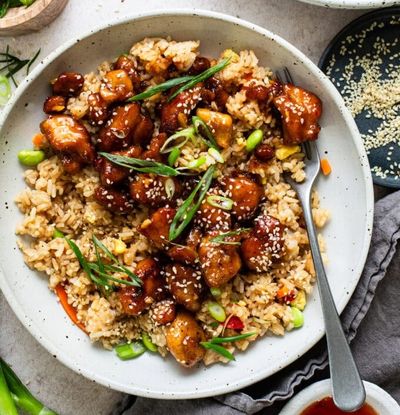
Crispy Honey Garlic Chicken
An Asian-American takeout standard reimagined for the home kitchen, with one specific upgrade: 10 cloves of garlic, chopped rather than minced, so the pieces stay visible and bite back. The flavour is the canonical sweet-salty-spicy balance of American Chinese cookery, honey for sweetness, soy for salt and umami, sweet chilli sauce (Mae Ploy or similar Thai bottled brand) for vinegared chilli warmth, garlic for sharpness across the back. Crisp comes from a cornstarch dust on the chicken, which gives a more even, lacier crust than flour does and stays crisp longer once the sauce hits it. The chicken thighs themselves stay juicy because they're cubed, not pounded; the small pieces cook fast and the seasoning penetrates. Smell when the chicken hits the sauce is honey-and-soy hitting hot oil, which is one of the more universally appealing kitchen smells. Easy and fast, active cooking under 20 minutes once the marinade has rested. The dish has no claim to traditional Chinese cookery; it's the product of decades of evolution in American Chinese restaurants and the home-cook adaptations that followed.
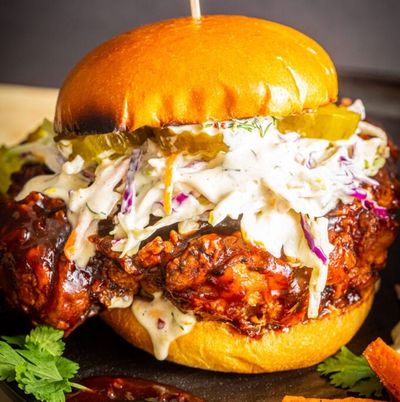
Honey Chipotle Fried Chicken Sandwich
Three flavour systems stacked on a single sandwich: a buttermilk-brined fried chicken thigh (the American Southern foundation), a smoky-sweet chipotle-honey-soy glaze (the modern flavour-bomb that took fast-food fried chicken in the 2010s past plain Buffalo), and a Cajun-lemon-dill aioli slaw with dill pickle chips (the cool, acidic, salt-heavy counter that keeps the sandwich from being a sweetness-overload). The chipotle-honey is the dish's identity, molasses-deep, smoky from canned chipotles in adobo, sticky-sweet from honey and brown sugar, savoury from the soy that grounds it. Pickle juice in the buttermilk brine is the small upgrade that pushes the chicken from good to noticeably better; the salt and acid penetrate the meat and tenderise further than buttermilk alone. Smell is fried chicken with a wave of chipotle-and-honey lifting off the warm bun. Easy enough to make at home and genuinely better than most chain-restaurant versions; this isn't traditional Southern cooking, it's the modern American fried-chicken-sandwich-renaissance dish, the kind of build that emerged from food blogs and Black-American chef culture across the 2010s and 2020s.
Buttermilk Fried Chicken
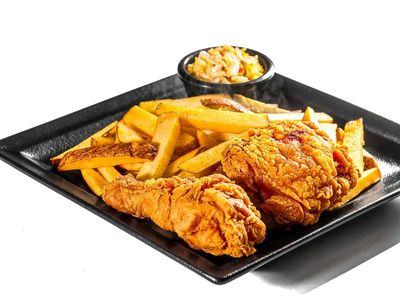
The Southern Sunday dinner that defined a region. You start the night before, sinking bone-in chicken pieces into a buttermilk brine spiked with hot sauce and garlic so the acid tenderises the meat and the seasoning works its way deep. The next day comes the double-dredge: a roll through heavily-seasoned flour, a brief dip back in the buttermilk, then another roll through the flour, which is what gives the finished bird its craggy, almost lacy crust. Into 175°C oil for twelve to fifteen minutes per piece, turned every few minutes so the crust browns evenly. You're done when the coating is deep mahogany and a thermometer in the thigh reads 75°C. Drain on a wire rack rather than paper so the steam escapes and the crust stays shattering. Eat hot with a stack of pickles, a soft biscuit and a bottle of hot sauce on the table; cold the next day at the kitchen counter is its own justified American ritual.
Honey Soy Glazed Chicken
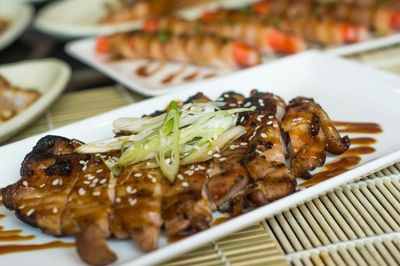
Roast chicken at its most rewarding: bone-in, skin-on thighs that braise gently in their own marinade then crisp up under a sticky honey-and-soy lacquer, basted twice during cooking so the surface builds up in glossy layers. You let the chicken sit in the marinade overnight so the salt in the soy seasons deep into the meat, and the same marinade doubles as the glaze when you roast - raw honey and dark brown sugar caramelising into the skin while the ginger, garlic and a hit of sambal oelek keep things from being one-note sweet. A wire rack matters; it lifts the chicken so the underside also crisps and the marinade can't pool and boil. The kitchen fills with the smell of caramelising honey, garlic and toasted soy for the last fifteen minutes. The result sits somewhere between Cantonese roast meats and a Korean glazed thigh, with the gentle chilli warmth threading through every bite. Steamed rice and a quick green vegetable on the side, with the basting sauce poured generously over.