In season

May produce

Tap any item to find recipes that use it.

Asparagus 0Rhubarb 0Peas 0Broad beans 0Radish 0Lettuce 0New potato 0Spring onion 0Watercress 0Sorrel 0
Boerewors

Boerewors

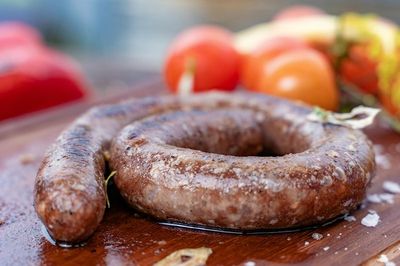
Boerewors, literally "farmer's sausage" in Afrikaans, is the national sausage of South Africa and the obligatory centrepiece of any braai. South African law actually defines it: minimum 90 per cent meat (beef the dominant component, often with pork or lamb for fat), no more than 30 per cent fat overall, no offal, and a defined spice profile led by toasted ground coriander. That coriander is the signature; combined with clove, nutmeg, allspice and black pepper, and brought together with a splash of malt or brown vinegar, it produces a flavour quite unlike any European sausage. The sausage is always coiled rather than linked, and grilled in a single long spiral that can be turned in one piece with a pair of long forks. Difficulty for the home cook is very low if you can buy ready-made boerewors from a South African butcher, deli or online supplier, which is the practical route for most. Making it from scratch needs a meat grinder and sausage stuffer but the spicing is straightforward. Cooking is the part everyone gets wrong: boerewors is a coarse-ground sausage with chunks of fat in the meat, and it cooks at medium heat, never high. Too hot and the casing splits, fat renders out and the sausage shrivels; just right and it stays plump, juicy, with a deep mahogany crust. The classic accompaniments are pap (a stiff white maize porridge), tomato-and-onion relish (sous), or stuffed into a fresh bread roll with tomato chutney and crispy fried onions as a boerie roll.
South African 35 minutes Serves6
Cantonese BBQ Chicken

Cantonese BBQ Chicken

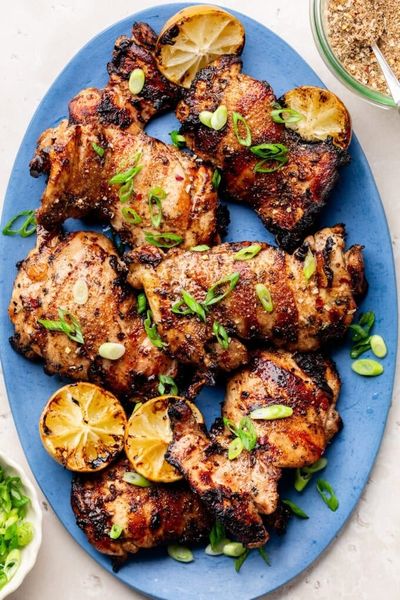
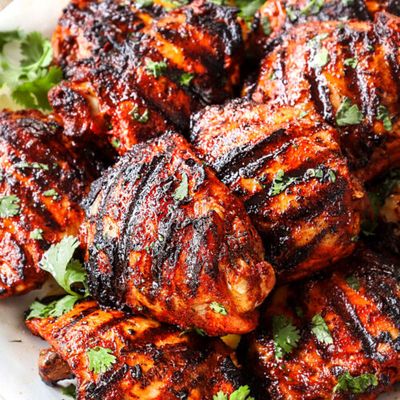
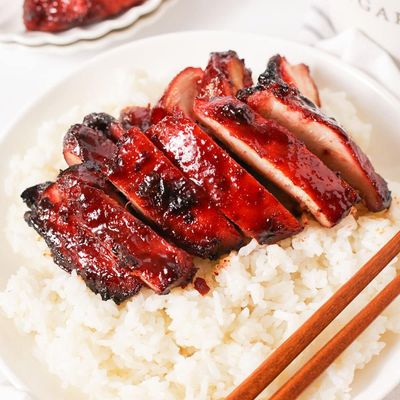
This is summer-BBQ adaptation of the lacquered red roast meats that hang in the windows of Cantonese siu mei shops. The marinade borrows from char siu (hoisin, soy, Shaoxing wine, five-spice, fermented bean curd, garlic, ginger) but pulls back on the sugar slightly because chicken does not need as much sweetness as pork shoulder. Bone-in skin-on thighs are the right cut: they stay juicy on the grill, the skin renders down and crisps, and the bones give the meat shape. A two-stage glaze does the rest. The thighs cook over indirect heat first to render the fat and set the meat, then move directly over the coals for the last few minutes while a honey-maltose mixture is brushed on repeatedly. Every brush of glaze caramelises, blackens slightly at the edges, then gets brushed again. The result is sticky-shiny with a smell that is half five-spice, half woodsmoke. Difficulty is low if you control your heat. A two-zone fire (one side coals piled high, the other side empty) is the only real requirement; on a gas grill, two burners on full and one off does the same job. Serve sliced over plain rice with sliced cucumber and a spoon of chilli oil, or stuffed into bao with hoisin and spring onion.

Chinese 4 hours 40 minutes Serves4
Gai Yang

Gai Yang

Gai yang ("grilled chicken") is one of the cornerstones of Isaan cooking, the cuisine of north-eastern Thailand that has spread across the whole country and into Thai restaurants worldwide. The defining flavour is coriander root, an ingredient barely used in Western cooking but central to Thai marinades. Pounded in a granite mortar with garlic, white peppercorns and a pinch of salt, it forms an aromatic paste that's then mixed with fish sauce, oyster sauce and a touch of sugar. The chicken is butterflied (spatchcocked) so it lies flat on the grill, marinated for at least 4 hours, then cooked slowly over moderate charcoal. The proper Isaan technique is patient: 30 minutes or more, turning often, sometimes pressed flat between two bamboo splints, so the skin slowly crisps and the meat takes on smoke without burning. The flavour is savoury-funky from fish sauce, peppery-warm from white pepper, deeply garlic-and-herb from the paste, with no chilli in the marinade itself; heat comes from the dipping sauce. Difficulty is low for the home cook: a good mortar or a small food processor makes the paste in 2 minutes, butterflying a chicken is a single cut down the backbone, and any covered grill or kettle does the cooking. Eaten by hand with balls of sticky rice and dipped into nam jim jaew, the toasted-rice-and-tamarind dipping sauce.

Thai 5 hours Serves4
Greek Lamb Burger

Greek Lamb Burger

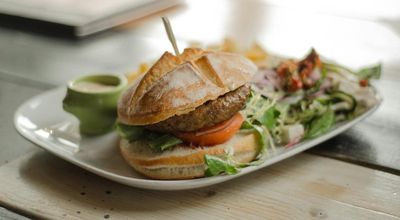
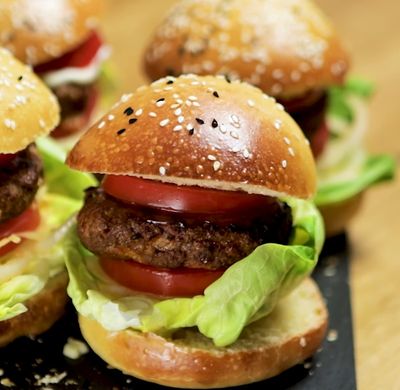
This burger borrows from the souvlaki and bifteki tradition of mainland Greece, where minced lamb or a lamb-beef mix is seasoned with dried oregano, garlic and a slug of red wine vinegar, then grilled over charcoal until the outside is dark and the inside still blushes pink. Crumbling feta directly into the mince is a home-cook trick: as the cheese melts it leaves salty, creamy seams through the patty rather than sitting flat on top. The result is much more interesting than a beef burger dressed up with Mediterranean toppings. The supporting cast is straightforward and traditional: a quick tzatziki of strained yoghurt, cucumber, garlic and dill; a sharp tomato and cucumber relish loosened with olive oil; and either toasted pita or a soft brioche bun, depending on whether you want this to lean Greek street food or backyard barbecue. Lamb is forgiving on the grill because its fat is so flavourful, but it can taste muttony if overcooked, so aim for an internal temperature around 60 to 63 degrees. Difficulty is low. The only thing to watch is keeping the mince loose: if you pack the patty tightly it goes dense and rubbery, so handle it just enough to hold together. Serve with a glass of something cold and resinous.

Greek 37 minutes Serves4
Grilled Jerk Chicken Thighs

Grilled Jerk Chicken Thighs

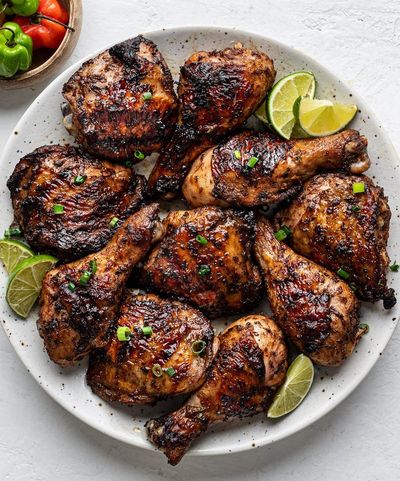
The dish lives or dies on the jerk marinade and on whether the chicken takes a proper char without drying out. The marinade here is jerk seasoning (homemade or Walkerswood, which is the canonical bottled brand) thinned with full-fat coconut milk and brightened with lime; the coconut milk is the technical move, it tames the heat, lubricates the meat, and helps the surface caramelise rather than blacken. Flavour is warm-piney from thyme and allspice, fiery from Scotch bonnet, slightly sweet from the browning sauce, deeply savoury once it hits high heat. Smell is unmistakable jerk: allspice smoke and pepper. Quick to cook once the marinade has done its work overnight, 15 minutes on a hot grill, 5 minutes rest. Originated on the eastern end of Jamaica (Boston Bay in Portland) where the Maroons, descendants of escaped enslaved Africans, developed a dry-rub-and-slow-smoke method over pimento wood; the modern grilled version is the home-kitchen adaptation that doesn't require a pimento-wood pit.

Jamaican 30 minutes Serves6
Jerk Chicken

Jerk Chicken

A wet jerk paste: scotch bonnet chillies, garlic, ginger, spring onions, thyme, allspice (whole or ground), brown sugar, soy sauce, lime, oil, salt and pepper, pureed in a blender. The chicken (bone-in skin-on thighs and drumsticks, or spatchcocked whole bird) marinates for 12 hours minimum. Slow-grilled over indirect heat with a pile of pimento wood chips or allspice berries on the coals for the signature smoke; alternatively, an oven-bake at 180°C with a final blast under the grill, supplemented with allspice in the marinade.

Jamaican 13 hours 5 minutes Serves4
Kofta Burger

Kofta Burger

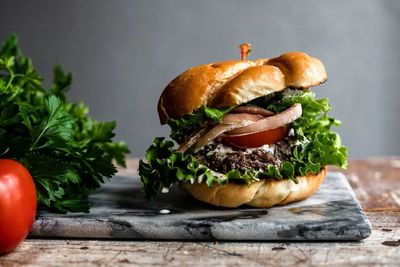
Lebanese kofta, sometimes spelled kafta, is minced lamb (often with a little beef) seasoned with grated onion, parsley and the warm spice blend known variously as baharat, sabaa baharat or seven-spice: allspice, black pepper, cinnamon, cloves, nutmeg, cumin and coriander. Traditionally it is moulded around flat metal skewers and grilled over charcoal at a mangal, where it sears fast and stays juicy. Shaping the same mince into a patty for a flatbread sandwich is a natural extension and one you will find in Beirut bakeries and Levantine takeaways from Sydney to Detroit. What makes this burger taste authentic and not just a "Middle-Eastern-spiced lamb burger" is the grated onion: pulled across a box grater so it dissolves into the mince and seasons every gram from the inside, releasing moisture as it cooks. Squeezing out the excess liquid first keeps the patty from falling apart. The sauce is a loosened tahini-yoghurt, tart with lemon and garlic, and the contrast comes from sumac-dusted onions whose sharp, almost berry-like sourness cuts through the lamb's richness. Wrap it in toasted khobz or a soft brioche, depending on the occasion. Difficulty is low. The only skill is restraint with the mince: knead just enough to bind, no more.

Lebanese 35 minutes Serves4
Lahori Beef Boti Kebab

Lahori Beef Boti Kebab

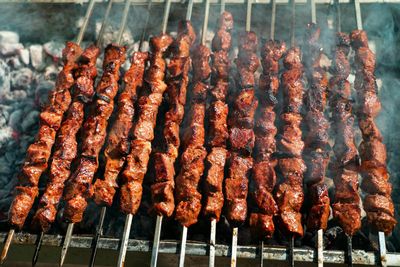
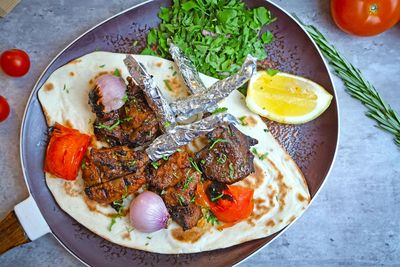
Beef tenderloin or fillet is cut into 3 cm cubes and marinated in two stages. A first short rub with raw papaya, ginger-garlic, salt and a splash of vinegar tenderises the meat (papaya enzymes break down the muscle fibre). After 30 minutes the second marinade goes in: yogurt, Kashmiri chilli, garam masala, kasuri methi, mustard oil and a touch of besan. The beef sits for at least 3 hours, ideally overnight. Threaded onto skewers and grilled hot until charred at the edges; the inside should stay pink and juicy.

Lahori 4 hours 32 minutes Serves4-6
Mojo Pork

Mojo Pork

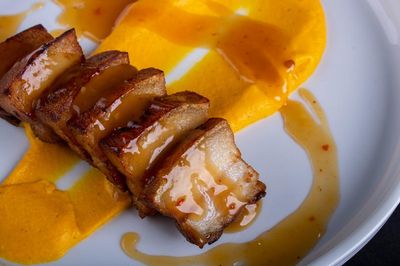
Mojo, pronounced moh-ho, is the foundational citrus and garlic marinade of Cuban cooking, and lechon asado al mojo, a whole pig or shoulder marinated in it and roasted slowly, is the centrepiece of Christmas Eve dinners across Cuba and the Cuban diaspora in Miami, Tampa and beyond. The defining ingredient is naranja agria, the sour or bitter orange, whose juice is sharper and more aromatic than regular orange and which provides the acid backbone of the marinade. If you cannot find sour oranges, the universal substitute is two parts fresh orange juice to one part lime juice, with a splash of grapefruit if you have it. The rest of the mojo is generous: a head of garlic crushed into paste, dried oregano (Cuban oregano if possible, regular Mediterranean otherwise), cumin, salt and good olive oil. The pork shoulder is stabbed all over and the marinade pushed deep into the flesh, then left overnight so the acid begins to break down the muscle fibres. The roast itself is forgiving: low and slow, fat-side up, until the meat pulls apart with a fork and the skin crackles. Leftovers become the heart of a Cuban sandwich, layered with ham, Swiss cheese, mustard and pickles in pressed bread. Difficulty is low. The only thing to plan for is time: the marinade needs overnight, and the roast takes most of an afternoon.

Cuban 4 hours 20 minutes Serves8
Piri Piri Chicken

Piri Piri Chicken

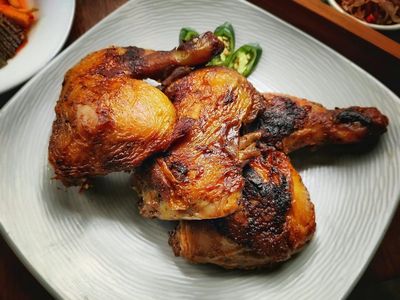
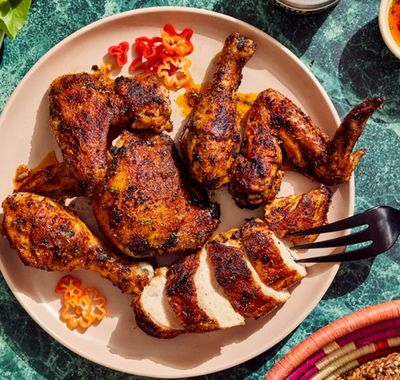
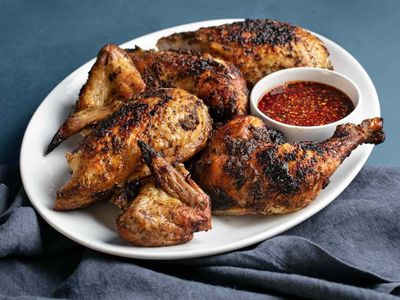
Piri-piri chicken is the dish that travelled from Mozambique to Portugal to the high street, and the original is still the best: a whole chicken spatchcocked flat, marinated overnight in a vivid red paste of bird's-eye chillies, garlic, paprika, lemon and olive oil, then grilled hard over charcoal until the skin is darkly blistered and the meat just-cooked through. The marinade itself takes five minutes in a blender. The bird wants a minimum of four hours in it, ideally overnight. A home broiler on max works if you do not have a barbecue, but the smoke from the coals is half the dish. Serve with a second bowl of the same marinade as a sauce, a green salad, and chips.

Portuguese 5 hours Serves4
Pollo Asado

Pollo Asado

Pollo asado is the Mexican answer to grilled chicken, and the marinade is the entire point. Achiote paste (ground annatto seed with garlic, cumin, oregano and vinegar) provides both the dish's distinctive brick-orange colour and a subtle, almost peppery earthiness. Sour orange (naranja agria) is the traditional citrus, though a blend of orange and lime juice mimics it where bitter orange isn't available. The chicken is marinated for at least 4 hours, ideally overnight, so the acid tenderises the meat and the achiote stains right through to the bone. On the grill, the marinade caramelises into a deeply coloured crust while the meat underneath stays juicy thanks to the bone-in cuts. Regional differences matter: Yucatán-style pollo asado leans heavily on achiote and sour orange, drawing from pibil traditions; northern Mexican versions add more cumin and chilli; the version popular in Los Angeles and Texas often gets a touch of tomato paste in the marinade for extra colour. Difficulty for home cooks is low: it's grilled chicken with a confident marinade. The main pitfall is high direct heat scorching the achiote-stained skin before the meat cooks through; a two-zone fire fixes that. Served with charred spring onions, warm corn tortillas, lime wedges, and salsa or guacamole.

Mexican 4 hours 50 minutes Serves4
Uyghur Kebab Burger

Uyghur Kebab Burger

A burger that tastes like a Kashgar street kebab rather than a Western quarter-pounder. Cumin is the dominant note (Uyghur cooking uses it the way the rest of China uses Sichuan pepper); behind it sits sweet chilli powder for warmth without burn, and the lamb fat that catches a deep gold sear on the outside. The patty stays loose and juicy because the mix is bound with a single egg and a spoon of flour rather than pressed dense like a beef burger. Smell-wise: charred fat, cumin, and the sweet onion folded into the meat. Easy enough that you can do it on a weeknight as long as the mix has had its 3-hour rest in the fridge; the resting time is what makes the difference between a flat-tasting patty and one that eats like the real tonur version. The dish is a clear modern adaptation of the classic Uyghur cumin lamb kebab, scaled down for households without access to a clay tandoor, and increasingly common in cafés across Xinjiang and the Uyghur diaspora.

Uyghur 8 hours 40 minutes Serves4
Yassa Spice-Rubbed Grilled Chicken

Yassa Spice-Rubbed Grilled Chicken

Yassa is one of the foundational dishes of Senegalese cooking, born in the Casamance region in the south of the country and carried by the Wolof and Joola diaspora across West Africa and beyond. At its heart it is a study in three things: acidity, alliums and smoke. Chicken is rubbed with a spice mix and marinated for hours in lemon juice, Dijon mustard, garlic and a heap of sliced onions, then charred over fire so the marinade caramelises in patches on the skin. The onions, meanwhile, are cooked low and slow in the leftover marinade with a little stock until they collapse into a glossy, tangy sauce that is both sweet and sharp. It is not a fiercely spicy dish, though a Scotch bonnet usually rides along in the pot for backbone, and the flavour profile is closer to a French-North African pickle than to the chilli-heavy stews further east. Difficulty is moderate: the cooking itself is easy, but yassa rewards patience at two stages, the marinade and the onion reduction. Serve over plain white rice or attieke so the sauce has somewhere to go.

Senegalese 13 hours 15 minutes Serves4