In season

May produce

Tap any item to find recipes that use it.

Asparagus 0Rhubarb 0Peas 0Broad beans 0Radish 0Lettuce 0New potato 0Spring onion 0Watercress 0Sorrel 0
Bobotie

Bobotie

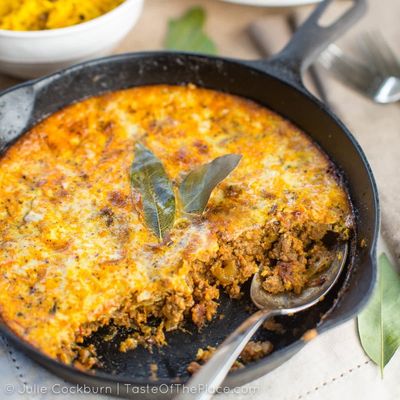
Bread is soaked in milk; mince is browned with onions; curry powder, turmeric and Cape Malay spices bloom. Apricot jam, mango chutney, vinegar and lemon balance the spice with sweet-sour notes. Raisins, toasted almonds and the soaked bread are folded through. The mixture is pressed into a baking dish; eggs are whisked with the leftover milk and poured over; bay leaves are stuck into the surface; the lot is baked until the topping is just-set with a faint wobble.

South African 1 hour 25 minutes Serves6
Bunjay-Style Curry Chicken

Bunjay-Style Curry Chicken

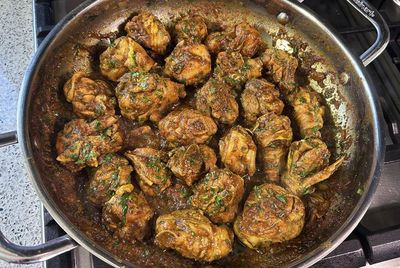
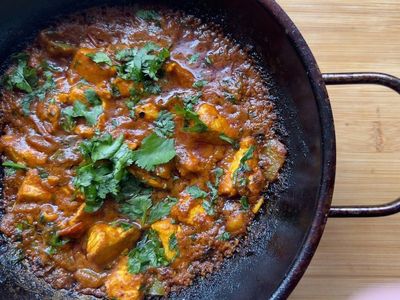
A dry curry rather than a saucy one, "bunjay" is Trinidadian patois for "fry-down", the technique of cooking meat in its own juices until the gravy completely disappears and the spices coat the surface of the meat in a sticky, glaze-like crust. The flavour is concentrated rather than diluted; nothing's been thinned with water or coconut milk, so what you taste is bone-in chicken, rendered chicken fat, and toasted spice. The spice mix is the East Indian Trinidadian signature: turmeric for colour and earth, roasted geera (toasted cumin, ground) for nuttiness, anchar masala for tang, regular curry powder for breadth. The pan oil splits and separates around the chicken at the end, which is the visual cue you're looking for. Smell when the curry powder hits hot oil is deeply aromatic, almost incense-like. Not difficult but it requires attention during the cook-down phase; if you walk away the curry burns onto the bottom of the pan. A Trinidadian household staple, eaten across the country with white rice and dhal, and a clean example of how Indian indentured labourers' descendants in the Caribbean evolved a distinct curry tradition over 150 years.
Trinidadian 2 hours 50 minutes Serves6
Charcoal Chicken Shop Chicken Skewers

Charcoal Chicken Shop Chicken Skewers

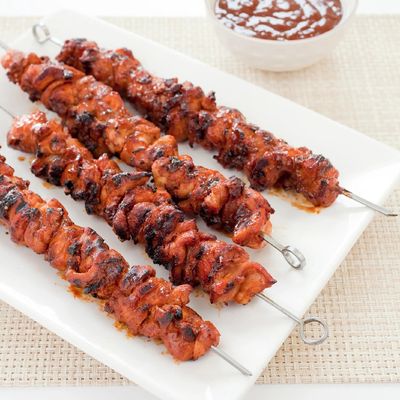
The flavour you'd get at a Melbourne charcoal-chicken takeaway, distilled into something you can run at home with a heavy pan instead of a rotisserie. You build a mostly-dry rub from the pantry: garlic powder, onion powder, sweet paprika, mustard powder, dried oregano, and a small amount of curry powder for the warmth that defines suburban-Australian charcoal-chicken shops. The rub wets out with olive oil and a generous squeeze of lemon, and the chicken thighs go in to marinate for twelve to twenty-four hours so the salt and spices penetrate properly. Thread onto skewers, sear hot in batches, rest briefly under foil so the juices settle. The lemon at the table is non-negotiable. Serve with warm flatbread, a chopped salad and a garlic-yogurt or hummus on the side, the kind of plate that arrives wrapped in butcher's paper at the takeaway.

Australian 24 hours 35 minutes Serves4-5
Curry Smelts

Curry Smelts

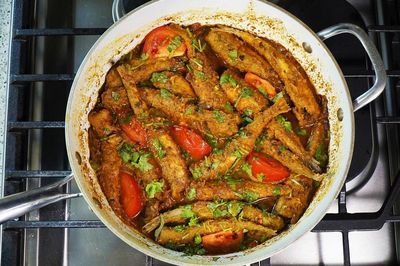
Trinidadian comfort food that brings together the East Indian and Afro-Caribbean strands of Trini cookery in one pan: small whole fried fish (a West African and Caribbean coastal habit) drowned in a Trinidadian East Indian curry sauce. The fish are smelts, sardines or whitebait, whole, head-on, eaten with a small bite to remove the spine. Once fried they sit crisp; when the curry sauce hits, the outer crust softens slightly and absorbs the gravy while the centre stays meaty. The sauce is the dish's signature: roasted geera (dry-toasted cumin) gives a smoky, nutty depth that pre-ground supermarket cumin can't touch, anchar masala adds a fermented-tangy edge (it's the Trinidadian pickled-mango spice mix), and Caribbean curry powder rounds the warmth. Whole pierced Scotch bonnet scents without flooring. Smell when the spices bloom in hot oil is heavy and pungent in the best possible way. Not difficult but it's a two-pan dance, so timing matters. A daily-cookery dish across Trinidad and Tobago and the Indo-Trinidadian diaspora, eaten with steamed rice or with sada roti torn and used as a scoop.

Trinidadian 50 minutes Serves5