In season

May produce

Tap any item to find recipes that use it.

Asparagus 0Rhubarb 0Peas 0Broad beans 0Radish 0Lettuce 0New potato 0Spring onion 0Watercress 0Sorrel 0
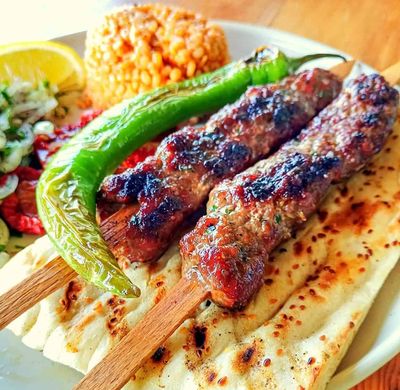
Adana Kebab

Adana Kebab

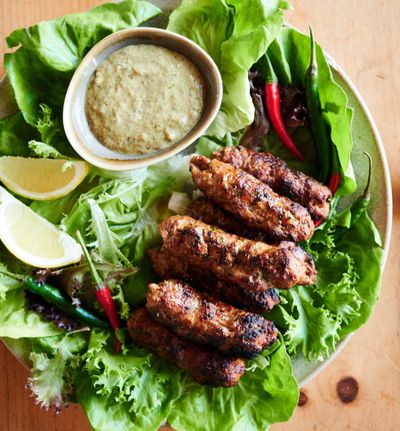
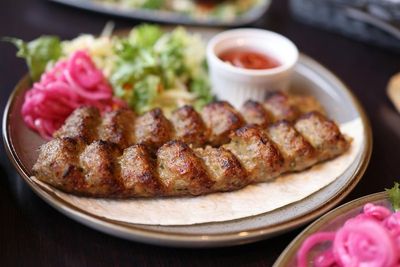
Lamb shoulder and lamb tail fat (or extra fatty trim) chop fine with a heavy knife or zırh (curved blade), proper Adana is hand-cut, never minced through a grinder. The texture has visible pieces of meat and fat the size of small peas. Knead with salt, ground sumac, hot red Aleppo / Maraş chilli flakes (acı biber) and crushed garlic for 6-8 minutes until tacky and clinging to the bowl. Chill for 2 hours. Press a fistful onto a wide flat skewer, working from the centre outward, shaping a 25 cm × 3 cm flat sausage with finger-tip dimples down the length. Grill over hot charcoal 5-6 minutes per side. Slide off skewer onto warm lavash. Rest for 2 minutes; serve.

Turkish 2 hours 42 minutes Serves4
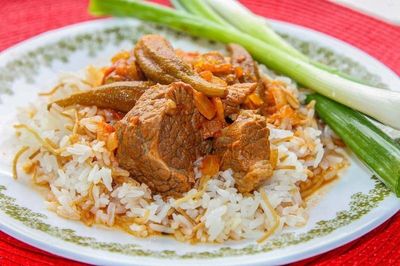
Dolma (Azerbaijani Stuffed Vine Leaves)

Dolma (Azerbaijani Stuffed Vine Leaves)

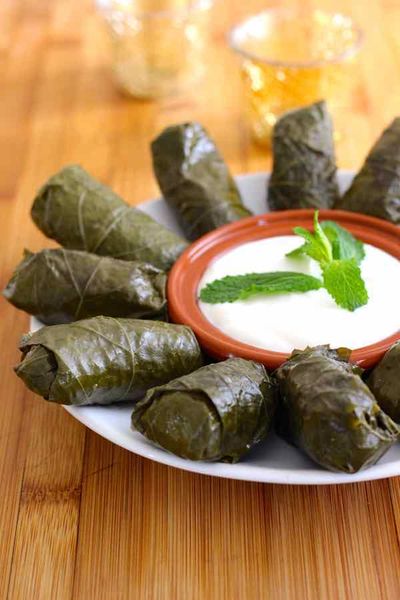
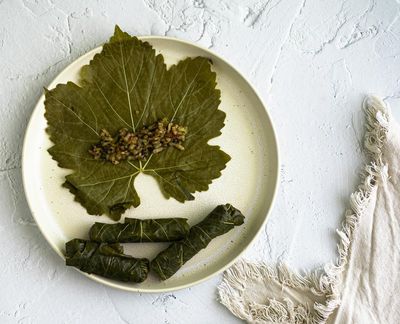
Azerbaijan's stuffed vine leaves, claimed as the national dish in 2017 and added to UNESCO's list of Intangible Cultural Heritage. You start by soaking brined vine leaves in warm water for twenty minutes to leach out the salt, then build a filling of raw lamb mince with rinsed short-grain rice, finely chopped onion, fresh mint and dill, butter, salt and pepper. Each leaf gets a teaspoon of filling and rolls into a tight cigar. The rolls pack in a single layer in a heavy pot, then a second and third layer perpendicular to the first, like a brickwork pattern that holds them together as they cook. Stock and a splash of sumac water pour in to barely cover, an inverted plate weighs everything down so the dolma keep their shape, and the lot simmers slowly for fifty minutes. Plated on a platter with thick garlic yogurt alongside for dipping.

Azerbaijan 2 hours Serves6
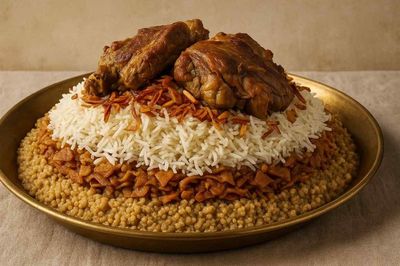
Kabsa

Kabsa

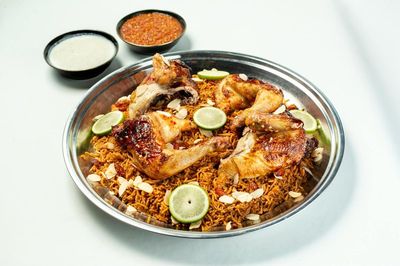
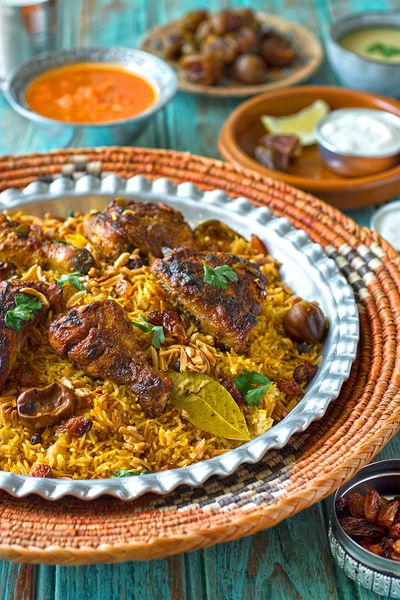
Saudi Arabia's national dish, the one platter you'll meet at almost every gathering from family lunch through wedding banquet. You brown chicken pieces or lamb shoulder hard in a heavy pot, then build a base of onion, garlic and ginger softened in the same fat, with tomato and a spoonful of baharat (or a dedicated kabsa spice mix) blooming until the kitchen fills with cardamom and cinnamon. The protein simmers in tomato and stock until it's tender and pulling away from the bone, then long-grain rice goes in to cook absorption-style in the same liquid, drinking up every layer of flavour the broth carries. You finish with almonds toasted in butter, raisins plumped briefly, and a fresh salsa of tomato, onion, chilli and parsley spooned on the side to cut the richness. Eaten communally from the centre platter, with hands or a long spoon.

Arabian 1 hour 35 minutes Serves6
Kofta Burger

Kofta Burger

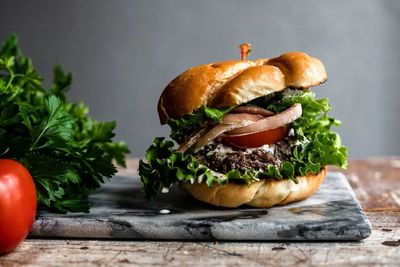
Lebanese kofta, sometimes spelled kafta, is minced lamb (often with a little beef) seasoned with grated onion, parsley and the warm spice blend known variously as baharat, sabaa baharat or seven-spice: allspice, black pepper, cinnamon, cloves, nutmeg, cumin and coriander. Traditionally it is moulded around flat metal skewers and grilled over charcoal at a mangal, where it sears fast and stays juicy. Shaping the same mince into a patty for a flatbread sandwich is a natural extension and one you will find in Beirut bakeries and Levantine takeaways from Sydney to Detroit. What makes this burger taste authentic and not just a "Middle-Eastern-spiced lamb burger" is the grated onion: pulled across a box grater so it dissolves into the mince and seasons every gram from the inside, releasing moisture as it cooks. Squeezing out the excess liquid first keeps the patty from falling apart. The sauce is a loosened tahini-yoghurt, tart with lemon and garlic, and the contrast comes from sumac-dusted onions whose sharp, almost berry-like sourness cuts through the lamb's richness. Wrap it in toasted khobz or a soft brioche, depending on the occasion. Difficulty is low. The only skill is restraint with the mince: knead just enough to bind, no more.

Lebanese 35 minutes Serves4
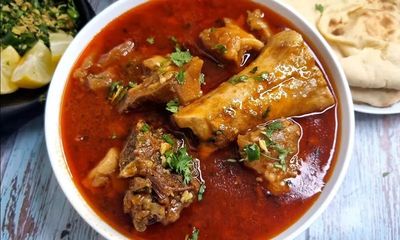
Lahori Mutton Karahi

Lahori Mutton Karahi

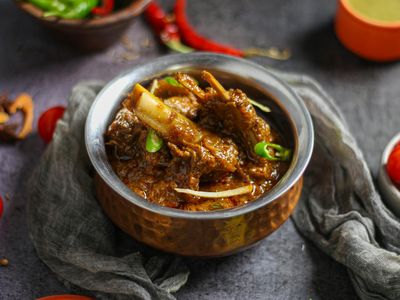
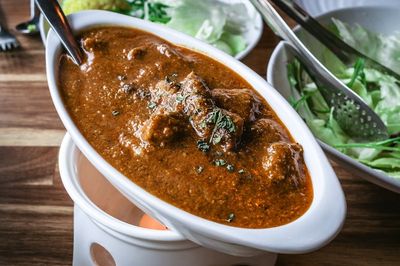
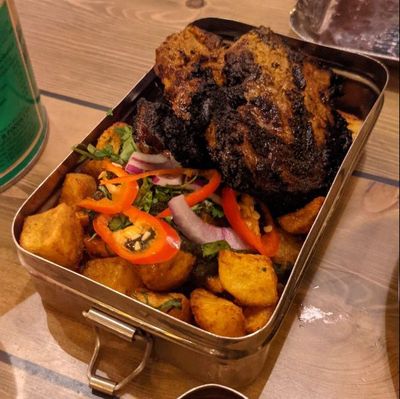
Bone-in lamb is browned in ghee with a small handful of whole spices, then ginger-garlic paste and tomato are added in two stages: first chopped, to break down into a base sauce, then sliced, to give texture at the end. The dish cooks uncovered the entire time, which is what defines Lahori karahi (the gravy reduces by half and concentrates). Green chilli, fresh ginger and coriander finish; a tablespoon of butter or ghee makes the slick on top.

Lahori 1 hour 30 minutes Serves4-6
Lahori Mutton Yakhni Pulao

Lahori Mutton Yakhni Pulao

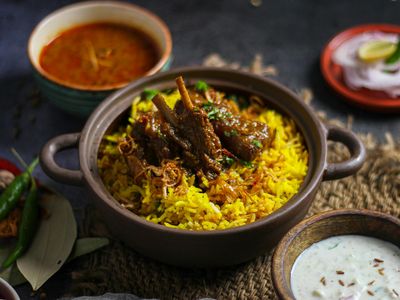
Bone-in mutton (or lamb shoulder, preferably with marrow bones) is simmered for two hours with onion, ginger, garlic, a spice pouch (coriander, fennel, cardamom, cinnamon, peppercorns, cumin) and salt, until the meat is fork-tender and the stock has reduced to a deep, fragrant yakhni. The stock is strained and measured. Basmati is soaked and added to a base of fried onion, whole spices, ginger and the cooked meat; the exact volume of yakhni is poured in, and the rice steams under a tight lid. The bone marrow ends up dispersed through the rice; the smell is unmistakable.

Rice 3 hours 35 minutes Serves6
Lyulya-Kebab

Lyulya-Kebab

The Azeri grill at its purest, and one of the most technically demanding kebabs in the Caucasus: a minced lamb sausage moulded onto a flat skewer and grilled over charcoal until the outside is charred and the inside still juicy. You mince fatty lamb shoulder twice or pulse it smooth in a processor, and grate a large onion fine with the juice squeezed out (excess water makes the meat slip off the skewer). Then you knead the onion and lamb together with salt, pepper and ground sumac for a full five minutes until the mixture goes from loose to tacky. This is the equivalent of bread's windowpane stage for meat, and it's the trick to skewer adhesion. The mix chills for two hours, then pats onto flat skewers in fifteen-centimetre sausages, grills over charcoal five or six minutes per side, rests two minutes, comes to the table on the skewer with lavash, grilled tomatoes and onions, and a wedge of lemon.

Azerbaijan 2 hours 42 minutes Serves4
Mandi

Mandi

Lamb shoulder is rubbed with a Yemeni spice mix (hawaij), browned, then steam-roasted at low heat for two hours until it shreds. The cooking juices are strained off; long-grain rice cooks in them with saffron, raisins and a bay-and-cardamom aromatic mix. The cooked lamb is laid on top of the rice; a piece of glowing charcoal is placed in a small heatproof bowl on top of the rice, drizzled with oil, and the whole thing is covered tight for 5 minutes to absorb the smoke. Lift, serve.

Yemen 7 hours 10 minutes Serves6
Mathloutha

Mathloutha

The Saudi gathering platter built for the night when one cut of meat isn't enough. Three proteins share the same pot: lamb shoulder and beef chunks go in first with a kabsa-spiced tomato base for ninety minutes of slow simmer until they're meltingly tender, then chicken pieces drop in for the last thirty-five minutes (their cook time is shorter, so they go in later). The strained meat broth, deeply spiced from everything that has braised in it, becomes the cooking liquid for basmati scented with saffron and dried lime. At the end you arrange all three meats on top of the rice in the same platter and bring the whole thing to the centre of the table. The kind of dish you make for a wedding lunch, an Eid gathering, or the night the extended family arrives unannounced.

Arabian 3 hours Serves8
Paya

Paya

Cleaned lamb or goat trotters are blanched, scraped clean and then simmered slowly with onion, ginger-garlic, ground spices (turmeric, chilli, coriander, cumin, garam masala), bay leaves and cardamom for 6 hours over the lowest heat. Pressure cookers cut this to 2 hours. The broth that results is thick and gelatinous; the meat on the bones is dark and luscious. Finished with a fried-onion-and-cumin tarka. Garnished generously with fresh ginger, green chilli, coriander and lemon.

Pakistani 8 hours 30 minutes Serves6
← Prev Page 1 of 2 Next →