In season

May produce

Tap any item to find recipes that use it.

Atakilt Wat

Atakilt Wat

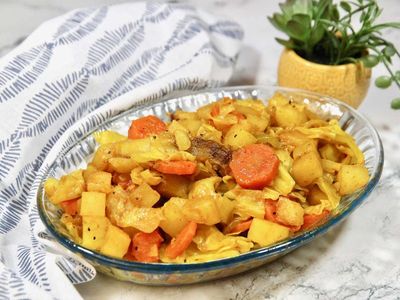
Ethiopia's spiced cabbage stew, the gentle vegetable side that sits between the fiercer berbere-loaded curries on a shared platter and cools whoever's eating against the heat. You soften onions in oil with turmeric until they're pale gold, then bloom garlic, ginger and a small amount of berbere in the same fat - small because this is the mellow dish, not the fierce one. Carrots and potatoes go in first to soften; cabbage joins later. Cover, drop the heat, and let the lot steam-cook for forty minutes until the volume has halved, the vegetables have melted into each other, and the cabbage has almost disappeared into the sauce. Eaten with injera and a few spoonfuls of doro wat or misir wat alongside for contrast.

Ethiopian 50 minutes Serves4
Atchara

Atchara

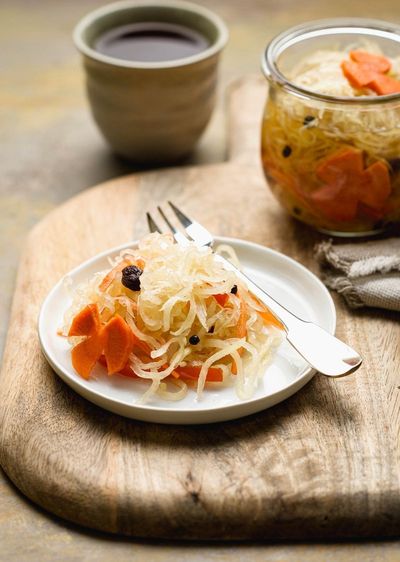
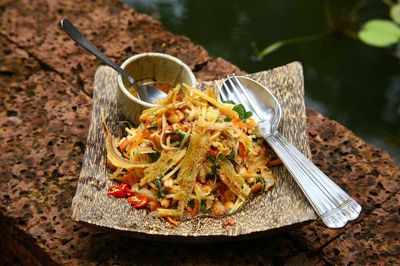
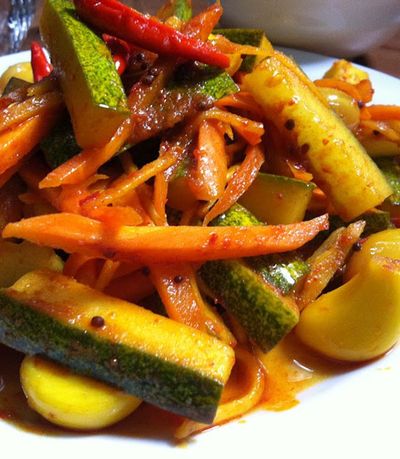
Green papaya is peeled, seeded and shredded on a coarse grater. Carrot, ginger, garlic, red pepper, onion and raisins are all prepared in matching shreds. The vegetables are salted and rested for 1 hour to draw water; rinsed and squeezed dry. A syrup of cane vinegar, sugar and whole peppercorns simmers for 5 minutes. Hot syrup is poured over the vegetables in a sterilised jar. The jar is sealed, cooled and refrigerated overnight before eating. Improves over the following week.

Sides 1 hour 40 minutes Serves1
Authentic Jamaican Curry Chicken

Authentic Jamaican Curry Chicken

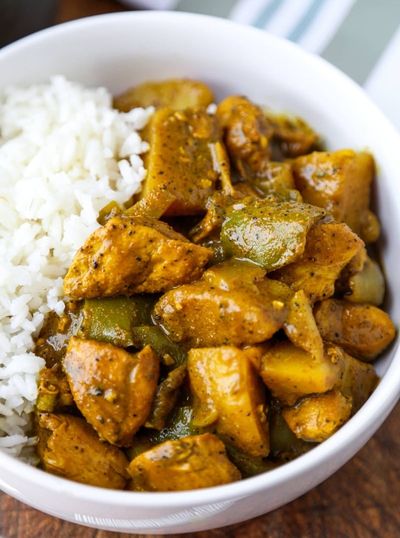
Jamaican curry sits in its own corner of the global curry map: heavier on turmeric and allspice than Indian Madras, lighter on cumin, and built on a technique called "burning the curry" that gives the dish its character. The technique is exactly what it sounds like, dry curry powder hits hot oil and is stirred for 30 seconds until it darkens from yellow to deep gold and smells like toasted spice. That move concentrates the flavours and removes any raw edge. The finished stew is bright yellow stained slightly orange, savoury and aromatic rather than searingly hot, with thyme and a whole pierced Scotch bonnet scenting the gravy without flooring it. Smell: bloomed curry powder, allspice, browned chicken fat. Not difficult, but requires confidence in the 30-second bloom (under-do it and the dish is flat; over-do it and you have to start over). A Sunday-dinner staple across Jamaica and the diaspora, served over white rice with the gravy spooned generously over.

Jamaican 2 hours 30 minutes Serves4
Brown Stew Chicken

Brown Stew Chicken

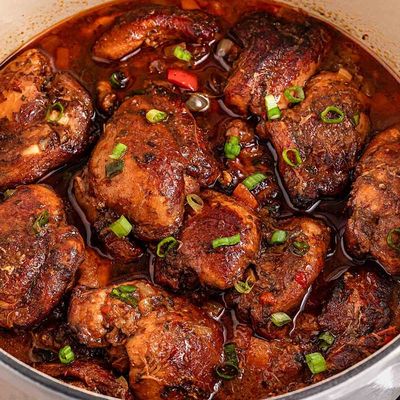
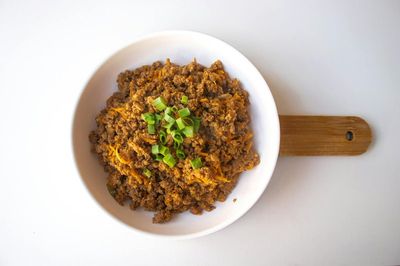
The Sunday-lunch counterpart to goat curry across Jamaica; not curry-driven but built on a deep mahogany gravy that gets its colour from caramelised brown sugar and a few teaspoons of bottled "browning sauce" (Grace is the canonical brand, a concentrated burnt-sugar syrup that's a kitchen staple in every Jamaican household). The chicken is bone-in, marinated overnight in a wet rub of onion, bell pepper, scallions, allspice, ginger and thyme, then browned hard and slow-braised until the meat slips off the bone. Flavour is savoury and slightly sweet with a deep thyme back-note and a whisper of Scotch bonnet heat from the whole pierced fruit in the pot. The gravy is what you actually want; thick, dark, sweet-savoury, glossy with rendered chicken fat, the kind of gravy you'd happily eat over plain rice as its own meal. Smell is browning sugar, thyme, and the unmistakable allspice signature. Patient cooking but easy: marinate the day before, then 30 minutes of active prep and 2 hours of unattended braise. The pairing with [[rice-and-peas]] is non-negotiable across Jamaican households.
Jamaican 4 hours 30 minutes Serves4
Chruok

Chruok

A Cambodian quick-pickle, the bright sharp counter that turns up on every Khmer table next to grilled meats and rich curries. You julienne daikon, carrot and cucumber thin so the brine penetrates fast, then salt them briefly in a colander to draw the water out. The brine is sweet-sour: lime juice, white vinegar, palm sugar, fish sauce (or soy for a vegetarian version) and a sliced bird's-eye chilli. Pour it over the drained vegetables and leave to sit at room temperature for an hour, then refrigerate. Ready in an hour, better after three, best the next day. Eaten alongside grilled fish or chicken, piled into a bowl of rice with anything saucy, or tucked into a sandwich.

Cambodian 1 hour 15 minutes Serves4
Kimchi (Cabbage)

Kimchi (Cabbage)

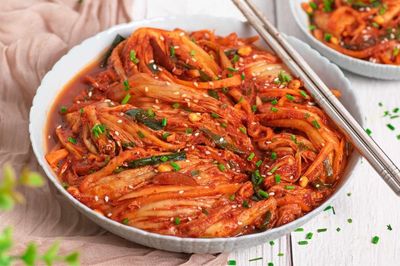
Napa cabbage quarters and salts in heavy salt water 4 hours; rinses well; drains. A sweet rice-flour porridge cooks briefly and cools. Aromatic paste: garlic, ginger, fish sauce, onion, apple/pear, gochugaru, sugar, pulses smooth, mixes with porridge. Daikon and carrot julienne fine; spring onion slices. Everything tosses with the paste. Cabbage stuffs leaf-by-leaf with the spiced mix. Packs tight in a jar. Ferments at room temperature 1-3 days, then refrigerates.

Sides 5 hours 5 minutes Serves1
Ploughman's Pickle

Ploughman's Pickle

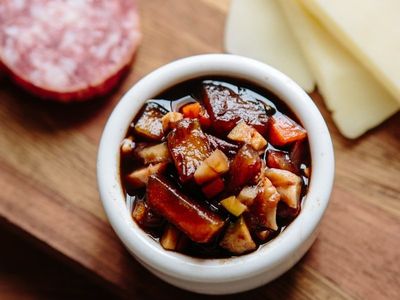
Vegetables, swede, carrot, gherkins, onion, cauliflower, dice into small (4 mm) cubes. Dates chop finely. A pickling base of malt vinegar, dark brown sugar, black treacle, salt, mustard powder, ground cloves and allspice brings to a simmer. The diced vegetables join; everything simmers for 45-60 minutes until the liquid reduces by half and the vegetables are tender but still distinct. Cornflour-and-water slurry thickens the syrup to a glossy chutney consistency. Spooned hot into sterilised jars; sealed; cooled. Matures 2-4 weeks before opening, the flavours develop dramatically with rest.

Snacks 2 hours Serves10
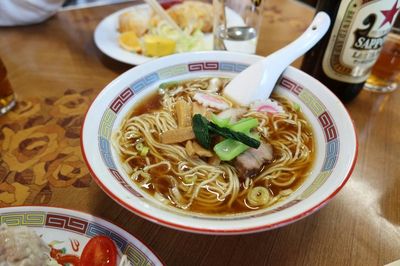
Shoyu Ramen

Shoyu Ramen

Of the four main ramen styles, shoyu (soy) is the cleanest and most aromatic, leaning on a clear roasted-chicken broth rather than the milky richness of tonkotsu or the heavy punch of miso. The technique splits the work: a long, gentle simmer with kombu and shiitake builds the broth, and a separate seasoning sauce called tare goes in bowl by bowl at the end. That last step is what lets you tune the saltiness without compromising the broth's clarity.

Japanese 4 hours 45 minutes Serves6
← Prev Page 1 of 2 Next →