Adana Kebab

Adana Kebab

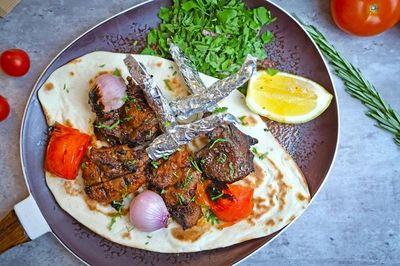
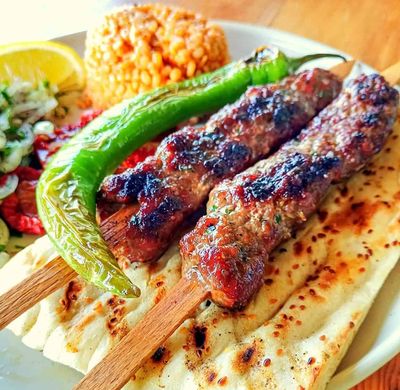
Lamb shoulder and lamb tail fat (or extra fatty trim) chop fine with a heavy knife or zırh (curved blade), proper Adana is hand-cut, never minced through a grinder. The texture has visible pieces of meat and fat the size of small peas. Knead with salt, ground sumac, hot red Aleppo / Maraş chilli flakes (acı biber) and crushed garlic for 6-8 minutes until tacky and clinging to the bowl. Chill for 2 hours. Press a fistful onto a wide flat skewer, working from the centre outward, shaping a 25 cm × 3 cm flat sausage with finger-tip dimples down the length. Grill over hot charcoal 5-6 minutes per side. Slide off skewer onto warm lavash. Rest for 2 minutes; serve.

Turkish 2 hours 42 minutes Serves4
Aussie Burger with Beetroot

Aussie Burger with Beetroot

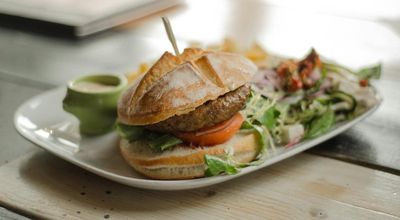
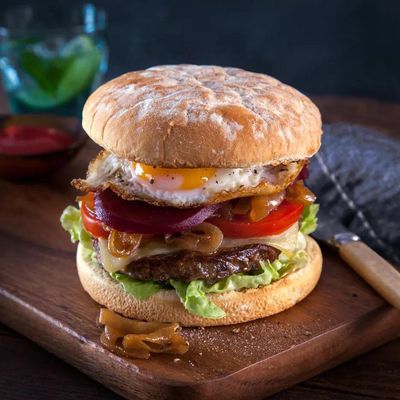
The Aussie burger, sometimes called "the lot", is a milk-bar institution that emerged in Australia in the mid-twentieth century when European immigrants and returning soldiers reshaped the corner takeaway. What distinguishes it from any American or British burger is the insistence on tinned pickled beetroot, a slice of canned pineapple, a fried egg and rashers of streaky bacon, all stacked under a thick beef patty on a toasted bun. The beetroot is non-negotiable: it stains the bread, it stains your fingers, it leaks down your wrist, and it is the entire point. The combination sounds chaotic but works because each layer plays a clear role: sweet pineapple against salty bacon, earthy beetroot against rich egg yolk, sharp tomato chutney cutting through melted cheese. The patty itself is generously sized, hand-shaped, and seasoned simply so the toppings can do the talking. Difficulty is low; the only real skill is timing several pans at once so the egg, bacon and patty all arrive hot together. This is not delicate food. It is built to be eaten leaning forward over a paper wrapper with napkins and a cold drink. Serve it at a backyard barbecue and watch grown adults negotiate the architecture of the bite.

Australian 40 minutes Serves4
Boerewors

Boerewors

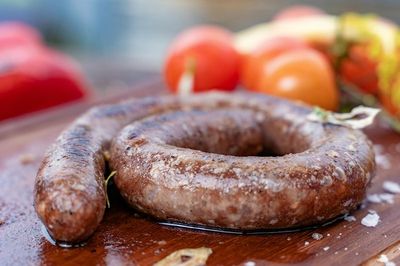
Boerewors, literally "farmer's sausage" in Afrikaans, is the national sausage of South Africa and the obligatory centrepiece of any braai. South African law actually defines it: minimum 90 per cent meat (beef the dominant component, often with pork or lamb for fat), no more than 30 per cent fat overall, no offal, and a defined spice profile led by toasted ground coriander. That coriander is the signature; combined with clove, nutmeg, allspice and black pepper, and brought together with a splash of malt or brown vinegar, it produces a flavour quite unlike any European sausage. The sausage is always coiled rather than linked, and grilled in a single long spiral that can be turned in one piece with a pair of long forks. Difficulty for the home cook is very low if you can buy ready-made boerewors from a South African butcher, deli or online supplier, which is the practical route for most. Making it from scratch needs a meat grinder and sausage stuffer but the spicing is straightforward. Cooking is the part everyone gets wrong: boerewors is a coarse-ground sausage with chunks of fat in the meat, and it cooks at medium heat, never high. Too hot and the casing splits, fat renders out and the sausage shrivels; just right and it stays plump, juicy, with a deep mahogany crust. The classic accompaniments are pap (a stiff white maize porridge), tomato-and-onion relish (sous), or stuffed into a fresh bread roll with tomato chutney and crispy fried onions as a boerie roll.

South African 35 minutes Serves6
Bratwurst with Sauerkraut

Bratwurst with Sauerkraut

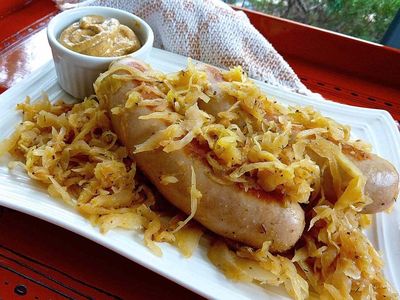
Bratwurst is less a single sausage than a whole family of them, with each German region defending its own version: long thin Nürnberger, plump Thüringer, the white veal Weisswurst of Bavaria, the smoked Frankfurter that became the American hot dog. What unites them is a fine grind of pork (often with veal), gentle seasoning of marjoram, white pepper, mace and a little caraway, and traditional natural casings. Authentic preparation matters: a raw bratwurst should never be slapped onto a screaming grill, because the high fat content scorches the outside before the inside cooks and the casing splits losing all the juice. The German method is a gentle two-stage cook: poach the sausages in barely simmering water or weak beer for 8-10 minutes until the inside is just set, then finish on a medium-hot grill for 3-4 minutes per side to colour the casing and add a touch of smoke. The accompanying sauerkraut is not the cold pickle from the jar but a warm braise: jarred kraut squeezed, then simmered with onion, bacon fat or butter, caraway seed, a bay leaf and a splash of white wine or apple juice for 25 minutes until soft and mellow. Difficulty is low; the only thing to get right is not boiling the sausages (a hard boil makes them swell and burst) and not impaling them on a fork (every puncture is a juice leak). Mustard is non-negotiable: sweet Bavarian süßer Senf for Weisswurst, sharp medium Düsseldorf or Löwensenf for everything else.

German 50 minutes Serves4
Broccoli-Bacon Salad

Broccoli-Bacon Salad

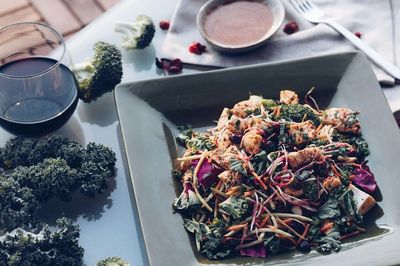
Broccoli-bacon salad is a fixture of American potlucks, summer cookouts, and church suppers, especially across the Midwest and South where it earned the affectionate nickname "broccoli crunch". Its origins sit somewhere in 1980s home cooking, when raw vegetable salads bound in creamy dressings became a casserole-era staple, and it has stuck around because the formula is so satisfying. Broccoli is treated like a salad leaf here rather than a hot vegetable, broken into bite-sized florets that stay assertively crunchy and grassy under the dressing. Crisp bacon adds smoke and salt, red onion brings a clean sharpness, sunflower seeds contribute a nutty crunch, and dried cranberries (or raisins, in older versions) drop little pockets of chewy sweetness across the bowl. The dressing is the secret. A glossy emulsion of mayonnaise, cider vinegar, and just enough sugar to round things out, it coats every floret without weighing them down. The salad is genuinely simple to make and improves with a short rest in the fridge, where the broccoli softens just slightly and absorbs the flavours of the dressing. It pairs wonderfully with grilled chicken, pulled pork, hamburgers, or a baked ham. Once you have made it, you understand why every American family seems to claim a version as their own.

Sides 30 minutes Serves6
Cantonese BBQ Chicken

Cantonese BBQ Chicken

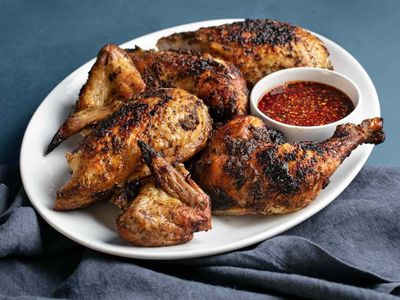
This is summer-BBQ adaptation of the lacquered red roast meats that hang in the windows of Cantonese siu mei shops. The marinade borrows from char siu (hoisin, soy, Shaoxing wine, five-spice, fermented bean curd, garlic, ginger) but pulls back on the sugar slightly because chicken does not need as much sweetness as pork shoulder. Bone-in skin-on thighs are the right cut: they stay juicy on the grill, the skin renders down and crisps, and the bones give the meat shape. A two-stage glaze does the rest. The thighs cook over indirect heat first to render the fat and set the meat, then move directly over the coals for the last few minutes while a honey-maltose mixture is brushed on repeatedly. Every brush of glaze caramelises, blackens slightly at the edges, then gets brushed again. The result is sticky-shiny with a smell that is half five-spice, half woodsmoke. Difficulty is low if you control your heat. A two-zone fire (one side coals piled high, the other side empty) is the only real requirement; on a gas grill, two burners on full and one off does the same job. Serve sliced over plain rice with sliced cucumber and a spoon of chilli oil, or stuffed into bao with hoisin and spring onion.

Chinese 4 hours 40 minutes Serves4
Chapli Kebab

Chapli Kebab

Chapli kebabs are the spiced beef patties sizzling on a wide flat tawa at any roadside grill from Peshawar to Kabul, big enough to wrap a hand around and seasoned with the unusual punch of dried pomegranate seeds and coriander. The mince mixes with grated onion, chopped fresh tomato, ginger, garlic, beaten egg and a little gram flour to bind, plus the signature Afghan spice blend (coriander seed, pomegranate seeds, chilli flakes, cumin and garam masala). A thirty-minute rest lets the gram flour absorb the moisture and the spices marry. Pat thin and wide (the word chapli means "flat" or "slipper-shaped"), then fry hard in oil three or four minutes a side until darkly crusted. Eat hot from the pan, wrapped in fresh naan with sliced raw onion and a green chutney.

Afghanistan 1 hour 10 minutes Serves4
Char Siu

Char Siu

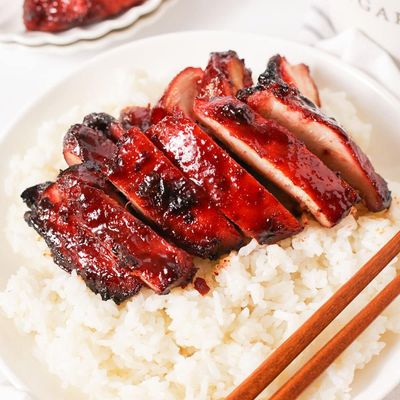
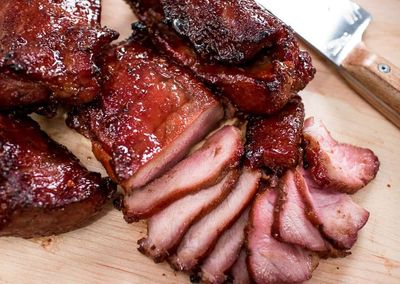
Char siu, literally "fork-roasted" in Cantonese, is the lacquered red barbecue pork that hangs in the windows of siu mei shops across Hong Kong, Guangzhou and any Cantonese diaspora neighbourhood worth knowing. Traditionally long strips of pork are skewered on hooks and lowered into vertical ovens or charcoal pits, where the marinade caramelises into a shimmering, almost brittle crust while the inside stays juicy and pink at the edges. The marinade is a careful balance: hoisin sauce for sweetness and body, light and dark soy for salt and colour, Shaoxing wine for aromatics, five-spice for warmth, fermented red bean curd (nam yu) for the deep umami funk that distinguishes shop-quality char siu from home attempts, and a final glaze of maltose syrup thinned with honey for that characteristic glossy finish. Pork shoulder is the cut of choice because the marbling keeps the meat moist through high-heat roasting; lean cuts like loin go dry and stringy. The classic colour comes from a small amount of red yeast rice or, in modern home recipes, a touch of red food colour, though the dish tastes the same without it. Difficulty is moderate. The marinade needs overnight, and the roasting needs your attention for the final glazing turns under high heat, but the technique itself is straightforward. Serve over rice with greens, in a soft bao bun, or chopped onto wonton noodles.

Chinese 1 hour 10 minutes Serves6
Char Siu Bao

Char Siu Bao

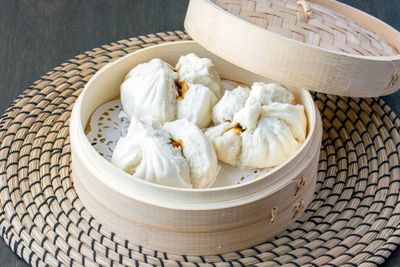
The dough uses a low-protein cake flour (or plain flour with cornflour added) for the snow-white pillowy crumb. Yeast, sugar, baking powder, milk and lard (or vegetable shortening) blend with the flour into a soft sweet dough. Rises for 1 hour. Filling: store-bought or homemade char siu pork is diced fine; shallots fry in oil; the diced pork tosses in with oyster sauce, hoisin, dark soy, sugar, chicken stock and a cornstarch slurry. Thickens to a sticky glaze. Cooled fully. The dough divides into 12 balls, each rolls into a thick disc with a thin edge, filling sits in the centre, pleats wrap up and pinch at the top. Final proof for 25 min. Steamed for 12 min over high heat, the tops should crack open.

Snacks 2 hours 35 minutes Serves6
Chicken Inasal

Chicken Inasal

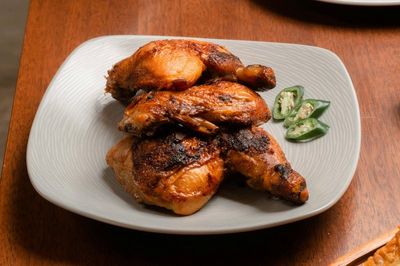
Chicken inasal is the pride of Bacolod City on Negros Occidental, where streetside grill houses serve nothing else: trays of chicken parts skewered on bamboo, smoking over long coal pits, with the cook brushing on bright orange annatto oil every few turns. The marinade is what marks it as Filipino: calamansi (a small, sour citrus halfway between lime and tangerine), cane vinegar, ginger, lemongrass, garlic and a generous slug of black pepper. The annatto oil (atsuete) is just neutral oil warmed gently with annatto seeds until it stains a vivid orange-red; this is the dish's signature look and a mild peppery flavour. Basting starts halfway through cooking so the colour goes onto skin that's already partly cooked, and continues right up to the moment the chicken leaves the grill. Difficulty for a home cook is low; the only special ingredients are calamansi (lime juice plus a touch of orange juice substitutes well) and annatto seeds (sometimes sold as achiote, found in any Filipino or Latin American shop). The flavour profile is sharp, herbal, slightly smoky, with a peppery edge from black pepper rather than chilli, and ribbon-thin lemongrass perfume running through everything. Service is non-negotiable: a heap of garlic rice (sinangag), a saucer of toyomansi (soy-calamansi-vinegar dipping sauce with sliced chillies), and the cook's pot of warm annatto oil for the table.

Filipino 4 hours 50 minutes Serves4
Classic American Potato Salad

Classic American Potato Salad

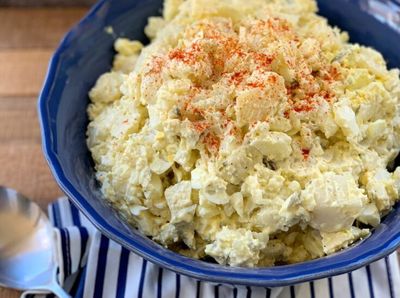
Few dishes feel as woven into American summer as potato salad. It appears at backyard barbecues, church potlucks, and Fourth of July tables from Maine to Texas, and although every family insists their version is the only correct one, the bones are reassuringly consistent: waxy potatoes, hard-boiled eggs, a generous slick of mayonnaise, and the bright bite of mustard and pickle. The taste is creamy and cool, savoury with a gentle sweet-sour tang, punctuated by crisp celery and the sting of raw onion. It smells faintly of vinegar and paprika, like a 1950s deli counter on a hot afternoon. The texture is the real prize. Potatoes should be tender enough to yield to a fork but still hold their shape, so the salad reads as chunky rather than mashed. Difficulty is low, which is part of its charm. The only real technique is seasoning the warm potatoes so they drink in the vinegar before the mayo goes on, a small step that separates a flat salad from a great one. Make it the day before if you can. A night in the fridge lets the flavours marry, the onion mellow, and the dressing settle into every crevice, which is exactly what you want when you pull it out alongside burgers, pulled pork, or grilled chicken.

Sides 40 minutes Serves6
Deviled Eggs

Deviled Eggs

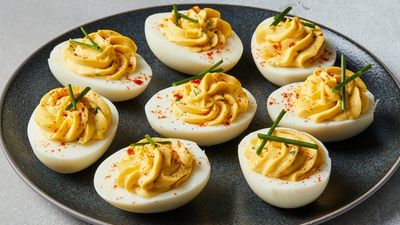
Deviled eggs are one of America's most enduring party foods, a fixture of Easter brunches, Thanksgiving tables, summer barbecues, and Sunday potlucks from coast to coast. The dish itself is much older than its American identity. Stuffed eggs flavoured with mustard, vinegar, and spices appear in Roman writings and remained popular across medieval Europe, but the term "deviled", meaning seasoned hot and spicy, took hold in eighteenth-century England and crossed the Atlantic with Anglo settlers. By the twentieth century, the American version had crystallised into the formula we recognise today: hard-boiled eggs split lengthwise, yolks scooped out and whipped smooth with mayonnaise, mustard, and a splash of vinegar, then piped or spooned back into the whites and finished with a dusting of paprika. The taste is luxurious in its simplicity. Creamy and rich, with a gentle tang and just enough mustard heat to justify the name, set against the cool, slightly springy bite of the white. Difficulty is genuinely low, but two details lift them from good to memorable: cooking the eggs just enough so the yolks are fully set but never grey-ringed, and seasoning the filling assertively, since cold dulls flavour. They are best made the day they will be eaten, although the eggs themselves can be boiled and peeled a day ahead.

Sides 25 minutes Serves6
Ensaladang Talong (Grilled Eggplant Salad)

Ensaladang Talong (Grilled Eggplant Salad)

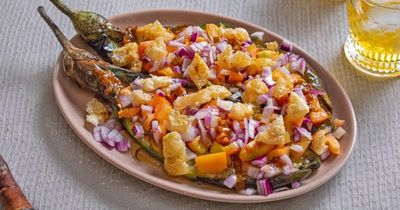
Long Asian aubergines char directly over a gas flame or hot grill until blackened all over and totally soft inside (poke through to test, no resistance). Cool for 10 minutes; peel away the charred skin (it slips off if cooked enough). Tear the flesh into 5 cm strips. Dress with diced tomato, thin-sliced red onion, fish sauce, white-cane vinegar and calamansi juice. Rest for 5 minutes to let the eggplant absorb the dressing. Serve room temperature.

Sides 27 minutes Serves4
Fire-Roasted Jerk Shrimp

Fire-Roasted Jerk Shrimp

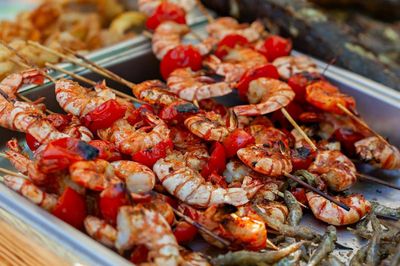
A fast, fragrant, hands-on dish: medium shrimp roasted hard in a beer-and-butter pool, with the jerk flavours (Scotch bonnet, allspice, thyme, garlic, scallion) bloomed into the fat at 260°C. The shrimp themselves are quick-cooked and sweet; the real treasure is what's at the bottom of the dish, a spiced, foaming butter that gets sopped up with hot toasted Cuban bread or baguette. Allspice (called pimento across the Caribbean) is the herbal warmth, Scotch bonnet brings the fruity-fierce heat, and beer adds a yeasty undertone that lifts the butter. Smell hits the kitchen the moment the dish leaves the oven and is genuinely the best part of dinner. Absurdly easy, everything goes cold into one dish, into the oven, 5 minutes, done. The dish is adapted from the Bahama Breeze restaurant chain, where it's a long-running menu staple, but the core technique (shrimp roasted in spiced butter, dipped with bread) is shared across the Bahamas as a casual party-snack format.

Bahamian 20 minutes Serves2
Gai Yang

Gai Yang

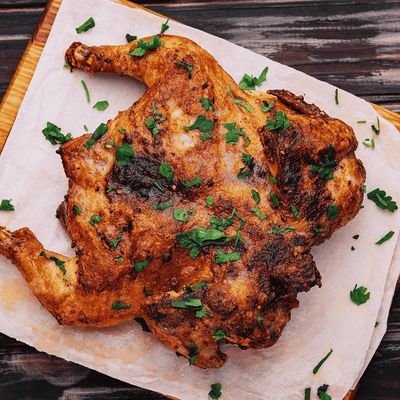
Gai yang ("grilled chicken") is one of the cornerstones of Isaan cooking, the cuisine of north-eastern Thailand that has spread across the whole country and into Thai restaurants worldwide. The defining flavour is coriander root, an ingredient barely used in Western cooking but central to Thai marinades. Pounded in a granite mortar with garlic, white peppercorns and a pinch of salt, it forms an aromatic paste that's then mixed with fish sauce, oyster sauce and a touch of sugar. The chicken is butterflied (spatchcocked) so it lies flat on the grill, marinated for at least 4 hours, then cooked slowly over moderate charcoal. The proper Isaan technique is patient: 30 minutes or more, turning often, sometimes pressed flat between two bamboo splints, so the skin slowly crisps and the meat takes on smoke without burning. The flavour is savoury-funky from fish sauce, peppery-warm from white pepper, deeply garlic-and-herb from the paste, with no chilli in the marinade itself; heat comes from the dipping sauce. Difficulty is low for the home cook: a good mortar or a small food processor makes the paste in 2 minutes, butterflying a chicken is a single cut down the backbone, and any covered grill or kettle does the cooking. Eaten by hand with balls of sticky rice and dipped into nam jim jaew, the toasted-rice-and-tamarind dipping sauce.

Thai 5 hours Serves4
Greek Lamb Burger

Greek Lamb Burger

This burger borrows from the souvlaki and bifteki tradition of mainland Greece, where minced lamb or a lamb-beef mix is seasoned with dried oregano, garlic and a slug of red wine vinegar, then grilled over charcoal until the outside is dark and the inside still blushes pink. Crumbling feta directly into the mince is a home-cook trick: as the cheese melts it leaves salty, creamy seams through the patty rather than sitting flat on top. The result is much more interesting than a beef burger dressed up with Mediterranean toppings. The supporting cast is straightforward and traditional: a quick tzatziki of strained yoghurt, cucumber, garlic and dill; a sharp tomato and cucumber relish loosened with olive oil; and either toasted pita or a soft brioche bun, depending on whether you want this to lean Greek street food or backyard barbecue. Lamb is forgiving on the grill because its fat is so flavourful, but it can taste muttony if overcooked, so aim for an internal temperature around 60 to 63 degrees. Difficulty is low. The only thing to watch is keeping the mince loose: if you pack the patty tightly it goes dense and rubbery, so handle it just enough to hold together. Serve with a glass of something cold and resinous.

Greek 37 minutes Serves4
Green Curry BBQ Aubergine

Green Curry BBQ Aubergine

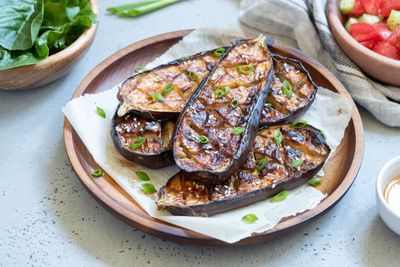
This is a BBQ side built on the flavour profile of Thai green curry rather than a Thai curry itself. The marinade is essentially a small batch of green curry sauce reduced down until thick and clinging, then cooled and rubbed into wedges of aubergine that sit in it overnight. By morning the cut surfaces have drunk in coconut, paste, fish sauce, palm sugar, lime leaf and basil; by the time they hit the grill, the flesh has half-pickled and the surface is coated in a paste that caramelises beautifully over hot coals. The grill does the rest. Direct high heat blackens the marinade into sticky-black patches while the inside steams under its own glaze and softens to spoon-tender. Difficulty is low. The only patience involved is overnight in the fridge. Serve as a centrepiece on a BBQ platter alongside grilled meats, or as a vegetarian main with sticky rice, a wedge of lime and a scatter of Thai basil. It is rich, smoky, gently sweet, salty and herbaceous all at once, with the unmistakable green-curry note running through every bite.

Sides 37 minutes Serves4
Grilled Corn on the Cob

Grilled Corn on the Cob

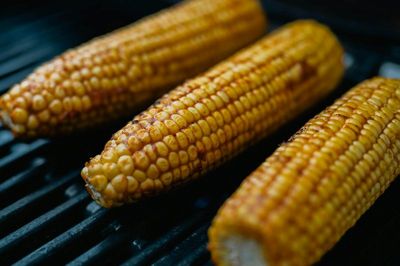
Grilled corn on the cob is the unofficial flag of an American summer cookout. Whether it appears alongside ribs in Kansas City, brisket in central Texas, or burgers on a Midwestern back porch, the technique is essentially the same: husk the cob, lay it directly over hot coals or a hard gas flame, and turn it until the kernels darken and pop with sugar caramelisation. The flavour is straightforward but layered. Heat converts the corn's starches and sugars into something almost popcorn-like in aroma, while a slick of garlic butter melts into every crevice and a squeeze of lime cuts cleanly through the richness. Difficulty is low, but the line between perfectly grilled and overcooked is narrow, since corn can dry out quickly once the kernels begin to wrinkle. The trick is high direct heat for a short time, and constant turning so each side picks up colour without burning through. American corn culture has always borrowed generously from its neighbours, and any conversation about grilled corn eventually circles to elote, the Mexican street-food version slathered in mayo, cotija, chilli, and lime. The recipe here keeps to the cleaner butter-and-chive backyard style, but elote is just a brush away in the notes. Serve hot, straight off the grill, with extra butter and napkins, because nobody eats this neatly and nobody minds.

Sides 22 minutes Serves6
Grilled Eggplant Salad

Grilled Eggplant Salad

A juicy room-temperature salad built around the smoky soft flesh of whole-roasted eggplant. The eggplant flavour anchors everything, mildly bitter, deeply smoky if you can blister the skin first, almost meaty in texture once scooped. Around it, finely chopped tomato and cucumber release their water and form a brothy dressing on the bottom of the bowl, sweetened slightly by the addition of a pinch of sugar and sharpened by black rice vinegar (Chinkiang, the malty, dark, slightly sweet variety, not the white-rice kind). Browned garlic in olive oil folds in last and carries the aroma. Easy to make and forgiving; the only step that requires care is roasting the eggplants long enough that the flesh is properly soft. Sits alongside polo or naan as a fresh, juicy counter to the heavier mains of the Uyghur table, and the kind of dish made every day in summer when eggplants are cheap and good in the Kashgar bazaars.

Sides 45 minutes Serves4
← Prev Page 1 of 3 Next →