In season

May produce

Tap any item to find recipes that use it.

Asparagus 0Rhubarb 0Peas 0Broad beans 0Radish 0Lettuce 0New potato 0Spring onion 0Watercress 0Sorrel 0
Aussie Burger with Beetroot

Aussie Burger with Beetroot

The Aussie burger, sometimes called "the lot", is a milk-bar institution that emerged in Australia in the mid-twentieth century when European immigrants and returning soldiers reshaped the corner takeaway. What distinguishes it from any American or British burger is the insistence on tinned pickled beetroot, a slice of canned pineapple, a fried egg and rashers of streaky bacon, all stacked under a thick beef patty on a toasted bun. The beetroot is non-negotiable: it stains the bread, it stains your fingers, it leaks down your wrist, and it is the entire point. The combination sounds chaotic but works because each layer plays a clear role: sweet pineapple against salty bacon, earthy beetroot against rich egg yolk, sharp tomato chutney cutting through melted cheese. The patty itself is generously sized, hand-shaped, and seasoned simply so the toppings can do the talking. Difficulty is low; the only real skill is timing several pans at once so the egg, bacon and patty all arrive hot together. This is not delicate food. It is built to be eaten leaning forward over a paper wrapper with napkins and a cold drink. Serve it at a backyard barbecue and watch grown adults negotiate the architecture of the bite.
Australian 40 minutes Serves4
Ema Datshi

Ema Datshi

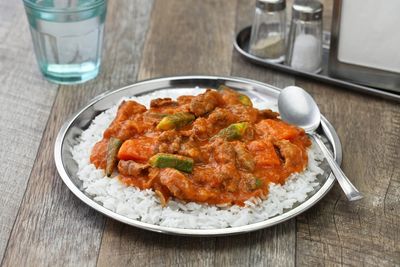
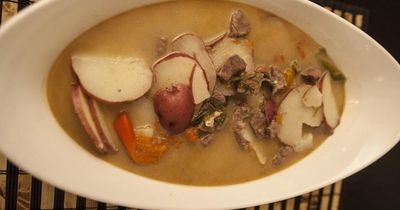
Bhutan's national dish, built on an honest two-ingredient premise: chillies and cheese, in roughly equal volume. The flavour is two things held in tension. The fierce burn of green chillies (jalapeños standing in for the hotter, more floral local Bhutanese varieties) on one side, the funky salty richness of blue cheese (Stilton or Gorgonzola standing in for the traditional yak cheese) on the other. The dairy fat tempers the burn just enough that you can actually eat it, but only just. The burn is the point. You build the dish out with beef, potato and tomato into a proper stew, and everything goes into the pot together to simmer until the cheese melts down into a fierce, creamy, chilli-flecked sauce. Eaten with red Bhutanese rice at most meals in Bhutan. Halve the chilli count the first time you cook it; the locals will laugh, but you'll be able to taste your next meal.

Bhutanese 50 minutes Serves6
Kibbeh Bil Saneeyeh

Kibbeh Bil Saneeyeh

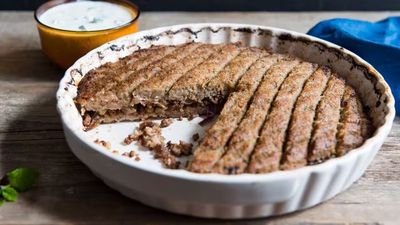
Fine bulgur (#1 grade, the smallest) soaks for 20 minutes; squeezed dry. The kibbeh dough: bulgur, lean lamb mince, grated onion, baharat, allspice, salt and pepper, all blitzed in a food processor to a smooth slightly sticky paste. The filling: onion fries; lamb mince browns with baharat, allspice and cinnamon; pine nuts toast in. A 26 cm round tin (or rectangular dish) is greased; half the kibbeh paste presses into the base; filling spreads on top; remaining kibbeh paste pats over the top. The whole surface is scored into diamonds with a sharp knife, brushed with olive oil, and baked for 35-40 minutes.

Palestinian 1 hour 55 minutes Serves6
Restaurant-Style Ragù

Restaurant-Style Ragù

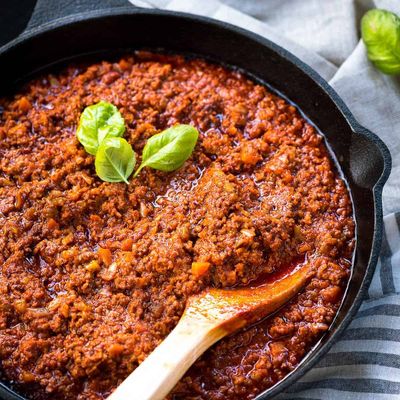
True ragu demands patience, precision, and respect for the process. Ground beef (or a beef and pork mix) browns deeply in batches to build caramelization without steaming. Aromatic vegetables soften slowly until sweet. Tomato paste darkens and concentrates its flavor through caramelization. Red wine deglazes and cooks off. Then comes the long, gentle simmer, 1 hour 45 minutes to 2 hours, where flavors meld and deepen into something far greater than the sum of its parts. This is not a quick sauce; it is an investment in excellence.

Italian 24 minutes Serves4