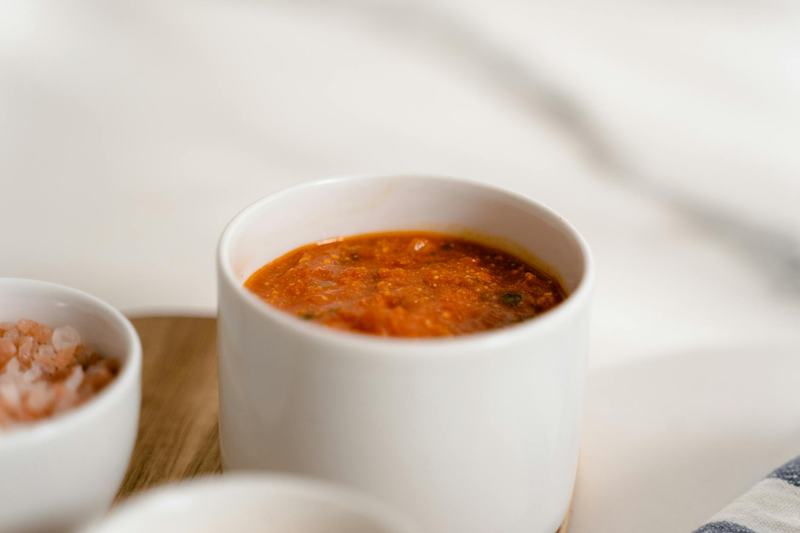
Américaine Sauce
This classic supreme sauce takes time to prepare, but is well worth the effort. Serve it with firm-fleshed fish, such as poached turbot, or a fish soufflé.
Overview
A luxurious, amber-hued sauce featuring tender lobster meat and shells creating a rich, umami-forward base. With tomato, aromatic aromatics, and luxurious cream finishing, this classic French sauce exemplifies refined seafood cookery at its finest.
Ingredients
Main
- 1 live lobster (about 800g, rinsed)
Base
- 100 ml groundnut oil
- 4 tablespoons carrots (very finely diced)
- 2 tablespoons shallots (very finely diced)
- 2 cloves garlic (unpeeled, smashed)
Liquid
- 50 ml Cognac
- 300 ml dry white wine
- 300 ml Fish stock
Vegetable & finishing
- 200 grams tomatoes (very ripe, peeled, de-seeded and chopped)
- 1 Bouquet Garni (with extra tarragon sprig)
- 75 ml double cream (optional)
- 60 grams butter
- 10 grams plain flour
- 1 pinch cayenne pepper
- salt
- pepper
Method
Stage 1 - Prepare lobster
- Plunge the lobster into a large pan of boiling water for 45 seconds. Lift out and place on a board. Separate the head and body and cut the claw joints and tail into rings across the articulations. Split the head length-ways and remove the gritty sac close to the feelers, and the greyish membranes. Scrape out the greenish coral from the head and reserve in a bowl. Season the lobster with cayenne, salt and pepper.
Stage 2 - Sauté lobster
- Heat the groundnut oil in a deep sauté pan over a high heat. When it is sizzling, add the lobster pieces and sauté until the shell turns bright red and the flesh is lightly coloured. Remove with a slotted spoon on to a plate. Discard most of the oil in the pan.
Stage 3 - Build sauce base
- Sweat the carrots and shallots in a pan until soft but not coloured. Add the garlic and return the lobster to the pan. Pour in the Cognac and ignite. Once the flames have died down, pour in the wine and stock. Add the tomatoes, bouquet garni and a little salt. As it comes to the boil, lower the heat and cook gently for 15 minutes.
Stage 4 - Reduce & finish
- Remove and reserve the claws and rings of lobster tail containing the meat. Cook the sauce at a gentle bubble for a further 30 minutes, skimming it once or twice.
- With a fork, mash the lobster coral with the butter and flour, then add to the sauce, a little at a time. Cook for 5 minutes, then add the cream, if using and pass through a fine-meshed conical strainer, pressing with the back of a ladle. Season to taste.
Notes
- Lobster coral: The greenish roe adds delicate flavour and colour; reserve and mash with butter to thicken the sauce naturally.
- Cognac flaming: This step caramelizes flavours; let flames die naturally, never snuff them out.
- Puréeing: For lighter texture, purée the sauce in a blender for 1 minute; always press through sieve after puréeing to remove shell fragments.
Serving
Serve hot with poached turbot, sole, or other firm white fish. Also excellent with fish soufflés and shellfish dishes.
Storage
- Best eaten immediately after preparation.
- Keeps refrigerated for 1-2 days; reheat gently, stirring constantly (do not boil to prevent emulsion breaking).
- Freezes poorly due to cream content and shellfish texture breakdown.
More like this
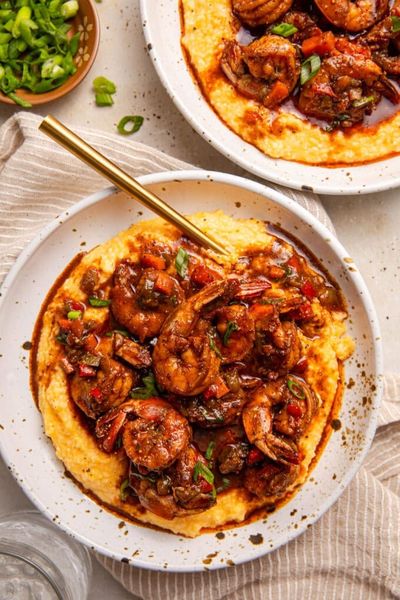
Brown Stew Shrimp and Sweet Potato Grits
A Caribbean-Southern crossover that works because both traditions cook in a similar register: butter, peppers, alliums, slow heat, savoury depth. The brown stew base on top of the dish is Jamaican, bell peppers, carrot, Scotch bonnet, ginger, browning sauce, that mahogany-coloured gravy with the unmistakable allspice-and-thyme signature, and the bed underneath is from Lowcountry Charleston, where sweet potato grits enriched with butter, half-and-half and gouda are a long-running modern Southern restaurant standard. The shrimp themselves are quick-cooked and sweet, picking up the brown stew sauce. Two textures stacked: silky-rich grits, brothy stew on top with bite from the diced peppers and carrot. Smell is sweet-onion-and-browning-sugar over the corn-sweet base of the grits. Not difficult but it's two pans running at once, so timing matters; the grits hold on a low warm setting while the shrimp cook quickly. A modern fusion rather than a traditional dish, popularised by Black American chefs in the 2010s exploring the points of overlap between Lowcountry and Caribbean cookery.
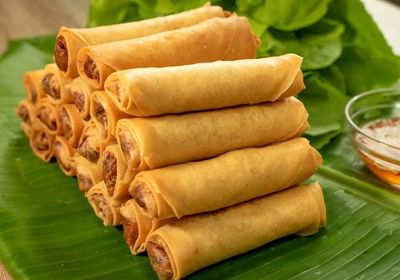
Chả Giò
A pork and prawn filling is bound with shredded carrot, glass noodles and reconstituted wood-ear mushrooms, then rolled tightly in moistened rice paper and fried twice for maximum crunch. The double-fry technique gives chả giò their characteristic bubbled, blistered crust. Served with cool lettuce leaves, herbs and a punchy nước chấm dipping sauce.
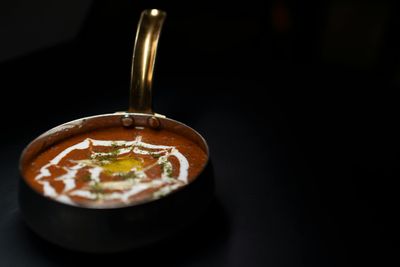
Dal Makhani
Whole black urad lentils and a small handful of red kidney beans are soaked overnight, then pressure-cooked or simmered until completely tender. A tomato-and-spice masala is built separately with onion, garlic, ginger and a careful hand with the spices. The lentils are folded into the masala and simmered, low and slow, for two hours, while butter and cream are stirred through in the final stage. The lentils break down into a glossy, almost-velvet finish.
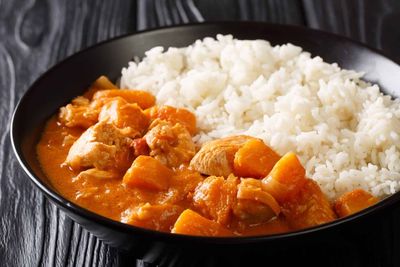
Domoda
Chicken thighs (or lamb) are browned, onions and tomato cooked down with garlic and a single whole chilli, then the meat simmers in stock until tender. A loose peanut paste is stirred in for the final 20 minutes, kept thin enough to ladle. Sweet potato or pumpkin softens in the sauce. A spoon of lime juice at the end balances the richness.