Pichene
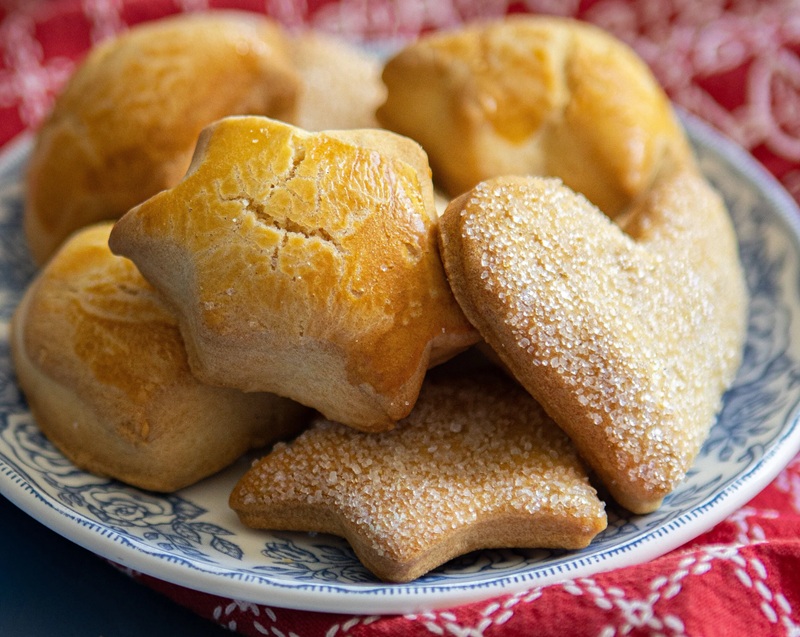
Uyghur cut-out sugar-topped cookies. A simple oil-and-egg dough, rolled thin, cut into shapes, dipped sugar-side-down on a plate of sugar, baked until just-set. A childhood Uyghur snack served with milk tea.
Overview
Soft butter-yellow biscuits with a layer of crystalline white sugar pressed into the top before baking. The flavour is plain and clean: egg, milk, sunflower oil, baking soda, the kind of childhood cookie that's exactly as sweet as a child's tea wants. The sugar crust on top is the signature; pressing each cookie face-down into a plate of sugar before the tray is what bonds the topping, and it gives the finished biscuit a faint crunch over a soft, cake-like crumb underneath. Smell is buttery-vanilla even though there's no vanilla in the recipe. Genuinely easy to make: no chilling, no rolling-to-millimetres, no nuanced technique. Roll, cut, press into sugar, bake. A staple of Uyghur tea tables, packed into tin boxes for car journeys and bus trips across Xinjiang, and the snack that every Uyghur grandmother makes for visiting children. The shapes, stars, circles, hearts, are improvisational, so home versions look as varied as the cutters in the kitchen drawer.
Ingredients
- 100 ml sunflower oil
- 100 g caster sugar
- 100 ml milk
- 2 eggs
- 1 teaspoon baking soda
- 1 teaspoon baking powder
- 250 g plain flour (added gradually until firm)
- Extra caster sugar, for topping
Method
Stage 1 - Dough
- In a wide bowl, mix the oil, sugar, eggs, milk, baking soda and baking powder until smooth.
- Add flour a handful at a time, mixing until the dough is firm enough to handle.
- Knead briefly to bring it together; cover and rest 10 minutes.
Stage 2 - Shape
- Preheat the oven (see below for temperature based on thickness).
- Oil the work surface lightly to prevent sticking.
- Roll the dough to 5 mm thick.
- Cut shapes with cookie cutters.
- Pour the extra sugar onto a flat plate. Hold each cookie face-down, press it firmly into the sugar, then lay sugar-side up on a lined tray.
Stage 3 - Bake
- Thin/crisper: 180°C (160°C fan) for 20-25 minutes.
- Thicker/softer: 200°C (180°C fan) for 12-15 minutes.
- Cookies are ready when the bases are lightly golden.
- Cool on the tray a few minutes before lifting onto a rack.
Notes
- Sugar dip not topping: the sugar adheres because the cookie is pressed firmly into it before baking. Sprinkling on top after baking falls off.
- Dough firmness: add flour gradually. The wetter the dough, the more it spreads. Aim for a dough that lifts off a clean wooden spoon.
Storage
- Keeps 1 week in an airtight tin at room temperature.
- Don't freeze - the sugar crust softens on thaw.
More like this
Uyghur Twisted Donuts
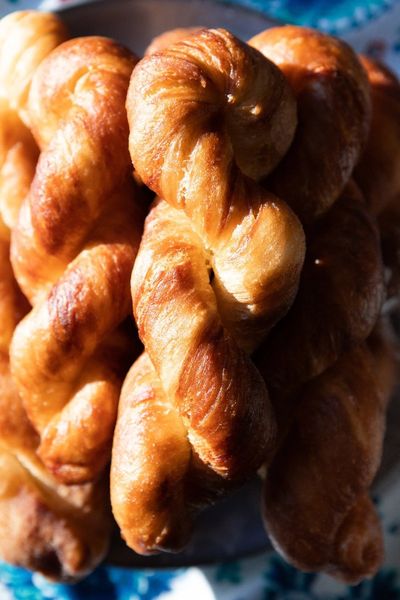
A fried dough with a glassy, slightly biscuit-crisp shell and a soft, chewy, slightly elastic interior, the texture you only get from a yeasted dough that's had a "hot-oil pass" before frying. Pouring smoking oil onto risen dough with a sprinkle of baking soda is the trick: the heat partially cooks the surface gluten, the baking soda neutralises some acidity, and the result fries up with a deeper colour and a crackle that plain donut dough can't manage. The flavour is simple and yeasty, sweetened only by the icing-sugar dusting at the end. Smell is warm wheat and fresh oil. The signature is the shape, a hand-twisted rope that doubles back on itself and counter-twists into a tight spiral, genuinely satisfying to make once you've got the rhythm. A bazaar street snack across Xinjiang, sold from glass-fronted carts next to milk-tea stalls; you eat one warm in the morning with milk tea and it's enough until lunch.
Peushkel
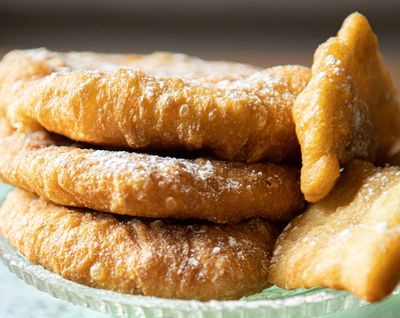
The most stripped-down Uyghur fried bread: flour, water, yeast, salt absent, sugar absent. The honesty of the ingredient list is the point, what you taste is fermented wheat, fresh oil, and the dusting of icing sugar on top. The hot-oil pass before shaping (the same technique that defines [[twisted-donuts]]) gives the surface a faint crackle and a darker fry colour than a plain yeasted dough would manage; the two short slits down the middle let steam escape and create the puffed shape that gives peushkel its silhouette. Smell is warm bread and frying oil, and very little else. Easy enough that this is the snack Uyghur children learn to make first, no measuring fussy quantities, no decorative shaping. Eaten across Xinjiang for breakfast with milk tea, or as a mid-afternoon pick-me-up, and a household staple in homes where every cookable scrap of flour matters; peushkel exists, in part, because it's what you can make when the cupboard is mostly bare.
Aborrajados
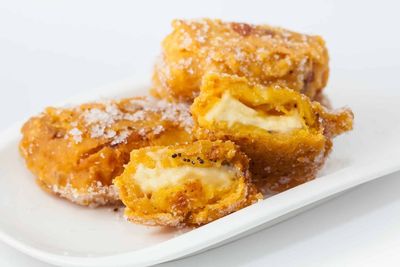
Very ripe (almost black-skinned) plantains peel and slice in half lengthways, then in half crossways, four pieces per plantain. Each piece pan-fries briefly in oil to soften, then mashes between two pieces of parchment with a flat saucepan to flatten to a disc. A cube of cheese sits between two flattened discs, sandwiching the cheese. The whole package dips in a sweet batter of flour, egg, sugar and milk, then deep-fries golden.
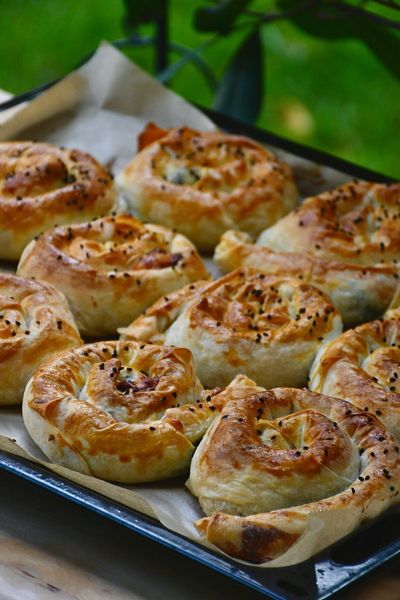
Baked Börek with Khandrajo Filling
Börek are Turkish pastry packages filled with various ingredients: meat, cheese, or vegetables. This vegetarian version uses khandrajo, a concentrated eggplant ragù heavily reduced until jammy and concentrated. Traditional börek-making uses thin, hand-rolled dough (yufka), but modern versions use readily available filo pastry. The key to success is preparing the khandrajo well ahead; it must be completely cool before filling (otherwise it creates soggy börek). The eggplant roasts down to deep mahogany richness through high-heat cooking, creating a sweet-savory filling. Baked börek develop shatteringly crisp exteriors through careful pastry handling and high-temperature baking.