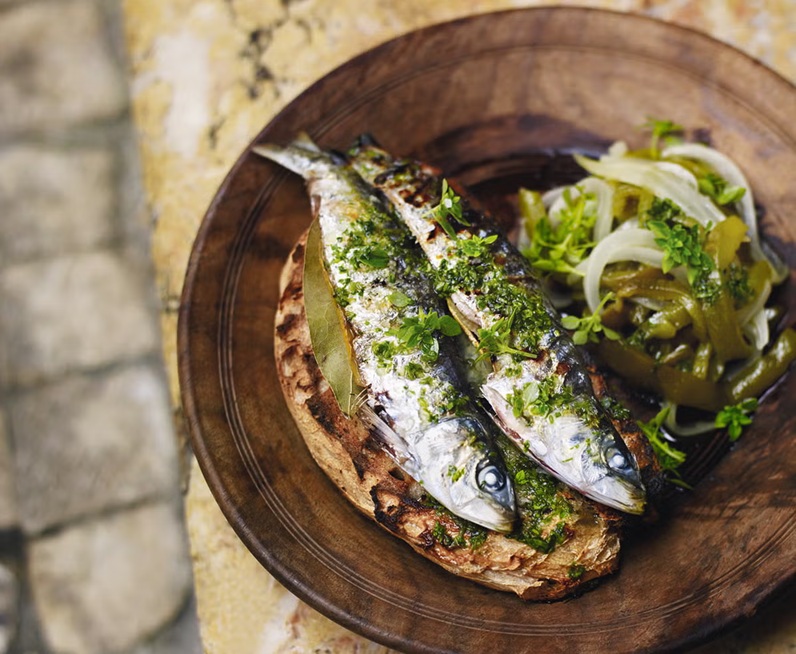
Sardinhas Assadas
Portugal's summer festival fish: whole fresh sardines salted heavily and grilled hard over open coals till the skin chars and the flesh just flakes.
Overview
Grilled sardines are the smell of a Portuguese summer. From June to August the small finger-length sardines come into season, you buy them from the fishmonger in the morning, salt them with coarse salt for an hour to firm the flesh, then grill them whole over charcoal (or under a domestic broiler) for three or four minutes a side until the skin chars and the flesh just lifts off the spine. Eat them with your fingers, off torn bread, with a glass of vinho verde and the lights low. The sea, in a single mouthful.
Ingredients
- 12 fresh whole sardines (small, about 600 g total - ideally finger-length, no longer than your hand)
- 4 tablespoons coarse sea salt (yes, that much)
- Olive oil (for the grill or pan)
To serve
- 4 thick slices of crusty country bread
- 2 red bell peppers (roasted, peeled, sliced, optional)
- 1 small bunch fresh parsley
- 2 lemons (cut into wedges)
- 4 boiled new potatoes (optional)
- A glass of cold vinho verde
Method
Stage 1 - Salt
- Rinse sardines briefly under cold water; don't gut them (intact sardines hold their shape better on the grill - Portuguese tradition is to grill whole; the guts are discarded after).
- Pat dry on kitchen paper.
- Lay on a wide tray.
- Sprinkle generously with coarse salt on both sides and inside the cavity.
- Rest 1 hour at room temperature (the salt firms the flesh and seasons through; excess salt absorbs and is wiped off).
Stage 2 - Wipe off excess salt
- After the salt rest, lift each sardine; rub off any remaining surface salt crystals with your hands.
- Pat dry on kitchen paper.
Stage 3 - Grill (best - charcoal)
- Build a fierce charcoal fire; wait for the coals to be glowing red.
- Brush the grill grate lightly with olive oil to prevent sticking.
- Lay sardines on the hot grate - don't crowd; they should sizzle immediately.
- Grill 3-4 minutes per side, until the skin is deeply charred and the flesh flakes easily from the spine.
Stage 3 (alt) - Domestic broiler
- Heat the grill (broiler) to maximum.
- Line a tray with foil; brush with olive oil.
- Lay sardines on it.
- Position close to the heat (5-10 cm).
- Cook 4 minutes; flip; cook 3-4 more minutes until charred.
Stage 4 - Serve
- Lift sardines onto warm plates over slices of crusty bread (the bread soaks up the juices and oil - eat the bread).
- Arrange roasted pepper strips, parsley sprigs, lemon wedges and boiled potatoes alongside.
Stage 5 - Eat
- Use your fingers. Hold the head and tail; the spine lifts cleanly out of the flesh.
- Eat off the bread that's been collecting the juices. Wash down with cold vinho verde.
Notes
- Fresh whole sardines: Frozen-thawed work but the texture is a step down. Ideally buy from a fishmonger the day of cooking; the eyes should be clear, the gills bright red.
- Salt then wipe: Heavy salting + 1 hour rest + wipe-off is the technique. The fish is properly seasoned without being painfully salty.
- The bread is the plate: Sardines on bread is the Portuguese way. The bread catches the smoky-oily juices; eat it last (or along the way).
Storage
- Best within 30 minutes of cooking. Sardines don't keep.
- Leftover cooked sardines refrigerate 1 day; eat cold on bread the next day.
More like this
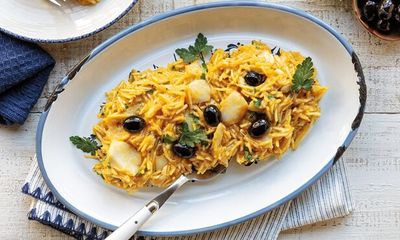
Bacalhau à Brás
Bacalhau à Brás is the dish Portugal turns to when the salt cod, the onions and the eggs all need to find their place in one pan: scrambled together with a tangle of fine matchstick chips so the whole thing reads as somewhere between a hash and a loose carbonara. The salt cod needs the usual day or two of cold soaks to draw the salt down, then a brief simmer to soften it; the onions take their time in olive oil with a few smashed garlic cloves until almost jam-like; the matchstick chips (palha) are fried separately so they stay crisp. Everything comes together in a wide pan, the eggs are whisked in over a low heat, and you stop the moment the eggs coat the cod and potato like a sauce. Never let them set firm. Olives, parsley and a wedge of lemon at the table.
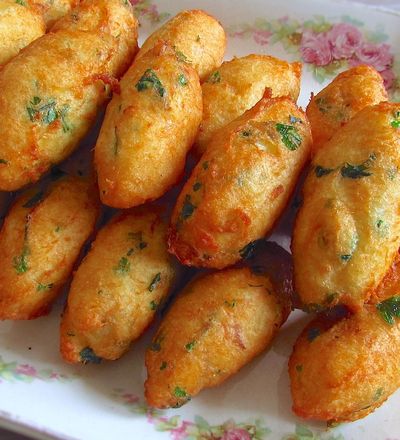
Pasteis de Bacalhau
These are the little salt-cod fritters you'd order at a marble counter in Lisbon, sitting with a glass of vinho verde while the bartender slides a plate across with no ceremony. The recipe itself is simple, dry mashed potato through flaked bacalhau with onion, garlic, parsley and egg, then a brief fry, but it does start the day before because the salt cod wants 24 to 36 hours of cold water soaks to draw the salt out. That step is the one thing you cannot shortcut. Once the cod is desalted, everything else is an afternoon's work: simmer the cod, flake it through warm potato, shape into the three-sided football "quenelles" that are the Portuguese signature, and fry until amber. Eat them warm with a wedge of lemon and a dish of piri-piri on the side.
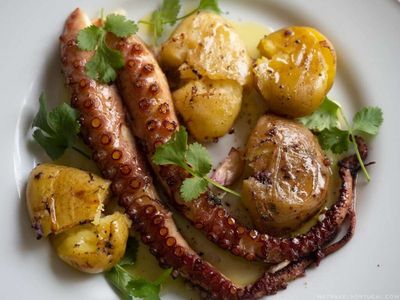
Polvo à Lagareiro
Polvo à Lagareiro is the dish the olive-press workers (the lagareiros) ate at the press during the harvest, and it is still glorious: tender octopus and small smashed potatoes baked together under a generous slick of olive oil. You simmer a whole octopus for an hour with onion and bay until you can pierce a thick part of the tentacle with a knife and feel no resistance. The potatoes parboil, then get punched gently with a wooden spoon so they crack but stay whole. Octopus and potatoes go into a wide oven dish, doused with olive oil, garlic, paprika and bay, and roast hard for 25 minutes so the edges char. The olive oil at the end is not a garnish but the dish itself, and it wants to be the best you have.
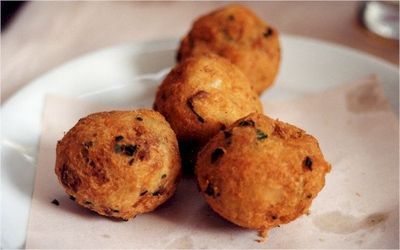
Bolinhos de Bacalhau
Salt cod soaks for 24 hours with several water changes to draw out the salt. Once desalted, it's poached, flaked and folded into hot mashed potato with onion, parsley, egg and a pinch of pepper. The mix is shaped between two tablespoons into the classic oval (two-spoon quenelle shape) and deep-fried.