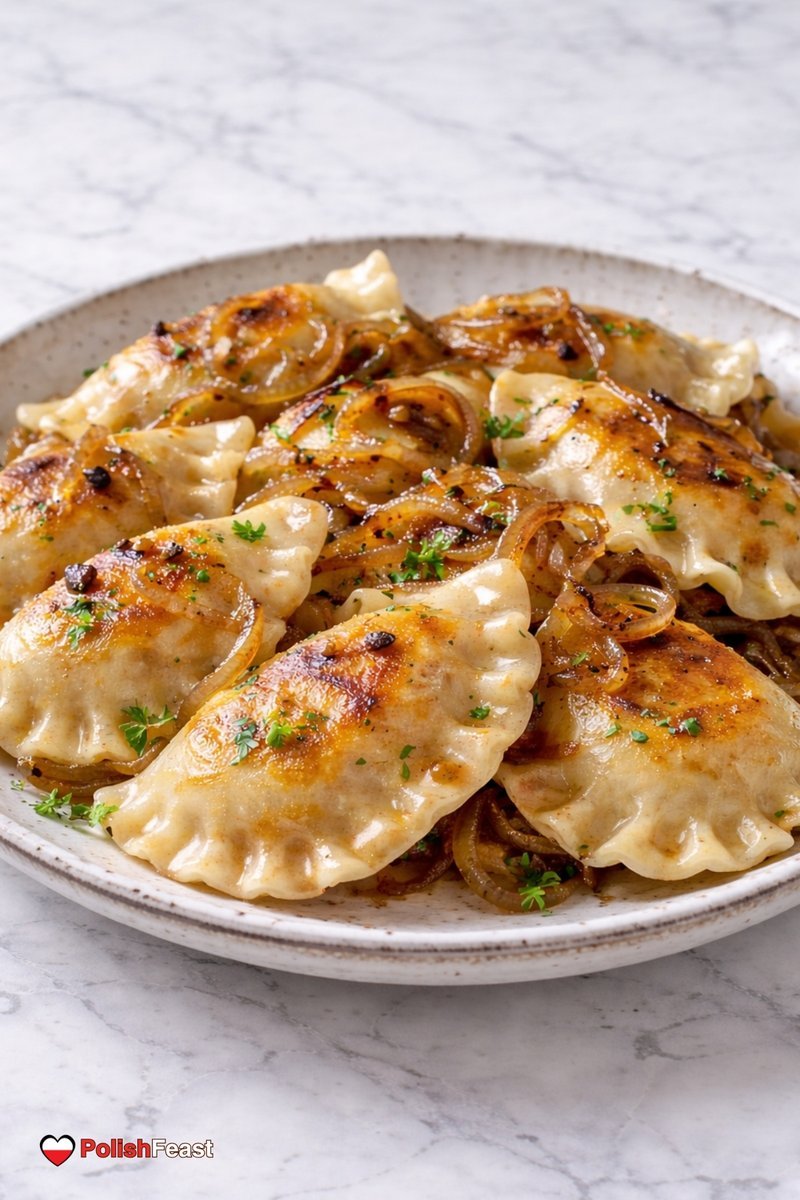
Pierogi Ruskie
Polish dumplings filled with potato, twaróg cheese and fried onion. Boiled, then traditionally pan-fried in butter until the edges crisp. Served with sour cream and more crisp onions on top. The most popular pierogi filling in Poland.
Overview
A simple flour-egg-warm-water dough rests then rolls thin. Discs cut, filling spooned, sealed by hand. Pierogi boil in salted water until they float, then optionally fry in butter to crisp the edges. Caramelised onions go on top with a generous spoon of sour cream.
Ingredients
Dough
- 500 g plain flour
- 1 egg (large)
- 1 teaspoon salt
- 250 ml warm water
- 2 tablespoons vegetable oil
Filling
- 600 g floury potatoes (peeled, cubed)
- 250 g twaróg cheese (or quark, ricotta, or a mix of cottage cheese and feta)
- 1 onion (medium, very finely chopped)
- 30 g unsalted butter
- 1 teaspoon salt
- ½ teaspoon black pepper
To finish
- 50 g unsalted butter (for pan-frying)
- 2 onions (very thinly sliced; for the crisp topping)
- 30 g unsalted butter (for the topping onions)
- 200 g soured cream
- A small bunch of chives (chopped)
Method
Stage 1 - Dough
- In a bowl, whisk the flour and salt.
- Make a well; crack in the egg.
- Pour in the warm water and oil.
- Mix to combine; turn out and knead 8-10 minutes until smooth and elastic.
- Cover; rest 30 minutes.
Stage 2 - Filling
- Boil the potatoes in salted water 15 minutes until tender; drain and steam dry.
- Mash thoroughly while still hot.
- Cook the chopped onion in 30 g butter for 8 minutes until soft.
- Mix the mashed potato, fried onion, twaróg cheese, salt and pepper. Cool.
Stage 3 - Caramelised onions
- While the dough rests, melt 30 g butter in a pan over medium heat.
- Cook the sliced onions for 25-30 minutes until deep golden and crisp at the edges.
Stage 4 - Shape
- Roll the dough on a floured surface to 2 mm thick.
- Cut out 8 cm circles with a glass or cookie cutter.
- Place a heaped teaspoon of filling on each circle.
- Fold over into a half-moon; pinch the edges firmly to seal (a fork crimp helps).
- Set on a floured tray.
Stage 5 - Boil
- Bring a large pot of salted water to a gentle boil.
- Cook the pierogi in batches (don't crowd) for 4-5 minutes until they float.
- Lift out with a slotted spoon.
Stage 6 - Pan-fry (optional but traditional)
- Melt the 50 g butter in a wide pan.
- Fry the boiled pierogi in batches for 1-2 minutes a side until golden and crisp at the edges.
Stage 7 - Serve
- Pile onto a warm plate.
- Scatter caramelised onions over.
- Serve with sour cream and chives.
Notes
- Twaróg is the classic cheese: Polish farmer's cheese, slightly tangy, dry. Ricotta works; a mix of cottage cheese with a little crumbled feta is closer.
- Seal firmly: Pierogi that leak filling in the boiling water lose their shape. Pinch hard, double-pinch with a fork if you need to.
- Pan-fry the boiled ones: Optional but the buttery crisp edge is what makes pierogi ruskie ruskie. Skip and they're just boiled dumplings.
Storage
- Cooked keep 2 days refrigerated; pan-fry to reheat (the texture's better than boiled-and-warmed).
- Raw shaped pierogi freeze 3 months on a tray, then bagged. Boil from frozen, adding 2 minutes.
More like this
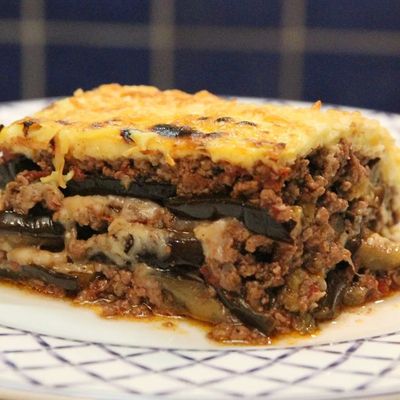
Moussaka
Aubergines and potatoes pan-fry or roast separately. Lamb mince cooks down with onion, garlic, cinnamon and tomato into a rich ragù. The layers go into a deep dish, topped with a cheese-rich béchamel that sets golden in the oven.
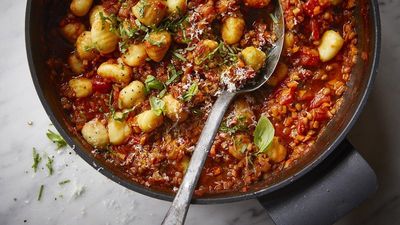
Ragù with Gnocchi
This ragù blends deep browning, layered aromatics, and a long, gentle oven braise to create a sauce with rich umami, silky texture, and balanced brightness. A two-milk finish adds softness, while a quick red wine gastrique lifts the sauce at the end.
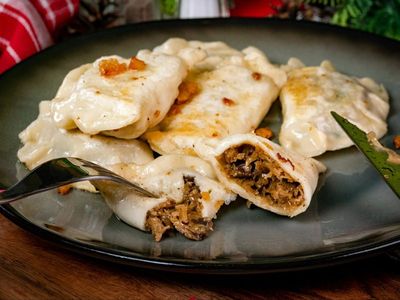
Pierogi Z Kapustą I Grzybami
Dried wild mushrooms (porcini if you can get them) rehydrate; sauerkraut squeezes dry. Both cook down with onion in butter until reduced and intense. The dough is plain, flour, egg, water, salt, oil, kneaded smooth and rested. Each circle gets a teaspoon of filling, folds, seals. Boiled until they float, then often pan-finished in butter with onions and a spoonful of soured cream on the side.
Cheese and Onion Pie
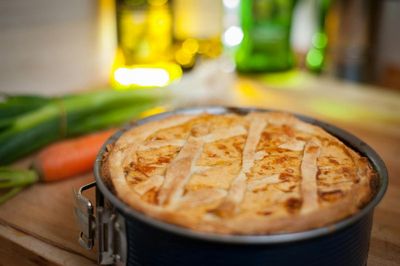
A British pub-and-cafe classic, the vegetarian counter to the meat pies on every menu from Pendle to Penzance. You cook onions slowly in butter until they're very soft and sweet (this is the only step that matters; rush it and the pie tastes raw), then bind them with mashed potato and grated mature cheddar so the filling slices cleanly rather than collapsing the moment a knife touches it. The pie sits in a shortcrust pastry case with a shortcrust lid, gets an egg wash for shine, and bakes until the top is deep gold. Eaten warm with HP sauce or pickled red cabbage on the side, often with chips and gravy if it's a proper pub plate.