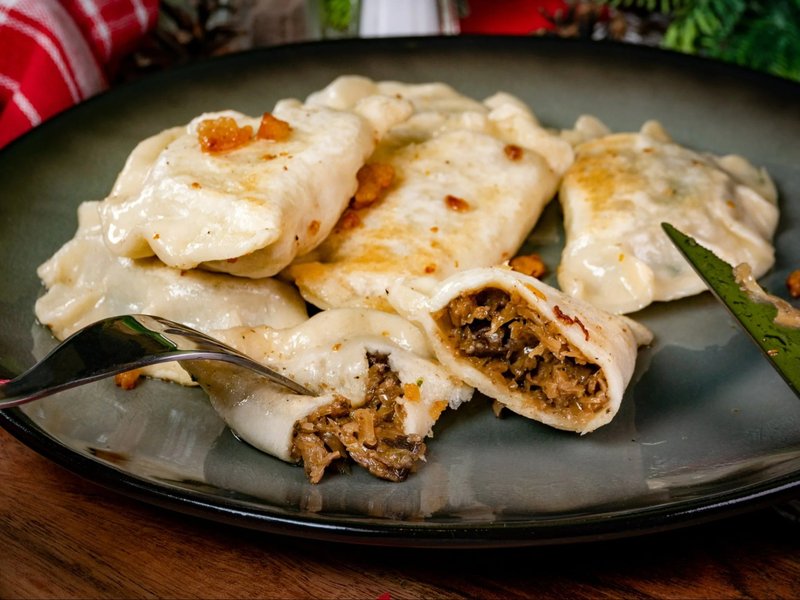
Pierogi Z Kapustą I Grzybami
Polish dumplings filled with sauerkraut and dried wild mushrooms - Christmas Eve pierogi, and an everyday pierogi the rest of the year. The filling is sour, earthy, deep; the dough is slightly elastic from kneading. Boiled briefly, then often pan-fried in butter for a crisp golden bottom.
Overview
Dried wild mushrooms (porcini if you can get them) rehydrate; sauerkraut squeezes dry. Both cook down with onion in butter until reduced and intense. The dough is plain, flour, egg, water, salt, oil, kneaded smooth and rested. Each circle gets a teaspoon of filling, folds, seals. Boiled until they float, then often pan-finished in butter with onions and a spoonful of soured cream on the side.
Ingredients
Filling
- 30 g dried porcini (or wild mushrooms, rehydrated 30 min in 250 ml hot water)
- 500 g sauerkraut
- 50 g unsalted butter
- 2 onions (medium, finely chopped)
- 1 bay leaf
- 5 black peppercorns (lightly cracked)
- 200 g chestnut mushrooms (finely chopped)
- 1 teaspoon dried marjoram
- 1 teaspoon salt (or to taste)
- Black pepper
Dough
- 500 g plain flour
- 1 egg (large)
- 1 teaspoon salt
- 1 tablespoon sunflower oil
- 250 ml warm water
To finish
- 50 g unsalted butter (for pan-frying or tossing)
- 2 onions (sliced; for fried-onion topping)
- Soured cream (to serve)
- Fresh dill (chopped, to garnish)
Method
Stage 1 - Filling
- Squeeze the sauerkraut hard to remove excess liquid; chop roughly.
- Drain the rehydrated wild mushrooms (save 100 ml of the soaking liquid); chop finely.
- Melt the butter in a heavy pan over medium-low heat.
- Cook the onions 10-12 minutes until soft and just golden.
- Add the chopped chestnut and wild mushrooms; cook 8 minutes until they release and reabsorb their liquid.
- Add the sauerkraut, bay, peppercorns, marjoram, salt and 100 ml mushroom soaking liquid.
- Cook 15-20 minutes more, stirring, until the mixture is dry-ish, dark and intensely flavoured.
- Discard the bay leaf and any peppercorns you can find. Cool fully.
Stage 2 - Dough
- Whisk the egg, salt and water; pour into a well in the flour with the oil.
- Mix to a shaggy dough; knead 8-10 minutes until smooth and elastic.
- Cover and rest 30 minutes.
Stage 3 - Shape
- Divide the dough in half (cover the half you're not using).
- Roll thin (2 mm) on a floured surface.
- Cut 8 cm circles.
- Place a teaspoon of filling on each; fold over to a half-moon; pinch firmly to seal.
- Lay on a floured tea towel; don't let them touch.
- Repeat with the second half.
Stage 4 - Fried onions
- Cook the sliced onion in 50 g of butter over medium heat 12-15 minutes until deep golden.
Stage 5 - Boil
- Bring a large pot of salted water to a steady boil.
- Drop pierogi in batches of 8-10. They sink, then rise - cook 2-3 minutes from when they float.
- Lift with a slotted spoon; toss with butter and onions.
Stage 6 - (Optional) pan-fry
- For a crisp version: after boiling, fry the pierogi in butter over medium heat 2-3 minutes per side until golden on both sides.
Stage 7 - Serve
- Pile onto plates; spoon over fried onions and butter; top with dill.
- Pass soured cream alongside.
Notes
- Squeeze the sauerkraut hard: Wet sauerkraut makes wet filling makes pierogi that tear in the boil. The drier the better.
- Two mushrooms: Dried wild ones for the deep umami flavour; fresh chestnut for body. Either alone is fine; together is better.
- Make-ahead: Shape the pierogi and freeze on a floured tray. Once frozen, transfer to a bag. Boil from frozen with 1-2 minutes extra.
Storage
- Cooked pierogi refrigerate 3 days; reheat in a buttered pan.
- Frozen raw pierogi keep 3 months.
More like this
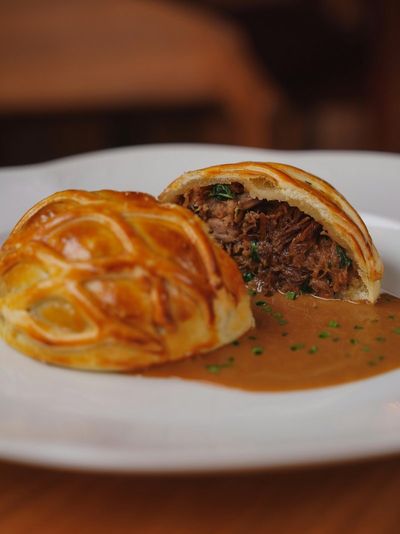
Beef Wellington
The defining British dinner-party showpiece, somewhere between French haute cuisine and English roast tradition, made famous in the modern era by Gordon Ramsay even if the Iron Duke himself probably never ate it. You sear a centre-cut beef fillet hard for colour, smear it with English mustard, wrap it in a tight blanket of mushroom duxelles and prosciutto, then encase the lot in all-butter puff pastry and roast at high heat. The pastry insulates the beef so it cooks gently to medium-rare while the crust crisps to deep mahogany above. The one technical trick the recipe insists on is drying the duxelles thoroughly so the pastry stays crisp underneath rather than going soggy from leaking mushroom water. Sliced at the table into thick rosy rounds, with a red-wine jus and roasted root vegetables on the side, the kind of plate that makes the evening feel like a special occasion before anyone says it.
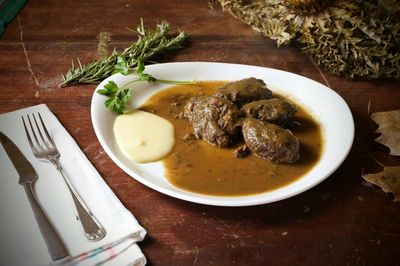
Beef Bourguignon (Boeuf Bourguignon)
Beef Bourguignon is the quintessential French braise, tender beef cubes slow-cooked in a Burgundy wine sauce enriched with pearl onions, mushrooms, and lardons. The combination of wine, beef stock, and a delicate flour thickening creates a deeply savory sauce that clings to the meat. This dish exemplifies classic French technique: patient cooking, careful skimming, and the balance of richness with restraint.
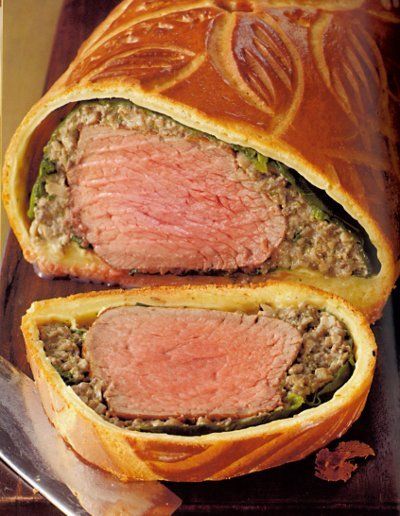
Beef Wellington en Brioche
A showstopping dish featuring a rare beef tenderloin encased in layers of mushroom duxelles, spinach, herb crêpes, and a golden, crispy pastry crust. Each slice reveals a beautiful cross-section of perfectly cooked beef, creamy mushroom filling, and elegant layers. This is fine dining on a plate, impressive enough for the most important dinner party.
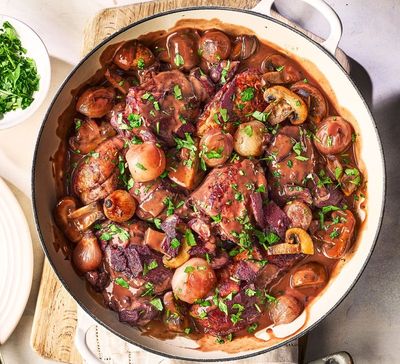
Coq au Vin
Lardons rendered, chicken pieces browned in the fat, then simmered in red wine with brandy, stock, garlic, herbs and tomato purée. Mushrooms and pearl onions are sautéed separately and added at the end so they keep their shape and texture.