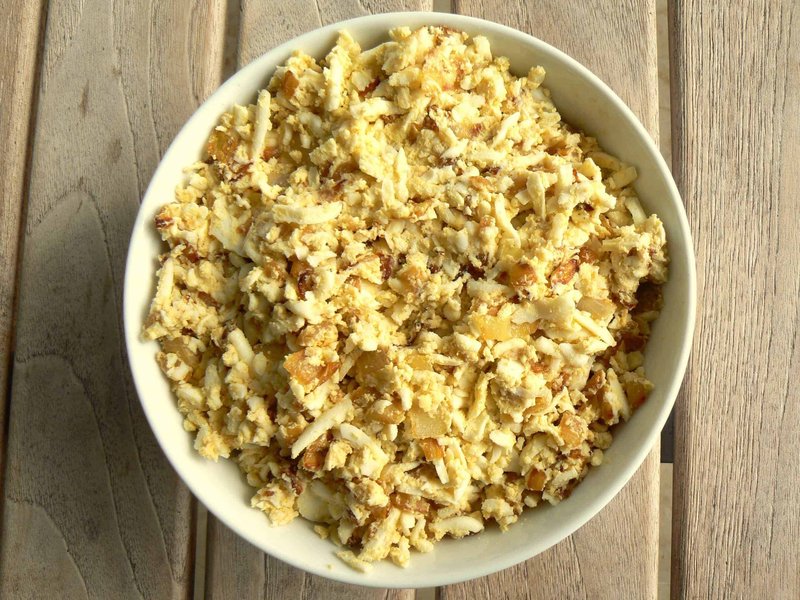
Chopped Egg and Onion
An Ashkenazi Jewish starter: hard-boiled eggs and softened onions chopped to a coarse paste, bound with schmaltz, seasoned only with salt and pepper.
Overview
Eggs hard-boil and cool. Onions cook slowly in oil or schmaltz until deeply golden and sweet. Both chop together with a fork or knife (not a food processor, the texture matters); salt and pepper season. Serve at room temperature.
Ingredients
- 6 eggs (large)
- 2 onions (medium, finely chopped)
- 4 tablespoons schmaltz (rendered chicken fat) or sunflower oil
- 1 teaspoon salt (or to taste)
- ½ teaspoon white pepper
To serve
- Rye bread, matzo, or crackers
- Sliced cucumber (or radish)
Method
Stage 1 - Hard-boil the eggs
- Place the eggs in a pan; cover with cold water by 2 cm.
- Bring to a steady boil; reduce to a simmer; cook exactly 10 minutes.
- Drain; cover with cold water until cool.
- Peel.
Stage 2 - Caramelise the onions
- Heat the schmaltz or oil in a wide pan over medium-low heat.
- Cook the onions 18-20 minutes, stirring occasionally, until deeply golden and very soft. Don't rush - this is half the dish.
- Cool to room temperature.
Stage 3 - Chop and combine
- Roughly chop the eggs in a wide bowl with a fork - coarse, not fine.
- Add the cooled onions with all their fat from the pan.
- Season with salt and white pepper; mix to combine.
- Taste; adjust salt and pepper.
Stage 4 - Rest
- Cover and refrigerate at least 30 minutes (the flavours marry).
- Bring back to room temperature before serving - cold mutes the flavour.
Stage 5 - Serve
- Pile into a small bowl; serve with rye bread, matzo or crackers, and a few cucumber slices to refresh between bites.
Notes
- Schmaltz is the soul: If you can render chicken fat (or buy a jar at a Jewish deli), the dish is transformed. Sunflower oil is the everyday substitute.
- Coarse texture: A food processor or blender turns it into pâté. Chop by hand or use a fork; the pieces of egg and onion should be visible.
- Don't skimp on the onion-cooking: Pale onions give a sharp, raw-tasting spread. The onions need real time to sweeten.
Storage
- Keeps 4 days refrigerated. Bring back to room temperature before serving each time.
More like this
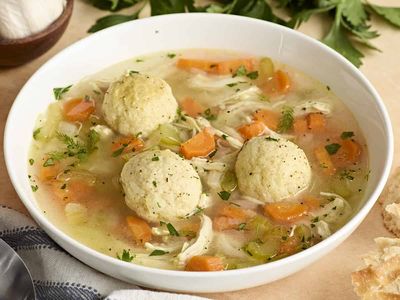
Matzo Ball Soup
Two parallel jobs: a long-simmered chicken broth made from a whole bird with onion, carrot and celery, skimmed clean and finished with dill; and the matzo balls themselves, made from matzo meal, eggs, schmaltz and seltzer, rested in the fridge for the gluten to relax. The balls poach in salted water (never the broth, or the broth clouds), then sit in the hot broth at serving time. Light, comforting, traditional.
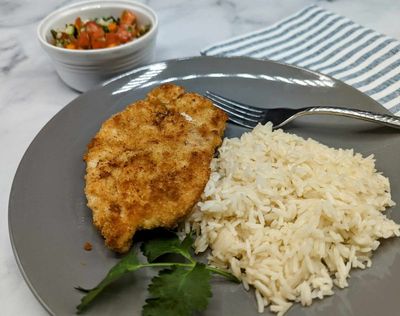
Israeli Schnitzel
Chicken breasts butterfly and pound to 5 mm thick. Dredge through seasoned flour, beaten egg, then panko breadcrumbs mixed with paprika, garlic powder and a pinch of cumin. Shallow-fry in 1 cm of oil at 175°C 2-3 minutes per side until deep gold and crisp. Drain on paper. Lemon wedges.
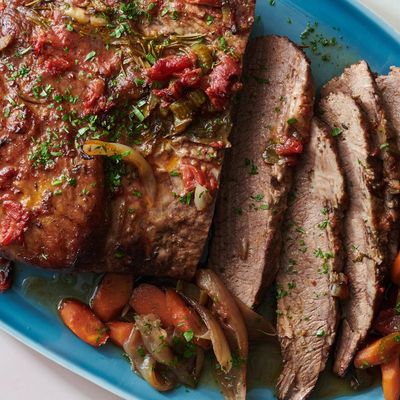
Jewish Brisket
This is the brisket that anchors every Ashkenazi holiday table - Rosh Hashanah dinner, the Passover seder, a Friday-night Shabbat. You sear the meat hard until the surface is mahogany, then build a slow braise on its rendered fat: onions caramelised down to gold, garlic and tomato paste deepened with paprika and brown sugar, wine and stock pulling the lot together. The brisket goes back in fat-side up and the pot disappears into a low oven for three hours plus, until a fork meets no resistance. The trick almost every recipe insists on is the overnight rest. You cool the meat in its sauce, slice it cold against the grain (warm brisket shreds, cold brisket slices clean), then reheat the slices in the sauce before serving. Spoon the onion-rich gravy generously over mashed potato, kasha or buttered egg noodles.
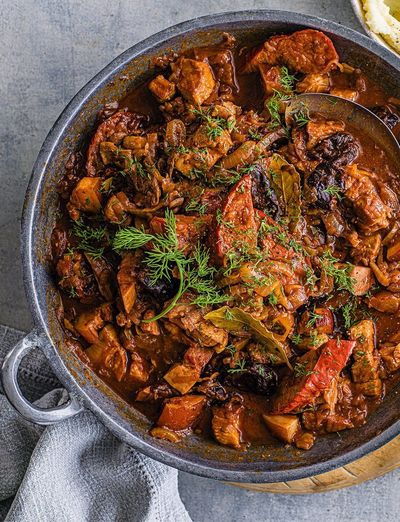
Bigos
Pork shoulder, beef, smoked sausage and bacon all brown separately, then meet sauerkraut, fresh cabbage, dried porcini, prunes, tomato and red wine in a heavy pot. Simmers for 3 hours minimum; reheats over 2-3 days, getting better each round.