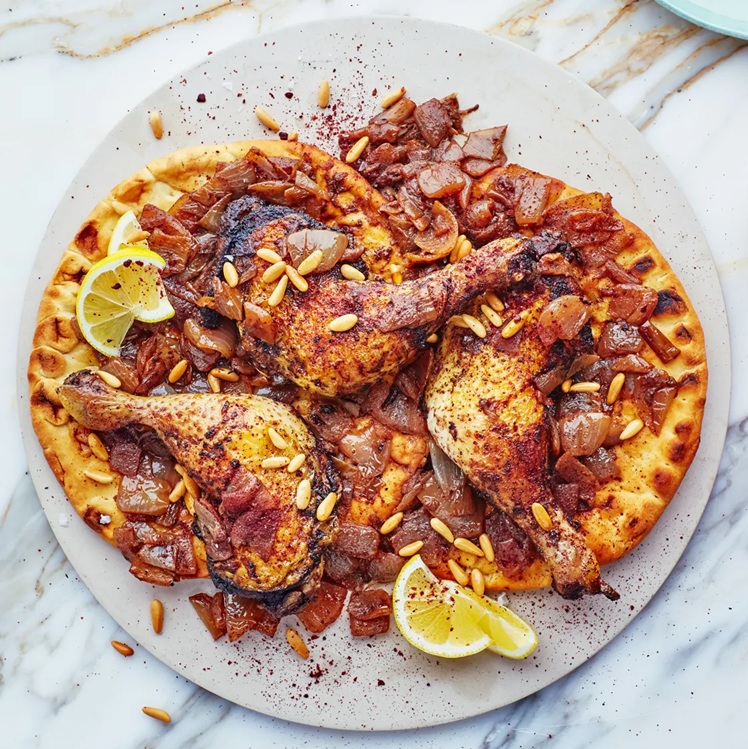
Musakhan
Palestine's national dish: chicken roasted on a bed of slow-cooked, sumac-stained sweet onions, served on flatbread (taboon) with toasted pine nuts. The chicken juices and the onion's sweet-tartness soak into the bread; eaten communally, torn from the same platter.
Overview
A whole chicken or chicken pieces marinate in olive oil, sumac, allspice and lemon. Onions cook slowly in olive oil until completely soft and sweet, then turn deep red-purple from a generous shake of sumac. The chicken roasts on top of the onions; the bread layers under at the end to catch the juices. Pine nuts toast separately.
Ingredients
- 1 whole chicken (around 1.6 kg, jointed) or 8 bone-in chicken thighs and drumsticks
Marinade
- 4 tablespoons olive oil
- 2 tablespoons sumac
- 1 tablespoon ground allspice
- 1 teaspoon ground cinnamon
- 1 teaspoon ground cardamom
- 1 ½ teaspoons salt
- ½ teaspoon black pepper
- 1 lemon (juice)
Onions
- 6 onions (large, around 1.2 kg; sliced thin)
- 150 ml olive oil
- 4 tablespoons sumac (plus more for sprinkling)
- 1 teaspoon salt
To assemble
- 2 taboon breads (large, or 4 flatbreads, around 30 cm; or pita rounds)
- 100 g pine nuts (toasted in a dry pan)
- A small bunch of flat-leaf parsley (chopped)
Method
Stage 1 - Marinate the chicken
- Mix all the marinade ingredients in a wide dish.
- Add the chicken; turn to coat all over.
- Refrigerate at least 1 hour (or overnight).
Stage 2 - Cook the onions
- Heat the 150 ml olive oil in a wide heavy pan over medium-low heat.
- Add the sliced onions and the salt.
- Cook 25-30 minutes, stirring occasionally, until completely soft, sweet and just turning golden - not browned.
- Stir in the sumac; cook 2 minutes more - the onions will go deep red-purple.
- Set aside.
Stage 3 - Roast the chicken
- Heat the oven to 200°C (180°C fan).
- Spread half the onions across a wide oven dish.
- Lay the chicken pieces skin-side up on top.
- Roast 35-40 minutes until the chicken is cooked through (juices run clear from the thickest part) and the skin is golden.
- Pour any pan juices into a bowl.
Stage 4 - Assemble
- Lay the flatbreads on a wide platter (cut to fit if needed).
- Drizzle with some of the chicken pan juices.
- Spread the remaining onions over the bread.
- Place the chicken pieces on top.
- Drizzle with the rest of the pan juices.
Stage 5 - Finish
- Scatter the toasted pine nuts and parsley.
- Sprinkle with extra sumac.
- Serve hot, torn into pieces.
Notes
- Sumac is the dish: Without it, this is just onion chicken. The lemony, fruity tartness of sumac is what makes musakhan recognisably Palestinian.
- Cook the onions properly: Pale, undercooked onions taste sharp; over-browned ones taste burnt. The right colour is deep gold, before browning.
- Taboon bread: A traditional Palestinian flatbread with characteristic dimples from being baked on hot stones. Lavash, naan or large pitas all work as substitutes.
Storage
- Best fresh; the bread softens. Keeps 2 days refrigerated; reheat covered.
More like this
Bunjay-Style Curry Chicken
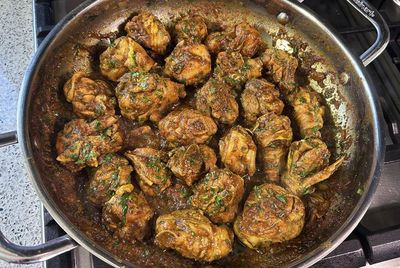
A dry curry rather than a saucy one, "bunjay" is Trinidadian patois for "fry-down", the technique of cooking meat in its own juices until the gravy completely disappears and the spices coat the surface of the meat in a sticky, glaze-like crust. The flavour is concentrated rather than diluted; nothing's been thinned with water or coconut milk, so what you taste is bone-in chicken, rendered chicken fat, and toasted spice. The spice mix is the East Indian Trinidadian signature: turmeric for colour and earth, roasted geera (toasted cumin, ground) for nuttiness, anchar masala for tang, regular curry powder for breadth. The pan oil splits and separates around the chicken at the end, which is the visual cue you're looking for. Smell when the curry powder hits hot oil is deeply aromatic, almost incense-like. Not difficult but it requires attention during the cook-down phase; if you walk away the curry burns onto the bottom of the pan. A Trinidadian household staple, eaten across the country with white rice and dhal, and a clean example of how Indian indentured labourers' descendants in the Caribbean evolved a distinct curry tradition over 150 years.
Chicken Pathia
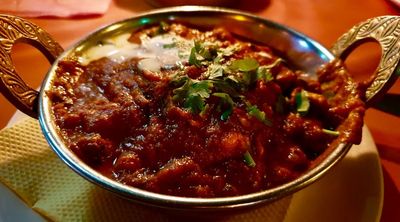
A British-Indian pathia curry with a sweet-and-sour profile, tuned for balanced acidity and a hint of chilli warmth. The recipe uses lemon, mango chutney and sugar for tang/sweetness, with optional red food colouring for the classic curry-house appearance.
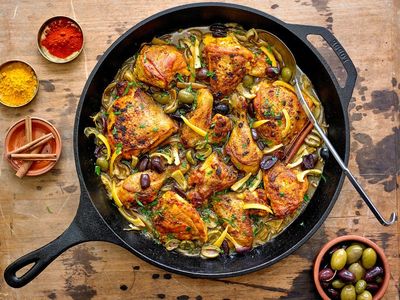
Chicken Tagine with Preserved Lemon and Olives
Bone-in chicken thighs and drumsticks rub with a saffron-cumin-ginger-paprika paste, then braise gently with onion, garlic and stock in a tagine or heavy casserole. Preserved lemon and green olives go in toward the end so they don't disintegrate. Coriander finishes.
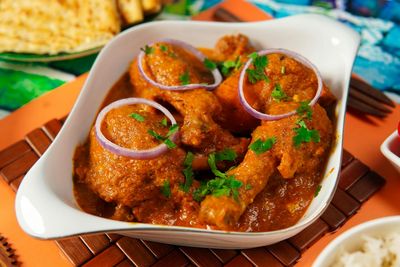
Chicken Xacuti
A xacuti masala is built by dry-roasting fresh coconut to a deep mahogany brown alongside a long list of whole spices (Kashmiri and byadgi chillies, coriander, cumin, fennel, peppercorns, cinnamon, cloves, star anise, mace) and grinding them with onion, garlic and ginger into a black-brown paste. The chicken is browned briefly, the paste added, water poured in to cook the chicken through, and tamarind stirred in to finish. The trick is in the roast: the coconut should be almost-burnt, with the bitterness offset by the tamarind.