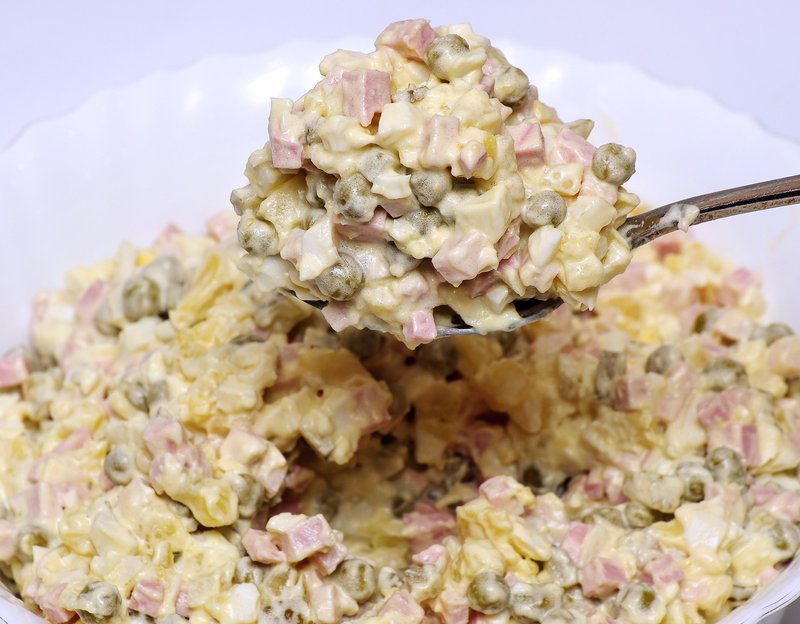
Niislel Salat
Mongolia's 'capital city salad': diced boiled potato, carrot, egg, pickles and sausage bound with mayo. Served chilled at any large meal.
Overview
Potatoes, carrots and eggs boil separately to keep their texture distinct. Cooked smoked sausage (or boiled beef) and dill pickles dice to match. Frozen peas thaw under hot water. Everything mixes with mayo, mustard, salt and pepper. Chills at least an hour so the dressing thickens and the flavours marry. Eaten cold from the fridge.
Ingredients
- 4 potatoes (medium, around 600 g; waxy or all-rounders)
- 3 carrots (medium)
- 4 eggs (large)
- 200 g cooked smoked sausage (frankfurter or doctor's sausage; or boiled beef brisket)
- 4 dill pickles (large, about 200 g)
- 200 g frozen peas (thawed; or tinned, drained)
- 6 tablespoons mayonnaise
- 1 tablespoon Dijon mustard
- 1 teaspoon salt (or to taste)
- ½ teaspoon black pepper
- 4 spring onions (sliced; optional)
- A small bunch of dill (chopped)
Method
Stage 1 - Boil
- Boil the potatoes in their skins in salted water 18-22 minutes until tender; drain; cool.
- Boil the carrots in salted water 12-15 minutes until tender; drain; cool.
- Hard-boil the eggs: place in cold water, bring to a boil, simmer exactly 10 minutes; drain; cool under cold running water; peel.
Stage 2 - Dice
- Peel and dice the cooled potatoes, carrots and eggs into 5 mm cubes.
- Dice the sausage and pickles to match.
- Have the thawed peas drained in a colander.
Stage 3 - Combine
- Tip everything into a wide bowl.
- Mix the mayo, mustard, salt and pepper together; pour over.
- Toss gently with two large spoons - try to keep the cubes intact rather than mashing.
- Stir in the dill (and spring onions if using); reserve a little for the top.
Stage 4 - Chill
- Cover and refrigerate at least 1 hour (3-4 hours is better) so the flavours marry and the dressing thickens.
Stage 5 - Serve
- Spoon onto a platter or into a wide bowl.
- Top with the reserved dill.
- Serve cold from the fridge alongside buuz, khuushuur, or grilled meat.
Notes
- 5 mm dice across the board: Inconsistency makes the salad look messy and dressed unevenly. Take the time to dice properly.
- Sausage or beef: Mongolian niislel salat traditionally uses boiled beef (sometimes including the brisket from making bone broth). Smoked sausage is the everyday city version. Both work.
- Make ahead: Better the next day - the potatoes absorb dressing and the salad becomes silkier.
Storage
- Keeps 3 days refrigerated. Don't freeze (the texture suffers).
Recipes mentioned here
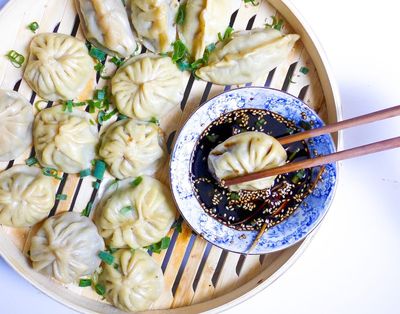
Buuz
A simple flour-and-water dough rests until pliable. The filling is finely chopped (or coarsely minced) lamb or beef mixed with very finely chopped onion, garlic, salt and pepper, minimal additional seasoning, since Mongolian buuz prizes the meat's own flavour. Each wrapper rolls thin in the centre, slightly thicker at the edges. A heaped spoon of filling sits in the middle; the edges pleat together to form a small purse with a hole at the top. Steamed for 15-18 minutes; the wrapper turns slightly translucent.
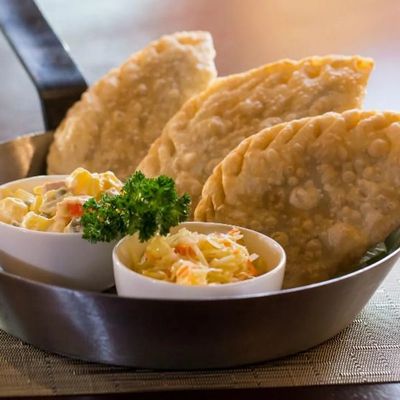
Khuushuur
A simple flour-water-salt dough rests for 30 minutes. Mutton (or beef) is minced finely with onion, garlic, salt and a splash of water (the water makes the filling steam-juicy inside). Dough is divided, rolled into thin 14 cm discs. A heaped tablespoon of filling sits on each disc; the edges are sealed by pinching and crimping into a flat half-moon. Deep-fried for 3 minutes a side in 180°C oil until blistered and gold.
More like this
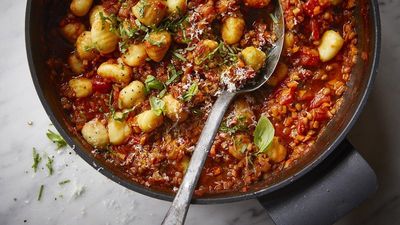
Ragù with Gnocchi
This ragù blends deep browning, layered aromatics, and a long, gentle oven braise to create a sauce with rich umami, silky texture, and balanced brightness. A two-milk finish adds softness, while a quick red wine gastrique lifts the sauce at the end.
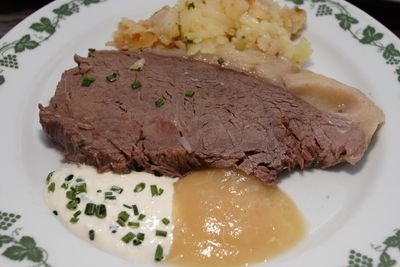
Tafelspitz
The Habsburg Sunday lunch, said to have been Emperor Franz Joseph's favourite dish, and still the proper-occasion centrepiece of any Viennese family table. You poach a whole 1.5 kg piece of beef rump cap very gently for two and a half to three hours in a stock built around onions, root vegetables and marrow bones, until the meat is fork-tender but still sliceable. The technique is the opposite of a roast: no browning, no sear, all the flavour pulled out gently into the broth and held in the slow-cooking beef. Two courses come from the one pot. The clarified broth comes to the table first, scattered with chives and served with semolina dumplings or the fine pancake strips called Frittaten. Then the beef itself is sliced and presented with apple-horseradish sauce, a sharp green chive sauce, crisp pan-roasted Bratkartoffeln and creamed spinach. A glass of cool grüner veltliner alongside; Sunday afternoon in front of you.
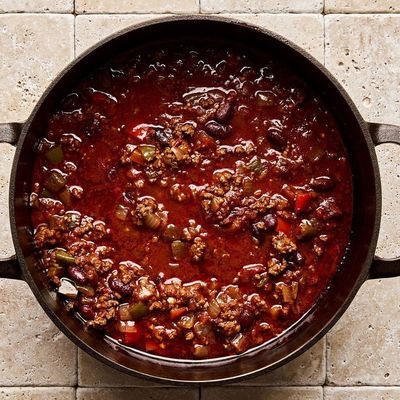
Mixed Meat and Bean Chilli
Chilli con carne is a hearty, flavour-packed stew that celebrates bold Mexican spicing combined with slow-cooked beef, beans, and tomatoes. This version builds deep, complex flavours through toasted whole spices, umami ingredients (marmite and soy sauce), and slow simmering. The result is a comforting, warming dish that improves with time and is perfect for feeding a crowd.
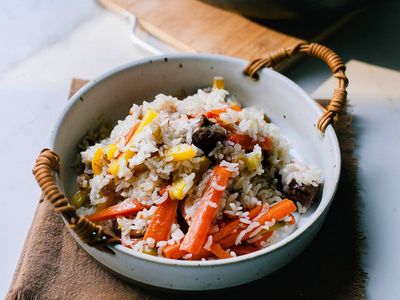
Xinjiang Lamb Pilaf
A dish entirely about lamb fat carried through rice. Each grain ends up glossy and orange-tinted from the rendering, with sweetness from caramelised yellow carrot, honey and raisins, and a savoury back-end from tender lamb cubes. White and black pepper give a quiet warmth; cumin doesn't appear here (unlike in most Uyghur lamb cookery), and that absence is deliberate, this pilaf is sweet-savoury rather than spice-driven. The aroma when the lid comes off is unmistakable Silk Road: lamb fat, sweet onions, honey, faintly resinous from the carrot. Not difficult but it requires confidence in the no-peek phase; the rice cooks by steam trapped under the lid, and lifting it sabotages the dish. Sits at the centre of a long Silk Road pilaf lineage that runs from Persian polo through Uzbek plov to Indian biryani, and a Xinjiang Uyghur celebration dish, the polo at every wedding, every Eid, every guests-coming-tonight household. Eaten with the hands, which is what zhuafan means.