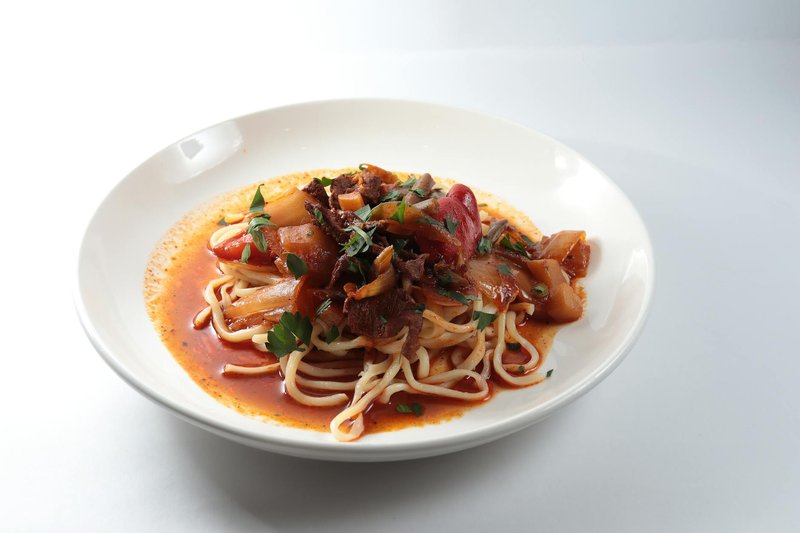
Tsuivan
Mongolia's one-pot noodle dish: hand-cut wheat noodles steamed atop a mutton-and-cabbage stew, the noodles drinking up the meat fat from below.
Overview
A stiff flour-and-water dough rests for 30 minutes, rolls thin, folds and is cut into 3 mm-wide noodle strips. Mutton (fatty) browns in a deep heavy pot; onion, garlic and shredded cabbage cook down on top. A small amount of water goes in (just enough to make steam, not to soup the noodles). The raw noodles are spread on top, the lid clamped on, and everything steams for 15 minutes. At the end, the lid lifts, the contents are tossed together: meat juice and fat coat the noodles.
Ingredients
Noodles
- 300 g plain flour
- 150 ml warm water
- ½ teaspoon salt
Stew base
- 500 g mutton shoulder (or fatty beef, cut into 2 cm cubes)
- 2 tablespoons vegetable oil
- 2 onions (medium, sliced)
- 4 garlic cloves (crushed)
- ½ small cabbage (shredded - about 300 g)
- 2 carrots (medium, julienned)
- 1 teaspoon salt
- ½ teaspoon black pepper
- 200 ml water (or mutton stock)
To finish
- 2 tablespoons soy sauce (modern addition, common today)
- 1 spring onion (sliced)
Method
Stage 1 - Noodles
- Mix flour, salt and warm water to a stiff dough.
- Knead 8 minutes until smooth.
- Wrap and rest 30 minutes.
- Roll out to a thin sheet 2 mm thick.
- Lightly flour the surface; fold the sheet into thirds.
- Slice across the folds into 3 mm-wide strips.
- Shake out the strips; dust with flour to prevent sticking.
Stage 2 - Brown the meat
- Heat oil in a deep heavy lidded pot over high heat.
- Add mutton; brown 5 minutes, stirring, until coloured all over.
Stage 3 - Aromatics and vegetables
- Reduce heat to medium.
- Add onion; cook 5 minutes until softened.
- Add garlic, carrot, cabbage, salt and pepper; stir 2 minutes.
Stage 4 - Steam the noodles
- Pour in the water; bring to a simmer.
- Spread the raw noodles on top of the stew in a loose pile (don't push them down into the liquid - they need to steam, not boil).
- Cover tightly; reduce heat to low.
- Cook 15 minutes (no peeking - the steam is what cooks the noodles).
Stage 5 - Toss
- Lift the lid; sprinkle over the soy sauce.
- With two big forks or wooden spoons, toss everything together - the noodles fall into the meat and vegetables and absorb the juices.
- Cook 2 more minutes uncovered if the bottom is wet.
Stage 6 - Serve
- Pile into wide bowls; scatter spring onion.
Notes
- Steam, don't boil: The water in the pot is for steam only - there should be no broth at the end, just glossy noodles coated in meat juice. If it looks soupy, lift the lid for the last few minutes to evaporate.
- Hand-cut, not shop-bought: Shop-bought noodles are pre-dried and won't absorb the meat fat the same way. The fresh noodles are non-negotiable for the right texture.
- Mutton fat is the flavour: Lean cuts give a thinner dish. Mutton shoulder or breast (or fatty beef) is what you want.
Storage
- Refrigerate 3 days; reheats well in a covered pan with a splash of water.
- Doesn't freeze well - the noodles turn mushy on thaw.
More like this
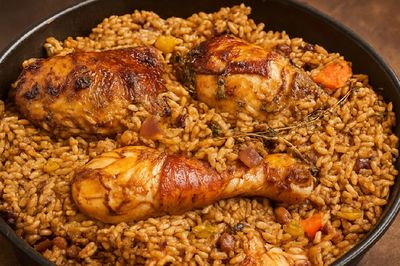
Pelau
Pelau is the Trinidadian one-pot, a meld of West African jollof technique with South Asian pilau influence and a uniquely Caribbean step: caramelising brown sugar in hot oil until it foams and turns dark mahogany, then dropping the seasoned chicken straight in so the meat takes on the colour and the slightly bitter-sweet edge of burnt sugar. This is the signature move of Trinidadian "browning" and it is what makes pelau pelau and not pilaf. Coconut milk, pigeon peas (gungo peas in some other islands), thyme, garlic and a whole Scotch bonnet finish the build. The rice cooks through the whole pot so it absorbs the chicken juices, coconut and burnt sugar, and the finished dish is mid-brown, glossy, mildly sweet, slightly spicy and packed with chicken on the bone. It is not difficult but the burnt-sugar step requires nerve: the sugar needs to go well past caramel into something that smells almost burnt, otherwise the pelau will be too sweet rather than savoury-deep. Cook in a heavy pot with a tight lid and resist stirring once the rice is in. Serve with coleslaw or a sharp green salad, a slick of pepper sauce and a slice of fried plantain.
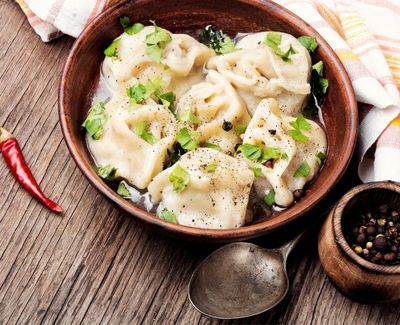
Bansh
A wheat-flour-and-water dough rests for 30 minutes. Mutton mince mixes with onion, garlic and salt with a splash of water (for juiciness). Dough rolls into a long rope; cuts into small (15 g) pieces; rolls each into a thin disc. A teaspoon of filling sits on the disc; the edges pinch into a small money-pouch shape with a pleated top. Simmer in salted water 10 minutes or float in clear mutton broth.
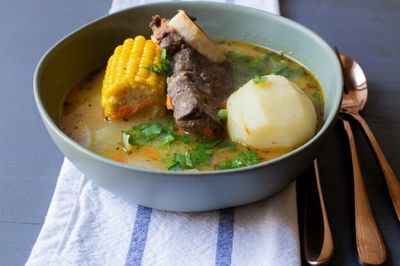
Cazuela de Vacuno
The Chilean Sunday-lunch one-pot, the soup-stew that turns up on every kitchen table from Santiago to Patagonia. You brown bone-in beef shin to colour, then drop it into a simple broth of onion, garlic, oregano and cumin and simmer slowly for ninety minutes until the meat is tender and the broth has built depth. The vegetables go in for the last twenty-five minutes - a thick chunk of pumpkin, a section of corn-on-the-cob, a whole potato, a handful of green beans - each piece kept whole because the cazuela is meant to arrive in the bowl looking like a still life. Rice or vermicelli cooks separately in a ladle of the broth and joins at the very end. Served in deep bowls with chopped coriander and a wedge of lime, the steam rising while you eat. Comfort food at its plainest and deepest.
Chicken and Peanut
When cooking Chinese food, it's essential to think about the flavours and textures of ingredients working in harmony. Juicy chicken combined with succulent baby corn, tender vegetables, and salty, crunchy cashew nuts create a balanced dish where each element complements the others. A glossy sauce ties everything together without overwhelming delicate flavours.