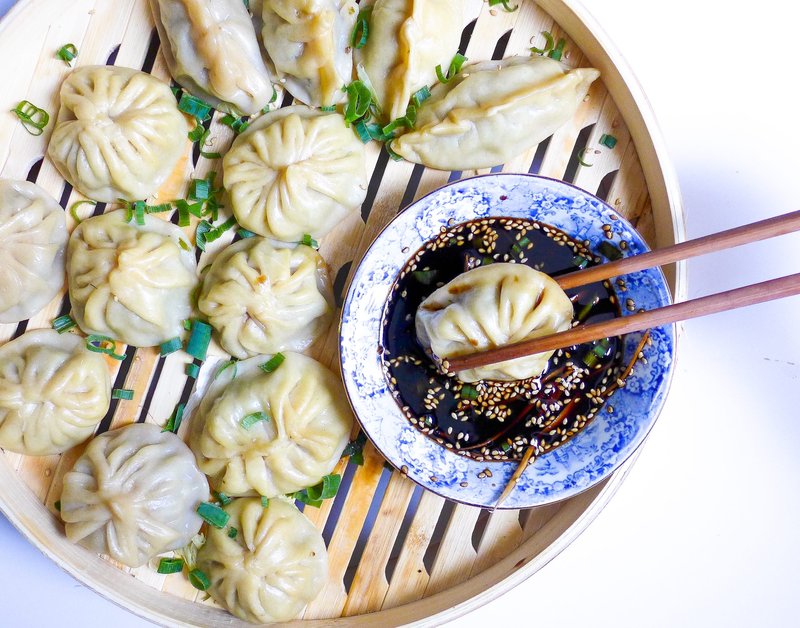
Buuz
Mongolia's signature dumplings: thick wheat wrappers gathered around juicy seasoned mutton, pleated into a small purse and steamed till the wrapper goes glossy.
Overview
A simple flour-and-water dough rests until pliable. The filling is finely chopped (or coarsely minced) lamb or beef mixed with very finely chopped onion, garlic, salt and pepper, minimal additional seasoning, since Mongolian buuz prizes the meat's own flavour. Each wrapper rolls thin in the centre, slightly thicker at the edges. A heaped spoon of filling sits in the middle; the edges pleat together to form a small purse with a hole at the top. Steamed for 15-18 minutes; the wrapper turns slightly translucent.
Ingredients
Dough
- 500 g plain flour
- 1 teaspoon salt
- 250-280 ml warm water
Filling
- 600 g minced mutton (or lamb, 20% fat - fat is essential for juicy buuz; or 60/40 lamb-beef mix)
- 2 onions (medium, very finely chopped)
- 6 garlic cloves (crushed)
- 2 teaspoons salt
- 1 teaspoon black pepper
- 1 teaspoon ground caraway seed (optional, traditional)
- 4 tablespoons cold water (for juiciness)
Soy-Vinegar Dipping sauce
- 4 tbsp light soy
- 2 tbsp rice vinegar
- 1 sliced spring onion
To serve
- Soured cream (or natural yogurt mixed with a little salt)
- Pickled cabbage (suan cai or simple sauerkraut)
- A small bowl of soy-vinegar dipping sauce
Method
Stage 1 - Dough
- Whisk the flour and salt in a wide bowl.
- Add the warm water gradually, mixing with a fork, then bringing it together with hands.
- Knead 8-10 minutes until smooth and elastic.
- Cover and rest 30 minutes.
Stage 2 - Filling
- Combine the minced meat, onion, garlic, salt, pepper, caraway and cold water in a wide bowl.
- Mix with one hand for 2-3 minutes - work it until the mixture is sticky and slightly springy. The water gets absorbed; the result is a juicier dumpling.
- Refrigerate while you roll the wrappers.
Stage 3 - Wrappers
- Divide the dough into 30 walnut-sized balls.
- On a lightly floured surface, roll each ball into a 9-10 cm circle - slightly thinner in the centre, thicker at the edge.
Stage 4 - Shape
- Place a heaped tablespoon of filling in the centre of each wrapper.
- Lift the edges up around the filling.
- Pleat the edges together: pinch a small fold, push it onto the next, repeat around the perimeter - making 12-15 small pleats.
- Pinch the pleats closed at the top, leaving a tiny hole (the steam vent and "drink hole").
- Place finished buuz on a lightly floured tray, not touching.
Stage 5 - Steam
- Set up a steamer with simmering water; line the steamer baskets with parchment (with holes punched) or oil them lightly.
- Place buuz in the steamer with 1 cm gaps between (they don't expand much but should not stick).
- Steam over high heat 15-18 minutes - the wrappers turn slightly translucent and the filling is cooked through.
Stage 6 - Serve
- Lift onto a platter; serve hot.
- Bring soured cream, pickled cabbage and dipping sauce to the table.
- Eat by hand: bite a small hole at the top, slurp the broth, then eat the rest. (A spoon catches escaping juice, but tradition is fingers.)
Notes
- Fat is essential: Lean meat makes dry buuz. Mutton with 20% fat (or beef + lamb mix) gives the proper juicy interior.
- Wrapper thickness: Centre thinner than edge - the bottom of the buuz has more filling and needs a stronger wrapper. With practice, this becomes automatic.
- Pleat count is showy: Mongolian and Tibetan dumpling makers pride themselves on 12, 15, even 20+ pleats per buuz. Six is fine for a home cook.
Storage
- Cooked buuz refrigerate 3 days; reheat by steaming again 5 minutes.
- Frozen raw buuz keep 2 months - steam from frozen, adding 4-5 minutes.
More like this
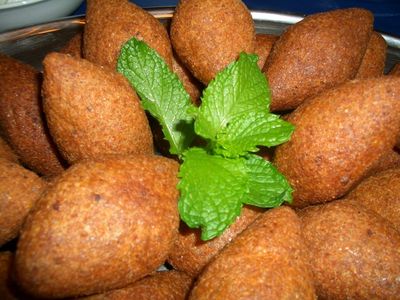
Kibbeh
Fine bulgur soaks until soft. The shell mixture combines bulgur, raw minced lamb, finely-grated onion, salt and spices, then blitzes (or pounds) into a dense, smooth, almost claylike paste. The filling is a separate cooked mince of lamb, onion, pine nuts, allspice and cinnamon. Each kibbeh shell is shaped over a finger; filling stuffs in; the lot pinches closed into a pointed oval. Deep-fries for 5 minutes.
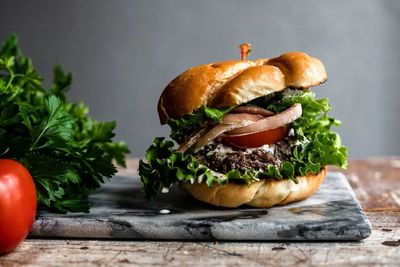
Kofta Burger
Lebanese kofta, sometimes spelled kafta, is minced lamb (often with a little beef) seasoned with grated onion, parsley and the warm spice blend known variously as baharat, sabaa baharat or seven-spice: allspice, black pepper, cinnamon, cloves, nutmeg, cumin and coriander. Traditionally it is moulded around flat metal skewers and grilled over charcoal at a mangal, where it sears fast and stays juicy. Shaping the same mince into a patty for a flatbread sandwich is a natural extension and one you will find in Beirut bakeries and Levantine takeaways from Sydney to Detroit. What makes this burger taste authentic and not just a "Middle-Eastern-spiced lamb burger" is the grated onion: pulled across a box grater so it dissolves into the mince and seasons every gram from the inside, releasing moisture as it cooks. Squeezing out the excess liquid first keeps the patty from falling apart. The sauce is a loosened tahini-yoghurt, tart with lemon and garlic, and the contrast comes from sumac-dusted onions whose sharp, almost berry-like sourness cuts through the lamb's richness. Wrap it in toasted khobz or a soft brioche, depending on the occasion. Difficulty is low. The only skill is restraint with the mince: knead just enough to bind, no more.
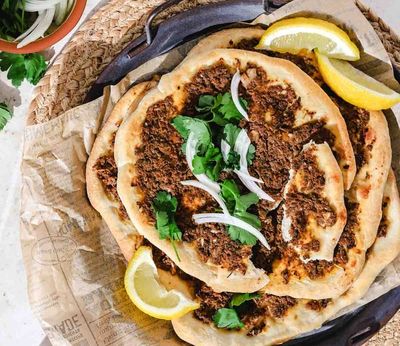
Lahem Bi Ajeen
A soft yeasted bread dough rises for 1 hour. While it rises, the lamb mince is mixed by hand with grated onion, chopped parsley, finely diced tomato, garlic, baharat, allspice, cinnamon, pomegranate molasses, lemon juice and salt, no cooking, the mince stays raw and cooks on the pies. The dough divides into 12 balls; each rolls into a thin 12 cm disc; a heaped tablespoon of the meat mix spreads to the edges. Bakes for 8-10 minutes at 230°C on a baking stone (or hot tray) until the dough is crisp and the meat is glossy and just cooked through.
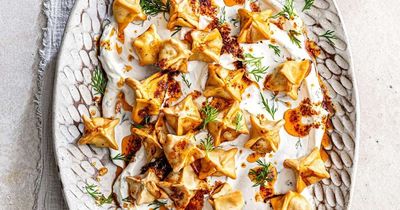
Manti
A simple egg-pasta dough rolls thin. Minced lamb, finely-chopped onion, parsley and spices form the filling, uncooked. Each dumpling is 1 ½ cm square: a teaspoon of filling, four corners pinched up to form a star/parcel. They boil briefly. Yogurt-garlic sauce ladles into bowls; dumplings pile in; melted butter with sumac and paprika pours over hot.