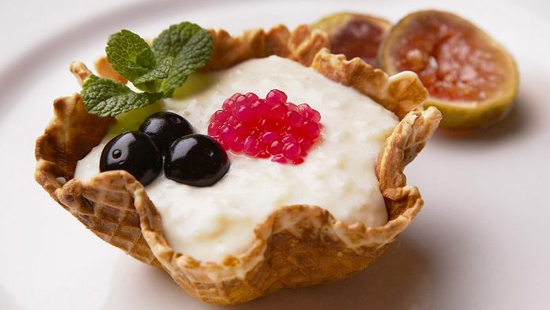
Mongolian Sweet Rice
A festival rice pudding from the Mongolian steppe: pudding rice simmered in whole milk with butter, sugar and raisins until thick and creamy.
Overview
Rice rinses, then simmers in a pot with milk and a knob of butter over low heat, the same technique as risotto but unstirred. After 30 minutes the rice is just-soft. Sugar and raisins go in for the last 15 minutes. The finished pudding is glossy, sweet, and pourable but holds its shape when spooned. Toppings vary: pine nuts and butter, an extra knob of melted butter, or a few drops of fresh cream.
Ingredients
- 250 g short-grain pudding rice (or arborio)
- 1.2 litres whole milk
- 80 g unsalted butter (plus extra to finish)
- 100 g caster sugar
- 80 g raisins
- 1 pinch salt
- 1 teaspoon vanilla extract (optional)
To finish (optional)
- 30 g pine nuts
- A spoonful of fresh cream
- A pinch of ground cinnamon
Method
Stage 1 - Rinse
- Rinse the rice in 3 changes of cold water until the runoff is mostly clear.
- Drain.
Stage 2 - Cook
- In a heavy-based pot, combine the rinsed rice, milk, butter and a pinch of salt.
- Bring to a gentle simmer over medium heat, stirring once to prevent the rice sticking to the bottom.
- Reduce to the lowest possible heat; cover loosely.
- Cook 25-30 minutes, stirring once every 5 minutes, until the rice is just-soft and the milk has reduced by half.
Stage 3 - Sweeten
- Stir in the caster sugar, raisins and vanilla.
- Cover; cook a further 15 minutes on the lowest heat.
- The pudding should be thick and creamy, with the raisins plumped soft.
Stage 4 - Rest and serve
- Remove from heat; rest covered 5 minutes.
- Spoon into shallow bowls.
- Top with an extra knob of butter (let it melt into the rice), a scattering of pine nuts, or a teaspoon of cream and a pinch of cinnamon.
- Serve warm.
Notes
- Low heat for the whole cook: any hint of a boil and the milk scalds at the bottom, giving the pudding a burnt taste.
- Sugar goes in LAST third: added at the start, sugar slows the rice absorbing the milk and you end up with chalky grains.
- Short-grain is non-negotiable: long-grain rice stays distinct; you want the grains to break down slightly into the milk.
- Raisins not currants: raisins plump nicely; currants stay shrivelled.
Storage
- Keeps 3 days refrigerated; the pudding sets firm in the fridge.
- Reheat gently in a pan with a splash of fresh milk to loosen.
- Doesn't freeze well - the texture goes grainy.
More like this
Dresil
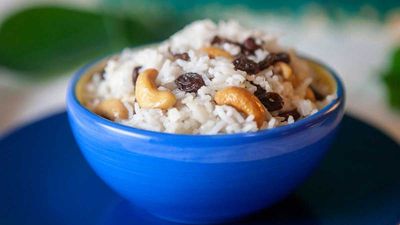
A sweet rice that's about generosity rather than complexity: hot basmati glossed with melted butter, fattened with cashews, sweetened just a little with sugar and softened raisins, and (in the traditional version) studded with droma, small starchy wild roots harvested in central Tibet that look a bit like miniature sweet potatoes and taste vaguely chestnut-like. Without droma the dish is still recognisably dresil, just simpler. Yak butter is the real-thing fat, tangier and stronger than supermarket butter; ghee is the closest accessible substitute. The sweetness is restrained, Tibetan sweets in general aren't very sweet by Western standards, which is part of why dresil eats well alongside salty butter tea. Smell is warm butter and toasted nuts. Easy to make: it's essentially a stir-through. The first thing eaten on the first morning of Losar (Tibetan New Year) in many Central Tibetan households, with each family member taking a small bowl as part of the day-one rituals, and a quiet dish despite being a celebration food.
Sholeh Zard
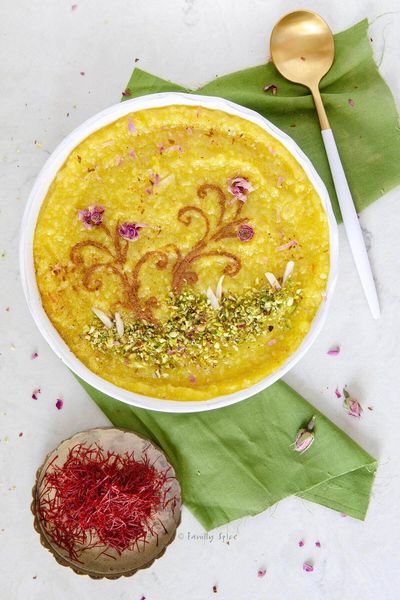
Rice cooks slowly in lots of water until tender and mashable. Sugar dissolves with bloomed saffron; the lot simmers until thick, like loose porridge. Rosewater and a knob of butter join near the end; the pudding pours into shallow dishes to set. Cinnamon dust and pistachio patterns top each serving.
Domoda
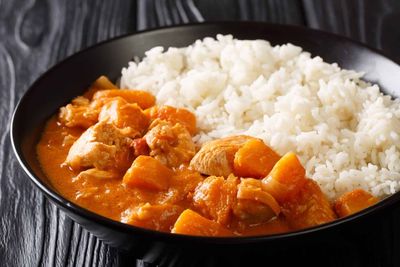
Chicken thighs (or lamb) are browned, onions and tomato cooked down with garlic and a single whole chilli, then the meat simmers in stock until tender. A loose peanut paste is stirred in for the final 20 minutes, kept thin enough to ladle. Sweet potato or pumpkin softens in the sauce. A spoon of lime juice at the end balances the richness.
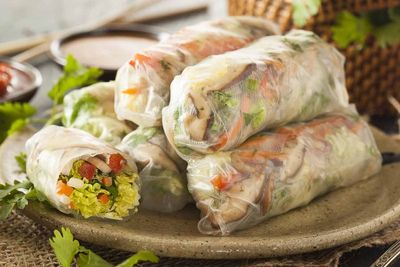
Gỏi Cuốn Chay
Vermicelli noodles cook briefly and get tossed with sesame oil to stop sticking. Tofu pan-fries until golden. Rice paper rounds soak in warm water until pliable; everything stacks on each round and rolls tightly. The peanut sauce blends in seconds.