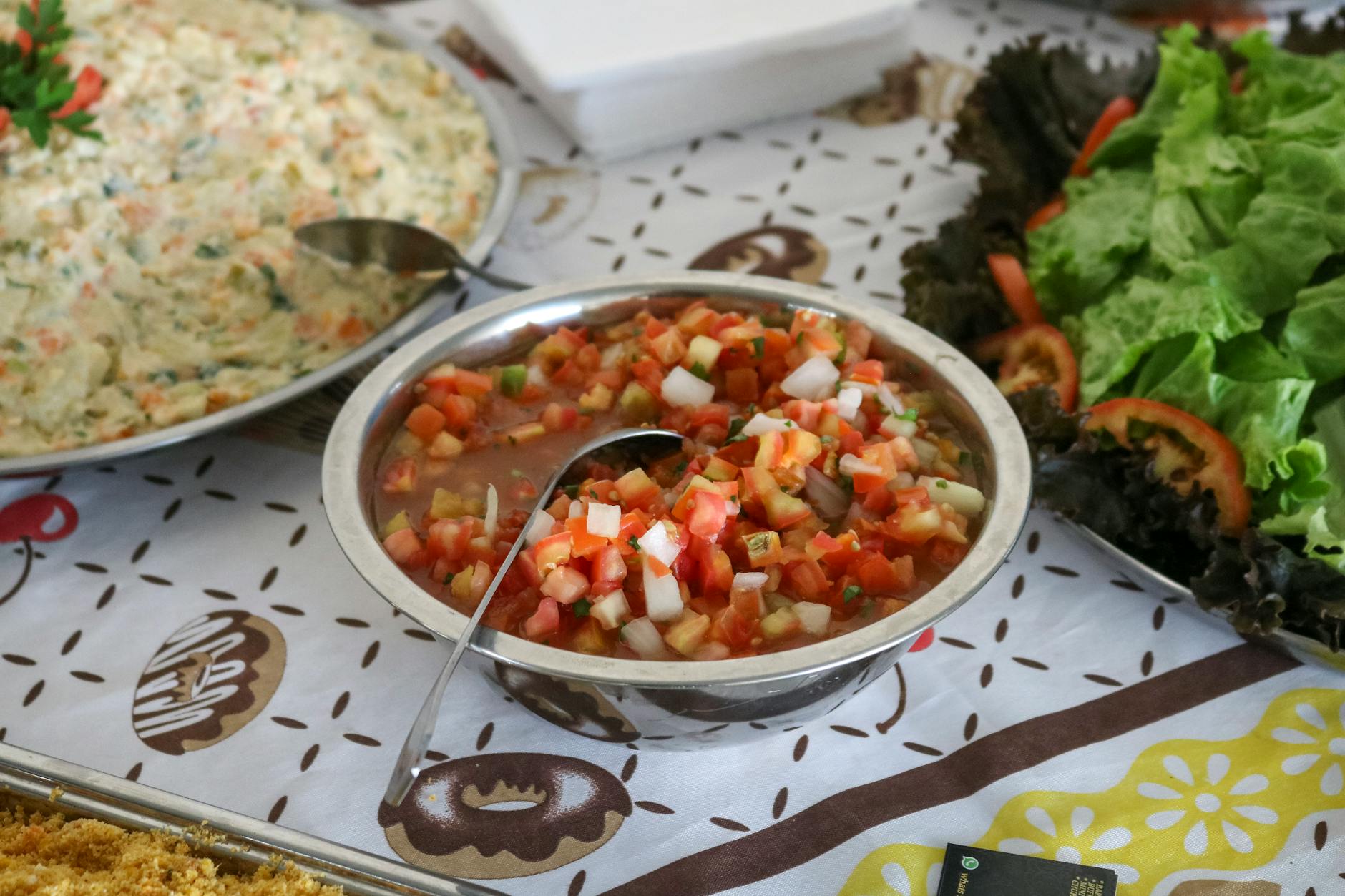
Pico de Gallo
Fresh tomato salsa, also called salsa fresca. Chopped tomato, white onion, jalapeño, coriander and lime; salted and rested so the juices come together. The fresh end of the salsa spectrum.
Overview
Ripe tomato, white onion, jalapeño and coriander are chopped fine and tossed with lime and salt, then left to rest for ½ hour for the juices to draw out and the flavours to combine. Texture matters: each bite should have all four colours. A staple alongside grilled meat, tacos and chips.
Ingredients
- 4 ripe tomatoes (about 500 g, deseeded and finely diced)
- 1 white onion (small, finely diced)
- 1-2 jalapeños (seeded and finely chopped)
- A large handful of fresh coriander (chopped, stems included)
- 2 limes (juice)
- 1 teaspoon salt (to taste)
- ¼ teaspoon black pepper
Method
Stage 1 - Prep the onion
- Place the diced white onion in a sieve and rinse briefly under cold water for 10 seconds.
- Drain well (this knocks the raw sulphur back without losing the bite).
Stage 2 - Combine
- In a bowl, combine the diced tomato, drained onion, jalapeño and coriander.
- Add the lime juice, salt and pepper.
- Toss gently to combine.
Stage 3 - Rest and serve
- Cover and rest at room temperature for 30 minutes for the juices to draw out and the flavours to combine.
- Taste and adjust salt and lime; the salt usually needs another pinch after the rest.
- Serve at room temperature; do not chill (cold dulls the tomato).
Notes
- Deseed the tomatoes: Tomato seeds and jelly turn pico watery. Halve, scoop the seeds out with a thumb or spoon, then dice.
- Cut size matters: All four ingredients should be roughly 4-5 mm dice; even sizes give even bites.
- White onion, not red: Red onion is sweeter and tints the salsa pink as it sits. White onion is the traditional choice and keeps the colour clean.
Storage
- Best within 4 hours of making.
- Refrigerate up to 2 days; the texture softens and the herbs blacken, but the flavour holds.
More like this
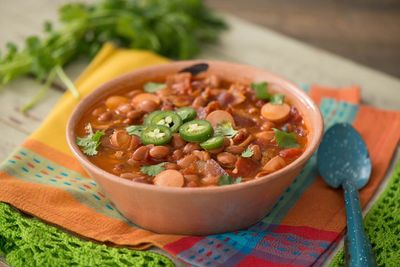
Frijoles Charros
Pinto beans are soaked overnight, then simmered with onion and garlic until tender. A separate pan crisps the bacon, browns the chorizo and softens the onion, jalapeño and tomato into a thick base. The two are combined for a final simmer with coriander, and the broth turns smoky, salty and rich. Eaten by the spoonful from a bowl, or set out alongside grilled meats and tortillas.
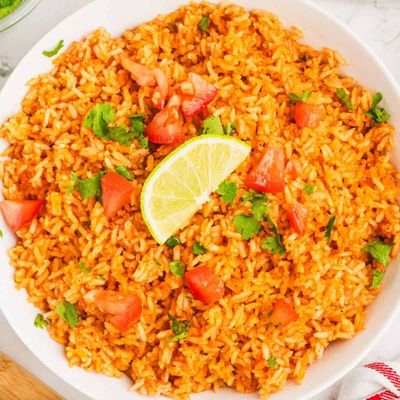
Mexican Rice
Long-grain rice (not basmati or jasmine, they're too slim) toasts in oil over medium heat until pale gold and nutty, 3-4 minutes. Diced onion and garlic join briefly. A blender pulses a ripe tomato, garlic clove, ½ onion and a few sprigs of coriander into a smooth red puree; this strains through a sieve to remove fibre and pours into the pan with the toasted rice, along with chicken stock, salt, cumin and a bay leaf. Brought to a simmer, covered, reduced to lowest heat, cooked for 18-20 minutes until the liquid is absorbed and the rice is tender. Off heat 10 min rest; fluffed with a fork; finished with frozen peas and chopped coriander.
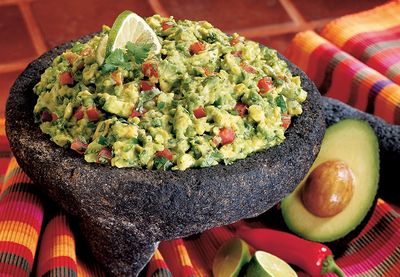
Guacamole
Avocados halve, scoop out, mash chunky (not smooth, texture matters). Onion finely chops, jalapeño deseeds and chops, coriander chops. Lime juice, salt, mix. Eat immediately or press cling film flat onto the surface to slow oxidation.
Birria
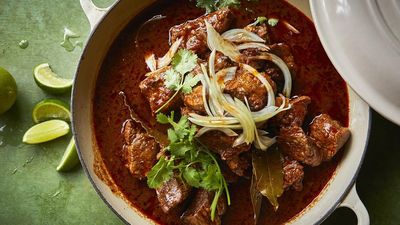
Birria is a Mexican braise of long, patient ambition. Originally a goat or lamb dish from Jalisco, it has long since adopted beef in much of Mexico and almost entirely in the popular taco version. The flavour comes from a layered chile base: guajillo for fruit and colour, ancho for raisin sweetness, pasilla for earthy depth, and a handful of arbol for a sharper heat. These are simmered with onion, garlic, cinnamon and peppercorns, blended smooth with chipotles in adobo and fire-roasted tomato, then poured over seared chuck and short rib for a long oven braise. Three hours later the meat is meltingly tender, sitting in a rust-red consomme that is the whole point: ladled over the shredded beef in a bowl, scattered with raw onion, cilantro and lime, or used to dip crisp taco shells for the now-iconic quesabirria. The recipe takes time but very little technique; almost everything happens unattended in the oven. Plan ahead and make it a day in advance so the flavours settle and the fat lifts cleanly off the top before you reheat.