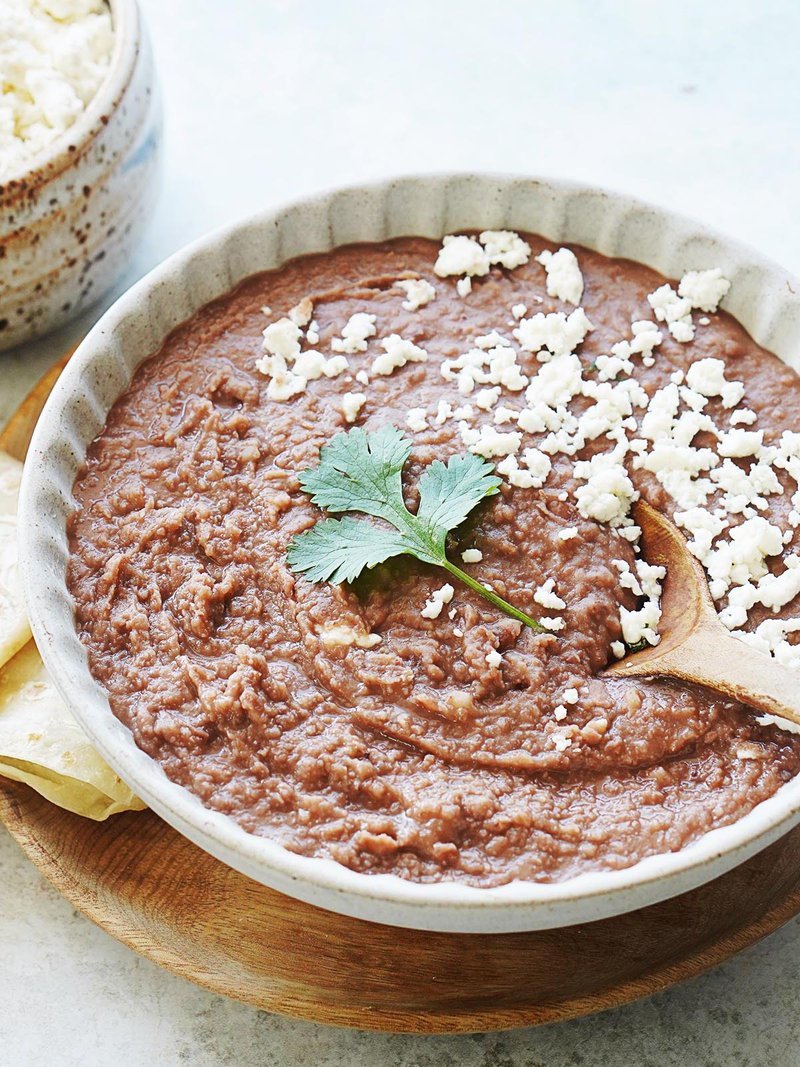
Refried Beans
Mexico's frijoles refritos: pinto beans slow-cooked from dried, then mashed and fried in lard with onion until thick and glossy.
Overview
Dried pinto beans soak overnight (or quick-soak: 1 hour after boiling). They simmer slowly with halved onion, garlic, bay leaves and a pork bone (or salt + epazote leaves) until very tender, about 1 ½ hours stovetop, 30 min pressure cooker. The cooking liquid is reserved. Lard (or bacon fat, or oil, but lard is traditional) melts in a wide pan; diced onion fries to deep gold; the cooked beans go in by spoon, with a ladle of cooking liquid. Mashed with a potato masher to a chunky paste (or pureed smooth, depending on preference). Cooked another 10-12 minutes, stirring, until the beans thicken and develop a slight crust at the edges of the pan. Cumin and salt to season. Topped with crumbled cotija or queso fresco, chopped coriander, sliced jalapeño.
Ingredients
Bean base
- 400 g dried pinto beans (or borlotti / cranberry beans as substitute)
- Cold water (for soaking)
- 2 litres water (for cooking)
- 1 onion (large, halved)
- 6 garlic cloves (whole, peeled)
- 2 bay leaves
- 2 sprigs fresh epazote (optional, traditional - sold dried at Mexican shops; an aromatic herb)
- 1 pork bone, smoked ham hock, or 100 g bacon (optional; vegetarians use 1 tablespoon extra salt)
- 1 ½ teaspoons salt (added in the last 30 minutes)
Refry stage
- 80 g lard (or rendered bacon fat, or sunflower oil)
- 1 onion (large, finely diced)
- 4 garlic cloves (finely diced)
- 1 teaspoon ground cumin
- 1 teaspoon dried oregano
- 1 jalapeño (small, optional, finely chopped)
- salt
- pepper
To finish
- 80 g cotija cheese (or queso fresco, crumbled - or feta as a substitute)
- 3 tablespoons fresh coriander (chopped)
- 1 jalapeño (small, sliced thin, for topping)
- Warm corn (or flour tortillas to serve)
- Tortilla chips (for dipping)
Method
Stage 1 - Soak the beans
- Place dried beans in a large bowl; cover with 2 litres of cold water.
- Soak overnight (8+ hours).
- (Quick-soak alternative: bring beans + water to a boil; boil 2 minutes; off heat; cover; rest 1 hour.)
Stage 2 - Cook the beans
- Drain the soaked beans; rinse.
- Place in a deep heavy pot with 2 litres of fresh water.
- Add halved onion, 6 garlic cloves, bay leaves, epazote (if using) and the pork bone / ham hock (if using).
- Bring to a boil; skim any foam.
- Reduce to a low simmer; partially cover.
- Cook 1 hour 30 minutes to 2 hours, until the beans are very tender (you should be able to crush one easily between fingers).
- In the last 30 minutes, add the salt.
- (Pressure cooker: cook on high pressure 30-35 minutes; natural release.)
Stage 3 - Reserve liquid
- Drain the beans through a sieve set over a large bowl - KEEP the cooking liquid.
- Discard the bay leaves, onion halves, and pork bone (pull off any meat and reserve).
Stage 4 - Refry stage
- Heat the lard in a wide heavy pan over medium-high heat.
- Add the diced onion; fry 7-8 minutes until deeply golden.
- Add the diced garlic and (optional) jalapeño; cook 1 minute.
Stage 5 - Spice
- Stir in cumin and oregano; cook 30 seconds.
Stage 6 - Add the beans
- Tip the cooked drained beans into the pan.
- Add 200 ml of the reserved cooking liquid.
- Cook 2 minutes, stirring.
Stage 7 - Mash
- Mash with a potato masher to a chunky paste - leave some whole beans for texture (smooth puree is the Tex-Mex / commercial style; chunky is traditional Mexican).
- Cook 8-10 more minutes, stirring frequently, until thick and glossy.
- Add more bean liquid if the mixture becomes too dry; reduce if too soupy. Final consistency: thick spoonable paste, like very thick porridge.
Stage 8 - Season
- Taste; adjust salt heavily - refried beans need generous salt.
- Add black pepper.
- If using leftover ham hock meat, shred and stir in.
Stage 9 - Serve
- Tip into a wide bowl.
- Top with crumbled cotija, chopped coriander and sliced jalapeño.
- Eat with warm tortillas, or as a side at any Mexican plate.
- Serve with tortilla chips for dipping if eating as snack.
Notes
- Lard is the right fat: Lard gives refried beans their unmistakable savoury depth. Bacon fat is a great substitute (and adds smoke). Vegetable oil works but the result is less rich; use 2 tablespoons more oil + 1 tablespoon butter if cooking vegetarian.
- Don't drain - reserve the liquid: The cooking liquid is what makes refried beans creamy. Adding it back during the fry stage gives the right consistency. Throwing it away gives a dry, pasty mash.
- Texture is a preference: Chunky mashed = traditional Mexican home cooking. Smooth puree = Tex-Mex restaurant style. Pinto-bean canned refried beans are usually the puree style; if you've grown up with them, the chunky version may seem rustic.
Storage
- Refrigerate 5 days; reheat with a splash of water (they thicken further in the fridge).
- Freezes 3 months in portion-size containers.
- Excellent next-day burrito filling.
More like this
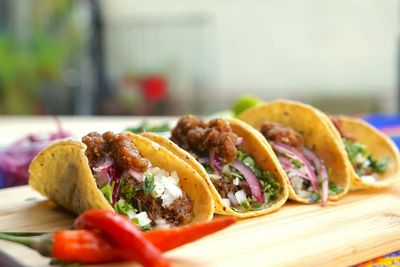
Cochinita Pibil
Pork shoulder is rubbed with a paste of achiote, orange and lime juices, garlic, oregano and warming spices, then left to marinate overnight. The pork is wrapped in banana leaves and roasted low and slow until it shreds with two forks. The pibil sits in its own bright red juices; warm corn tortillas and habanero-bright pickled red onions are the only accompaniments needed.
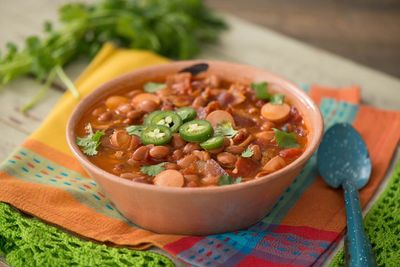
Frijoles Charros
Pinto beans are soaked overnight, then simmered with onion and garlic until tender. A separate pan crisps the bacon, browns the chorizo and softens the onion, jalapeño and tomato into a thick base. The two are combined for a final simmer with coriander, and the broth turns smoky, salty and rich. Eaten by the spoonful from a bowl, or set out alongside grilled meats and tortillas.
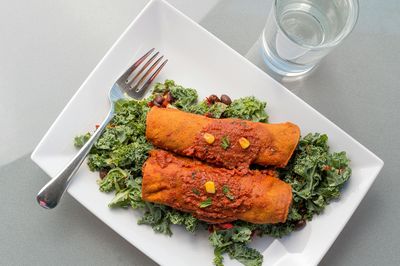
Beef Enchiladas
This Tex-Mex-inspired beef enchilada recipe is richly seasoned, easy to make, and always such a crowd favourite. Tender flour tortillas are filled with seasoned ground beef and black beans, rolled, and smothered in homemade red enchilada sauce, then topped with melted cheese and fresh coriander for a comforting, flavourful dish.
Birria
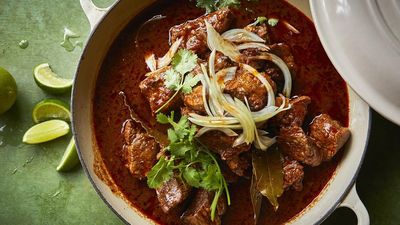
Birria is a Mexican braise of long, patient ambition. Originally a goat or lamb dish from Jalisco, it has long since adopted beef in much of Mexico and almost entirely in the popular taco version. The flavour comes from a layered chile base: guajillo for fruit and colour, ancho for raisin sweetness, pasilla for earthy depth, and a handful of arbol for a sharper heat. These are simmered with onion, garlic, cinnamon and peppercorns, blended smooth with chipotles in adobo and fire-roasted tomato, then poured over seared chuck and short rib for a long oven braise. Three hours later the meat is meltingly tender, sitting in a rust-red consomme that is the whole point: ladled over the shredded beef in a bowl, scattered with raw onion, cilantro and lime, or used to dip crisp taco shells for the now-iconic quesabirria. The recipe takes time but very little technique; almost everything happens unattended in the oven. Plan ahead and make it a day in advance so the flavours settle and the fat lifts cleanly off the top before you reheat.