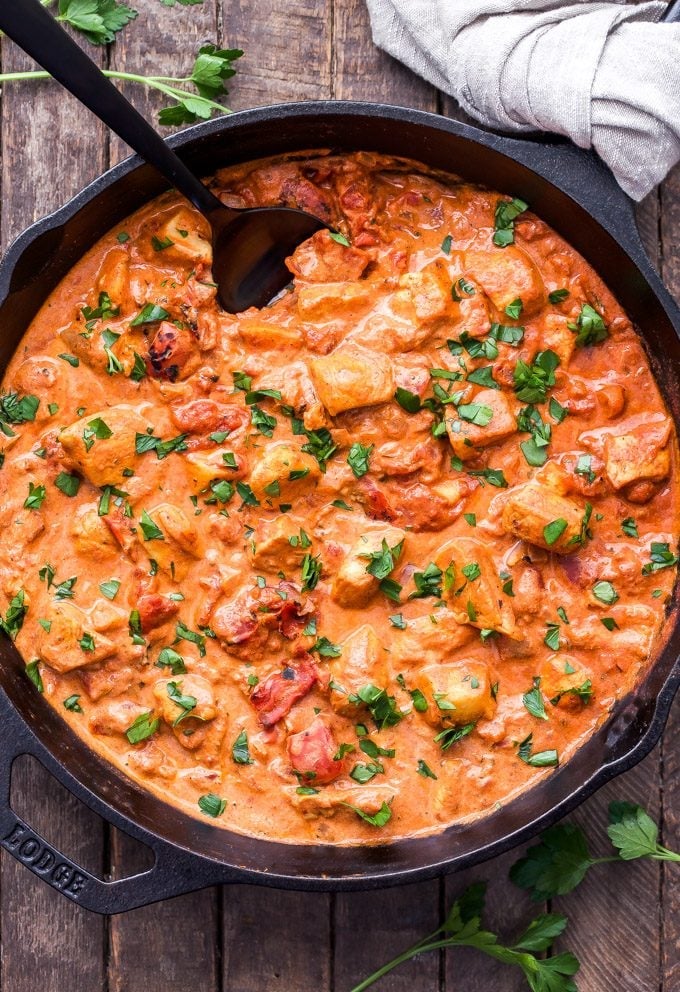
Chicken Paprikash
Hungarian chicken stew: chicken thighs and drumsticks braised in paprika, onion and tomato, finished with sour cream into a rust-orange sauce. Served over buttered egg noodles or spätzle. Lighter than goulash; equally Hungarian.
Overview
Onions are softened slowly with sweet paprika, tomato joins, then chicken thighs braise in the sauce until tender. Sour cream is stirred in off the heat for the velvety finish. Served over buttered egg noodles, with extra paprika sprinkled on top.
Ingredients
- 8 bone-in chicken thighs and drumsticks (or 1 kg of either)
- 3 tablespoons lard (or vegetable oil)
- 2 onions (finely chopped)
- 4 garlic cloves (crushed)
- 3 tablespoons Hungarian sweet paprika
- ½ teaspoon Hungarian hot paprika (optional)
- 2 tablespoons tomato purée
- 1 red pepper (chopped)
- 400 ml chicken stock
- 200 ml soured cream (full fat)
- 2 tablespoons plain flour (for stirring through the soured cream)
- salt
- pepper
- A small bunch of flat-leaf parsley (chopped, to finish)
To serve
- 400 g egg noodles (or spätzle)
- 50 g unsalted butter
Method
Stage 1 - Brown
- Season the chicken with salt and pepper.
- Heat the lard in a heavy casserole over medium-high heat.
- Brown the chicken pieces all over for 6-8 minutes. Set aside.
Stage 2 - Onions and paprika
- Cook the onions in the same pan over medium heat for 10-12 minutes until soft and starting to caramelise.
- Add the garlic; cook 1 minute.
- Take the pan OFF the heat. Stir in both paprikas; mix for 30 seconds.
- Return to heat.
- Stir in the tomato purée; cook 1 minute.
Stage 3 - Braise
- Add the red pepper.
- Return the chicken; pour in the stock.
- Bring to a simmer; cover and cook 30 minutes until the chicken is tender.
Stage 4 - Soured cream finish
- Lift the chicken out; keep warm.
- Whisk the flour into the soured cream in a small bowl (this stabilises it; otherwise it splits in the hot sauce).
- Whisk a ladle of hot sauce into the soured cream mixture (tempers it), then pour back into the pan, stirring continuously.
- Heat through gently; do not boil.
- Return the chicken to coat.
Stage 5 - Serve
- Cook the egg noodles in salted water until al dente; toss with butter.
- Plate the noodles; ladle the chicken and sauce over.
- Scatter parsley; finish with another pinch of paprika for colour.
Notes
- Off-the-heat paprika: Same as goulash. Burnt paprika is bitter; protect it by adding off the heat.
- Flour stabilises the soured cream: Without it, the cream curdles when it meets the hot acidic sauce.
- Don't boil after the soured cream: It splits. Heat just to warm through.
Storage
- Keeps 3 days refrigerated. Reheat gently without boiling.
- The soured cream sauce can split on freezing; if you want to freeze, do so before adding the cream and add fresh on reheating.
More like this
b'Stilla
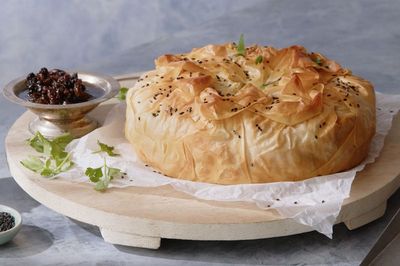
Chicken poaches in a heavily spiced broth (saffron, ginger, cinnamon, lemon). The shredded meat returns to a reduced sauce thickened with beaten eggs to make a soft set. Toasted almonds with sugar and cinnamon form a layer. Everything wraps in butter-brushed filo, baked golden, and dusted with icing sugar and cinnamon.
Chicken Piccata Meatballs
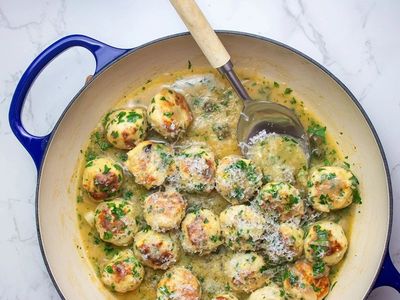
Chicken piccata, the Italian-American mid-century classic of pounded chicken cutlets in a lemon-butter-caper pan sauce, reshaped into meatball form, which trades the precise look of cutlets for a juicier, more forgiving texture. The flavour is unmistakably piccata: butter as the body of the sauce, lemon as the brightness, capers as the salty-vinegary punctuation. Underneath sits a chicken meatball lightened by ricotta (it keeps the lean ground chicken from going dry and dense) and parmesan, with parsley, garlic, smoked paprika and a pinch of red pepper flakes lifting the seasoning. The meatballs themselves stay tender because the mix isn't overworked and because they finish cooking in the sauce rather than the pan. Smell is melted butter, lemon and capers, the same smell every Italian-American restaurant kitchen has on a Tuesday lunch service. Easy enough for a weeknight, restrained enough not to feel like a stand-in dish; the technique is essentially "make meatballs, build pan sauce, return meatballs". Serves over pasta, rice or crusty bread to mop the sauce.
Doro Wat
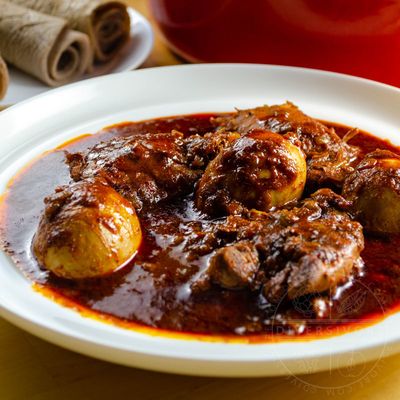
Ethiopia's national dish, the spiced chicken stew that turns up at every wedding, Easter feast and Christmas table, and the one dish a cook is judged on. The foundation is the onion - you cook it down slowly for nearly an hour into a deep dark base, and this is the step that decides whether the wat is great or merely acceptable. Berbere (the Ethiopian spice blend of chilli, fenugreek, ginger and a dozen others) and niter kibbeh (spiced clarified butter, the dish's defining fat) fold in. Chicken thighs and legs simmer in the deep red sauce, and hard-boiled eggs join late, scored with a knife so they take on the colour and the flavour. Eaten communally from a single platter, with injera flatbread torn into pieces to scoop the stew. No cutlery, no individual plates, hands clean before the meal.
Pastel de Choclo
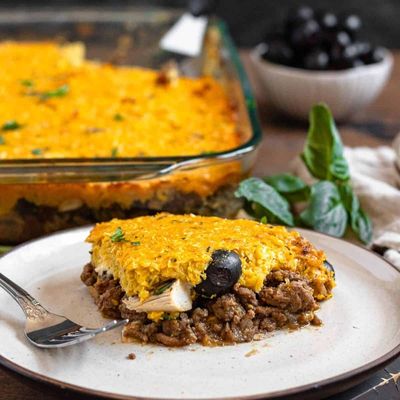
Chile's summer corn cake, the layered casserole made when fresh sweetcorn is at its peak and the asado has yielded leftover meat. You cook the pino first: onions softened slowly with cumin, paprika and oregano, beef mince browned in, raisins and olives folded through with a splash of stock to keep it moist. Chicken pieces poach separately and shred. The corn topping is the star: fresh sweetcorn (or a kabocha-corn mix in winter) blends with milk, butter and fresh basil into a thick batter. Layer in clay dishes (or one large baking dish): pino, shredded chicken, hard-boiled egg slices, corn batter poured over the top. A heavy dust of sugar finishes it, which caramelises under the grill into a sweet crusted top. Eaten with ensalada chilena on the side and a glass of red wine.