Sangkhya Lapov
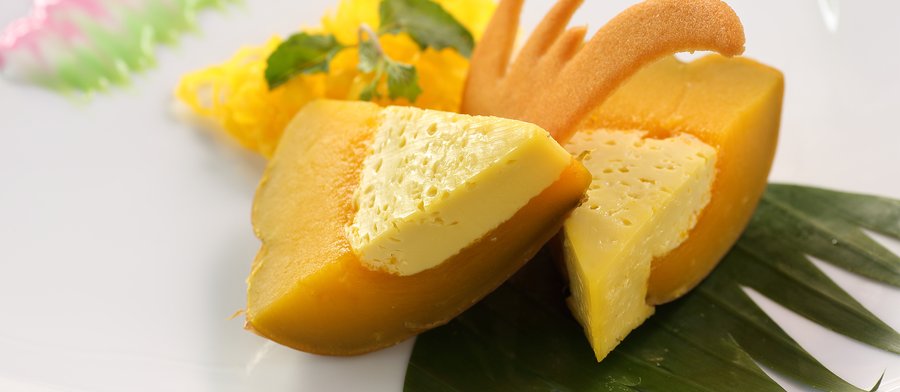
Cambodian pumpkin custard steamed inside a whole pumpkin: coconut milk, palm sugar and eggs poured into a hollowed kabocha and steamed until the custard sets and the pumpkin flesh softens. Cut into wedges; the layered pumpkin and custard slice together. A celebration dessert across Khmer New Year.
Overview
The Khmer New Year dessert, a pumpkin custard steamed inside a whole pumpkin and sliced at the table into wedges so layered pumpkin and custard come together in every bite. You start with a small kabocha or buttercup pumpkin, cut the top off (keep it for replacement), and scoop the seeds out to make a hollow vessel. A custard of coconut milk, palm sugar, eggs and a pinch of salt fills the cavity. The top replaces and the whole pumpkin sits in a steamer over boiling water for about an hour, until the custard has just set and the pumpkin flesh has gone tender enough to spoon. Cool slightly, slice into wedges, and serve with the custard quivering against the pale orange pumpkin. A celebration dish across Cambodia for weddings and New Year, gentle, fragrant, faintly floral from the palm sugar.
Ingredients
- 1 kabocha (small, or buttercup pumpkin, around 1 ½ kg)
- 5 eggs (large)
- 250 ml thick coconut milk (or coconut cream)
- 200 g palm sugar (or brown sugar)
- ½ teaspoon salt
- 1 teaspoon vanilla extract (optional)
- A few pandan leaves (knotted, optional but classic)
Method
Stage 1 - Prep the pumpkin
- Cut off the top of the pumpkin in a wide circle (around 12 cm across) - this is your lid; save it.
- Scoop out the seeds and stringy flesh.
- Wipe the cavity dry with kitchen paper.
Stage 2 - Custard
- Warm the coconut milk and palm sugar gently in a small pan with the salt and pandan leaves until the sugar dissolves; cool to lukewarm; remove the pandan.
- Whisk the eggs in a bowl until smooth (don't froth).
- Strain in the warm coconut milk; whisk gently to combine; add the vanilla if using.
- Pour the mixture into the pumpkin - fill to about 1 cm below the rim.
Stage 3 - Steam
- Set the pumpkin (lid on) on a heatproof plate inside a large steamer (or a deep roasting pan with a wire rack, lid sealed with foil) over boiling water.
- Steam 60-75 minutes - top up the water as it boils away. The custard is set when a knife inserted comes out clean.
- The pumpkin flesh underneath should yield easily to a knife (similar to roast pumpkin).
Stage 4 - Cool and slice
- Lift the pumpkin out carefully; cool 30 minutes.
- Refrigerate at least 2 hours before slicing - gives clean, layered wedges.
- Cut from the top: each wedge has a layer of pumpkin and a layer of custard.
Notes
- Choose a small pumpkin: Larger ones don't fit a domestic steamer; the custard takes longer. 1.2-1 ½ kg is ideal.
- Strain the custard: Removes any chalazae (the white string in egg whites) and gives a silkier set.
- Don't over-steam: Once set, more steaming makes the custard weep. The knife test is the only test.
Storage
- Keeps 3 days refrigerated; eats cold or at room temperature.
- Doesn't freeze well.
More like this
Amok Trey
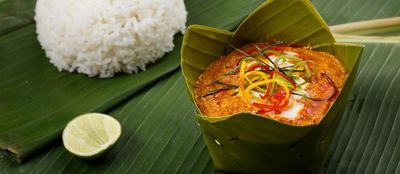
Cambodia's national dish, the centrepiece of any Khmer feast and the proper-occasion food across the country. You start by pounding kroeung fresh in a mortar (the paste of lemongrass, galangal, turmeric, garlic, shallots, kaffir lime zest and coriander root that defines Khmer cooking, and that no shop-bought paste comes close to matching). The kroeung fries briefly to bloom its aromatics, coconut cream and stock loosen it, and eggs whisk in to set the eventual custard. Chunks of firm white fish fold through with chopped greens (traditionally noni leaves, with spinach or chard standing in), and the whole mix spoons into banana-leaf cups (or small ramekins). Twenty minutes in a steamer turns the custard just-set around the soft fish, and the banana leaves perfume everything. Served from the parcels with steamed rice and a wedge of lime.
Watalappam
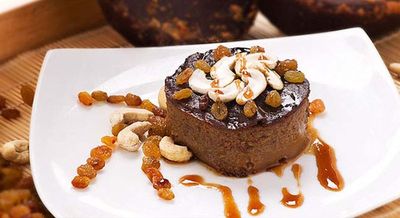
Eggs whisk with grated kithul jaggery (or palm sugar) until the sugar starts to dissolve. Coconut milk and ground spices fold in. The mixture strains through a sieve into ramekins (or one wide dish), gets steamed gently until just-set with a slight wobble. Topped with toasted cashews; served chilled or at room temperature.
Bánh Flan
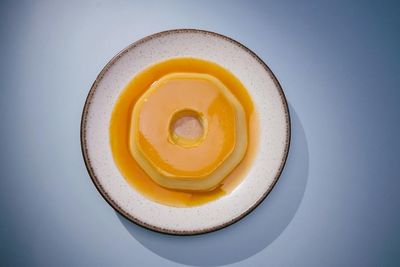
A simple custard of whole eggs, condensed milk and evaporated milk is poured over a hard caramel base and baked in a bain-marie at low temperature for a silken set. The caramel melts into a sauce as the flan chills overnight in the fridge. Tipped out onto a plate, the dark caramel runs down the sides and pools at the base.
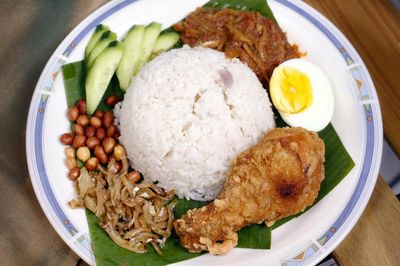
Nasi Lemak
A platter built around fragrant coconut and lemongrass rice, served with a fiery sambal of dried anchovies and rehydrated chillies, then ringed with hard-boiled egg, sliced cucumber and fried peanuts. The sambal does most of the heavy lifting, sweet, sour, smoky and hot. The rice itself is gentle, designed to be a calming counterpoint to everything else on the plate.