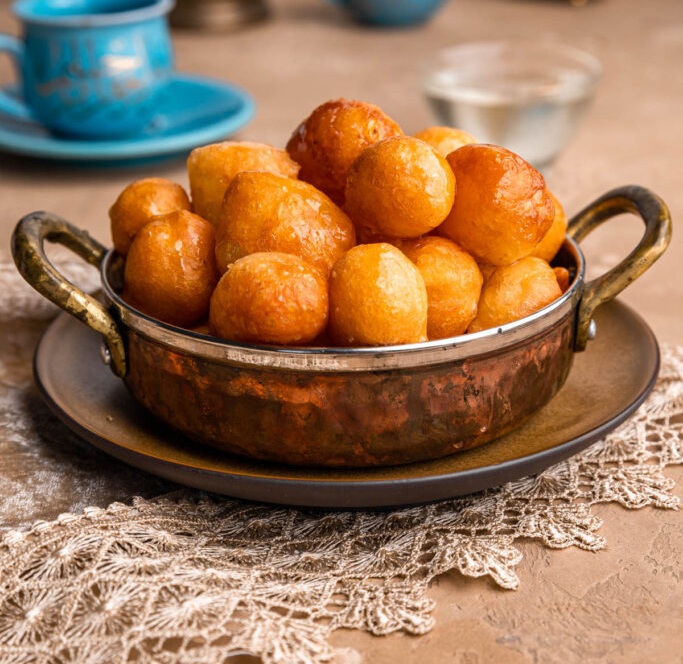
Lugaimat
A Khaleeji Ramadan sweet: small balls of yeasted batter deep-fried golden, drenched in date syrup or saffron sugar syrup, sprinkled with sesame.
Overview
The little golden dumpling that arrives on the table after iftar across the Khaleej, sometimes piled in a glass dish next to the dates and the qahwa, always disappearing faster than the cook can replace them. You mix a slack batter of flour, cornflour, yeast and milk powder with cardamom and saffron, then leave it to rest for an hour until it bubbles and puffs. Small balls of it drop into 170°C oil and fry for three or four minutes until they're deep gold and just hollow inside. While they're still warm you dunk them into date syrup or a saffron-cardamom sugar syrup so the outside crackles and the centre soaks the sweetness up. A sprinkle of sesame on top, eaten with the fingers, ideally with a tiny cup of cardamom coffee to cut the sugar.
Ingredients
Batter
- 250 g plain flour
- 30 g cornflour
- 1 sachet (7 g) fast-action yeast
- 1 tablespoon caster sugar
- 1 tablespoon milk powder
- ½ teaspoon ground cardamom
- 1 small pinch saffron (bloomed in 1 tablespoon hot water)
- 350 ml warm water (more if needed)
- 1 litre vegetable oil for deep frying
Syrup (choose one)
Date syrup
- 200 g date syrup (warmed gently)
Sugar syrup:
- 200 g caster sugar
- 120 ml water
- 1 teaspoon lemon juice
- ½ teaspoon ground cardamom
- pinch saffron (boil 5 minutes, cool slightly)
Garnish
- 1 tablespoon toasted sesame seeds
Method
Stage 1 - Batter
- Whisk flour, cornflour, yeast, sugar, milk powder, cardamom in a large bowl.
- Stir in the saffron-water and warm water gradually until you have a thick, sticky batter (slightly looser than pancake batter).
- Cover; rest in a warm spot 1 hour until bubbly.
Stage 2 - Syrup
- Make the syrup (or warm the date syrup) and keep warm but not boiling.
Stage 3 - Fry
- Heat the oil to 170°C in a wide pan.
- Wet your hand. Scoop a small amount of batter; squeeze through your thumb-and-forefinger fist into the oil to drop small walnut-sized balls. (Or use two teaspoons dipped in water.)
- Fry in batches of 8-10, 3-4 minutes, turning, until deep gold all over.
- Lift onto kitchen paper for 5 seconds.
Stage 4 - Soak
- While still hot, dunk each ball into the warm syrup for 5-10 seconds; lift; drain on a wire rack.
Stage 5 - Finish
- Stack on a plate; scatter with toasted sesame seeds.
Stage 6 - Serve
- Eat warm with qahwa (cardamom coffee) or strong black tea.
Notes
- Batter consistency: Slack enough to fall from a wet hand but thick enough to hold a rough ball shape in the oil. Too thin and you get flat puffs; too thick and they don't fry through.
- Date syrup is traditional: Sold in Middle Eastern shops as "dibs" or "rub al rumman" labels. Darker, richer than honey. Saudi households go either way.
- Soak briefly: A few seconds glazes; longer and they go soggy.
Storage
- Best fresh, eaten warm. Will keep 1 day in a tin; eat at room temperature.
- Don't refrigerate (the syrup crystallises).
More like this
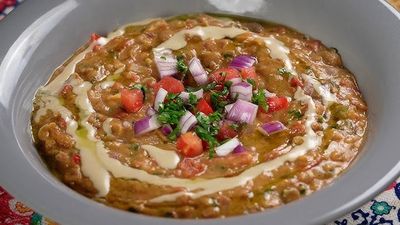
Foul Saudi
The Saudi take on foul medames, somewhere between the Egyptian original and the Yemeni daal-like versions. You soak dried fava beans overnight, then simmer them with a chickpea or two and a garlic clove for six hours low and slow (or pressure-cook for forty-five minutes if you don't have the day) until they're so soft they fall apart at a glance. Once drained, the beans go back into a hot pan with olive oil and garlic, cumin and a hit of chilli; you crush them roughly with a fork (chunky, not smooth) and finish with lemon and a handful of chopped parsley. Eaten warm for breakfast across the Gulf, scooped with flatbread, with a side of pickles or salata hara, and a glass of mint tea.
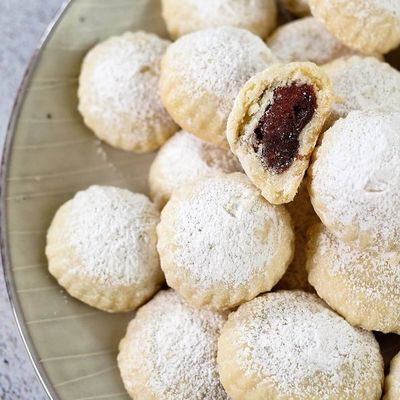
Maamoul
The cookie that arrives in tins at every Middle Eastern festival worth marking, baked for Eid al-Fitr, Eid al-Adha, Christmas and Easter alike across Lebanese, Syrian, Iraqi and Gulf households. You make a short dough of fine semolina and plain flour with butter, milk and orange blossom water, then let it rest overnight so the semolina hydrates fully and the dough turns silky. Three classic fillings sit alongside: dates pounded with cinnamon and cloves, walnuts mixed with sugar and rose water, pistachios with sugar and a drop more orange blossom. Each cookie wraps a teaspoon of filling, gets pressed into a carved wooden mould (or scored by hand with the back of a knife), then bakes pale gold so the crust stays sandy and the filling stays soft. A dust of icing sugar at the end. Tea or coffee on the side, and a tin kept on the shelf for visitors who haven't yet been told about your batch.
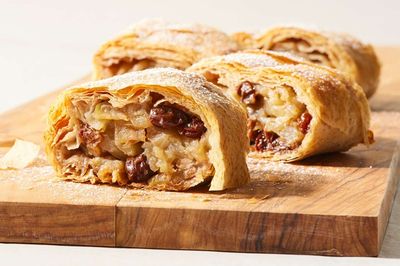
Apfelstrudel
A simple flour-egg-oil dough kneads until silky, rests so the gluten relaxes, then stretches over a floured cloth until you can read newsprint through it. A filling of grated and sliced tart apples, sugar, cinnamon, raisins, lemon zest and butter-toasted breadcrumbs spreads across the dough. The cloth helps roll the whole thing into a long log. Bakes brushed with butter until shatteringly crisp.
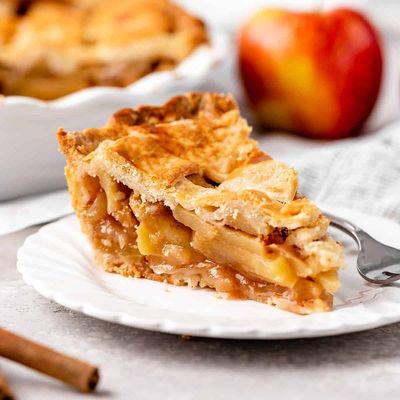
Apple Pie
All-butter pie pastry rests in two discs. The filling, a mix of apples (Bramleys for tartness and break-down, Granny Smith and Braeburn for hold), brown sugar, cinnamon, lemon, cornflour, pre-cooks slightly to release water and keep the crust from going soggy. Bottom crust lines a pie dish; filling piles in tall (it sinks); top crust seals on, vented. Egg-washed and sugar-dusted; baked until deep gold.