
Southern Fried Cabbage and Sausage
A one-skillet Southern weeknight: andouille or kielbasa rounds brown in butter, then aromatics build, then cabbage joins in two stages with apple cider vinegar and a touch of brown sugar to balance. Cajun seasoning ties it together. Eats as a side or as a main over rice. Faster than feels possible.
Overview
A lighter, faster Southern cabbage dish than its heavier bacon-laden sibling, 30 minutes start to finish, one skillet, a side or a main. The cabbage is the centre of attention here rather than the meat. Two stages of cabbage cooking is the small technical move: half goes in first under a lid and steams down, the rest joins uncovered to keep its bite, so the finished dish has two textures (soft, tender pieces and slightly crisp pieces) rather than uniform mush. Brown sugar cuts the bitter edge that long-cooked cabbage develops; apple cider vinegar brightens the rich fat; Cajun seasoning brings warmth and a small nutmeg pinch deepens it without being identifiable. Andouille or kielbasa rounds provide the smoke and the salt. Smell is browned sausage hitting cabbage. Easy, weeknight-fast, forgiving on quantities. A Southern home-cooking standard from the Carolinas through Texas, where cabbage is a year-round cheap vegetable and smoked sausage is in every fridge; the recipe has dozens of family-specific variants but the brown-sugar-and-vinegar balance is the constant.
Ingredients
- 3 tablespoons unsalted butter (or bacon grease / duck fat)
- 340 g pre-cooked andouille (or kielbasa, sliced into rounds)
- 1 cup chopped yellow onion
- 4 garlic cloves (minced)
- 2 teaspoons brown sugar
- 1 medium head green cabbage (~900 g, chopped)
- 2 tablespoons apple cider vinegar
- 2 teaspoons Creole Cajun seasoning
- ¼ teaspoon ground nutmeg
- ½ teaspoon crushed red pepper flakes (optional)
- Fresh chopped parsley, to garnish
Method
Stage 1 - Sausage
- Melt the butter in a large skillet over medium heat.
- Add the sausage rounds; brown 3-5 minutes per side.
- Transfer to a plate.
Stage 2 - Aromatics
- Sauté the onion in the same pan 2-3 minutes until translucent.
- Add the garlic; cook 1-2 minutes until fragrant.
Stage 3 - Sweet edge
- Stir in the brown sugar; cook until dissolved.
Stage 4 - Cabbage
- Add half the chopped cabbage with the vinegar.
- Cover; steam 3-4 minutes.
- Add the remaining cabbage; continue cooking uncovered 3-4 minutes.
Stage 5 - Combine and finish
- Return the sausage to the pan.
- Add the Cajun seasoning, nutmeg and optional red pepper flakes.
- Cook 3-5 minutes more, stirring, until everything is tender and the seasoning is even.
- Taste; adjust salt.
Stage 6 - Serve
- Plate hot; garnish with parsley.
- Serve as a side, or over rice as a main.
Notes
- Brown sugar tames the cabbage: a small amount cuts the bitter edge that long-cooked cabbage develops. Skip for Keto / Whole 30.
- Apple cider vinegar is the brightness: balances the rich fats. Skip and the dish reads as flat.
- Cabbage doneness is preference: 8-10 minutes total gives a soft, deeply-cooked texture. 5-6 keeps the bite.
Storage
- Keeps 4 days refrigerated; reheats well in the microwave or a pan.
- Doesn't freeze well - cabbage texture suffers.
More like this

Sausage and Peppers
The Italian-American skillet basic that nearly everyone forgets about and then rediscovers, the kind of dish you can make on a Tuesday with whatever sausage is in the fridge and have dinner on the table 25 minutes later. The flavour leans on three things: pre-cooked smoked sausage (kielbasa is the gentle option, andouille turns it Cajun, sweet Italian is the traditional Sunday-supper-in-Bensonhurst choice), peppers and onion caramelised until they're sweet and slightly tacky, and a generous amount of fresh garlic added at the end so it scents the dish without burning. Italian seasoning (or herbes de Provence) rounds the herbal note. Smell when the garlic hits hot oil at the end is the moment you know it's nearly done. Easy enough that this is what you cook when you're tired; honest enough that it doesn't suffer for it. The dish has its strongest roots in Southern Italian immigrant kitchens of the early 20th century in New York and New Jersey, where bulk sausage and bulk peppers were both cheap and where the leftovers shoved into a hoagie roll became the lunch the next day.
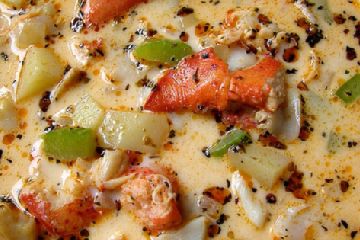
Manhattan Seafood Chowder
New York's tomato-based answer to New England's milk-and-cream chowder, and the source of a regional argument that has been going on for a hundred years. You start by softening bacon with onion, celery and garlic in butter, then add potatoes, thyme and fish stock and let them simmer until the potatoes are tender. The clams go in next under a lid for a few minutes until they open; you pull most of them out of their shells (keeping a few intact for the look of it) and strain the liquor back into the pot. Then tomato purée, chopped tomatoes, cod and prawns, and a final low simmer of just three minutes so the seafood stays tender. A generous scatter of flat-leaf parsley at the end lifts the lot. Serve with crusty bread to mop the brothy red sauce, and ignore anyone from Boston who tells you it's not a chowder.
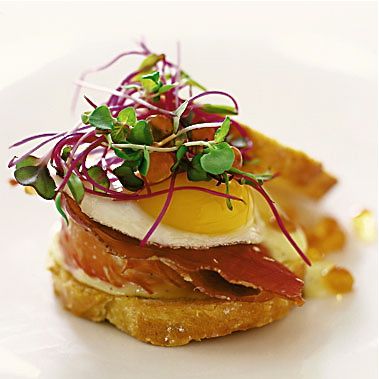
Club Sandwich
The diner triple-decker reworked with a poached egg sitting on top - what an American sandwich shop would call a club with eggs, and what a French brunch menu would simply serve as the house club. Two slices of buttered, toasted bread layered with sliced grilled chicken, crisp smoked bacon, shredded iceberg dressed in mayo and a sharp pinch of onion, ripe tomato brightened with vinaigrette, and the soft poached eggs draped over the top so the yolks break into everything underneath. The pleasure is in the layering: a different texture in every bite, the bread crisp enough to hold structure but soft enough to give. You build it carefully, slice it on the diagonal, and pin the halves together with toast picks so the whole tower stays upright on the plate. Lunch counter at noon, light supper after a long afternoon, eaten with chips on the side and an extra napkin within reach.
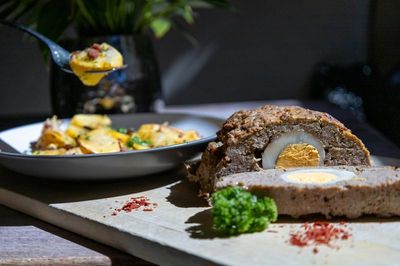
Meatloaf
The mid-century Sunday supper that every American household above a certain age has its own version of. You soften onion and garlic in butter and let them cool, soak breadcrumbs in milk to a soft panade (this is the structural trick that keeps the loaf from going dense and bricklike), then mix everything into the beef and pork with egg, Worcestershire, mustard and a handful of fresh herbs. The mix goes loosely packed into a tin so it stays tender rather than tight, brushed thickly with a glaze of ketchup, brown sugar and a touch more Worcestershire, and into a moderate oven for the best part of an hour. You glaze again at the end and let it tan in the heat for fifteen more minutes until the top has gone deep mahogany and slightly tacky. Slice thick and serve with mashed potato and a green vegetable on the side. The leftover slab cold the next day in a sandwich is the dish's quiet second life.