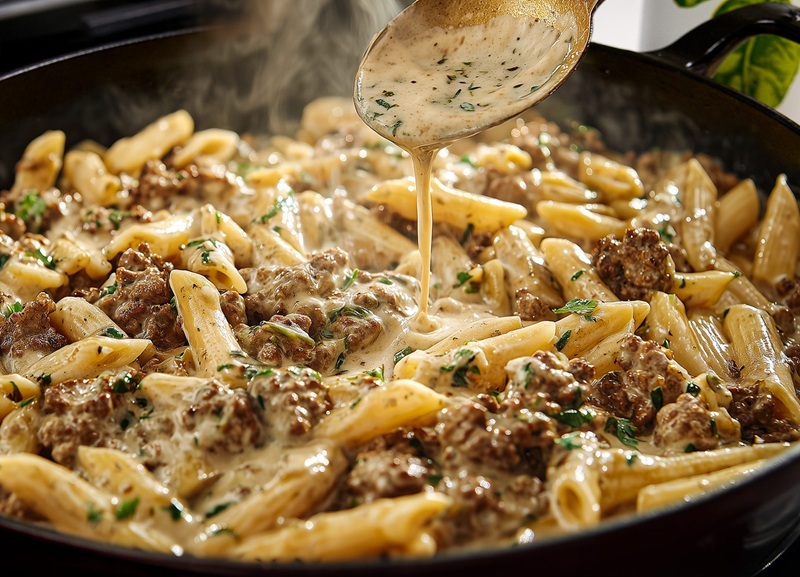
One-Pot Creamy Beef Pasta
A 35-minute weeknight pasta where ground beef, dried rigatoni and broth all cook in the same pot, then heavy cream and two cheeses fold in to finish. Sharp white cheddar + parmesan; rigatoni's wide ribbed surface clings to the sauce. Single pot, single wash.
Overview
An American weeknight pasta that compresses a Hamburger Helper-style box meal into a single pot, an open package of fresh ingredients, and 35 minutes of low-effort cooking. The trick is that the pasta is cooked directly in the broth (no separate boil, no drain), which means the starch released from the rigatoni stays in the pot and helps thicken the sauce when the cream and cheese are folded in at the end. Flavour is sharp-savoury rather than red-sauce-comforting, sharp white cheddar gives a tangy bite, parmesan adds salty umami, heavy cream binds the lot into something almost like a stovetop mac-and-cheese with ground beef stirred through. Rigatoni's wide ribbed surface clings to the sauce in a way that smoother shapes can't. Smell is browned beef and melted cheese. Genuinely easy and a single pan to wash; the only technical points are using freshly shredded cheese (pre-shredded supermarket bags have anti-caking starches that prevent smooth melting) and letting the off-heat rest do its job. A modern American weeknight staple that emerged from one-pot pasta TikTok and food-blog culture in the 2010s-2020s.
Ingredients
- 2 tablespoons unsalted butter
- 450 g (1 lb) ground beef (grass-fed)
- salt
- pepper
- 1 teaspoon garlic powder
- 1 shallot (large, finely chopped)
- 450 g (1 lb) dried short pasta (rigatoni recommended)
- 950 ml chicken (or beef broth)
- 240 ml heavy cream
- 225 g sharp white cheddar (shredded)
- 1 cup freshly grated parmesan cheese (plus more to top)
Method
Stage 1 - Brown the beef
- Melt the butter in a large heavy pot over medium-high heat.
- Add the ground beef; break up with a wooden spoon.
- Brown 6-7 minutes.
- Season with salt, pepper and garlic powder.
Stage 2 - Shallot
- Add the chopped shallot; cook 4-5 minutes until tender.
Stage 3 - Pasta in the pot
- Add the dry pasta and the broth.
- Stir well; cover.
- Simmer 10-12 minutes until the pasta is al dente. Stir once or twice to prevent sticking.
Stage 4 - Finish off heat
- Remove from heat.
- Stir in the heavy cream, shredded cheddar and grated parmesan.
- Cover; rest 10 minutes - the sauce thickens around the pasta as it sits.
Stage 5 - Serve
- Plate in deep bowls; top with extra parmesan.
Notes
- Pasta + broth ratio: the pasta cooks in just enough liquid that it absorbs everything by the time it's tender. Use a quality broth; cheap broth = thin sauce.
- Freshly shredded cheese matters: pre-shredded supermarket cheese has anti-caking starches that prevent smooth melting. Block cheese, shredded fresh, melts properly.
- Don't freeze: the cream-based sauce splits on thaw. Make and eat within a couple of days.
Storage
- Keeps 3 days refrigerated; reheat with a splash of broth or milk to loosen the sauce.
- Skip freezing.
More like this
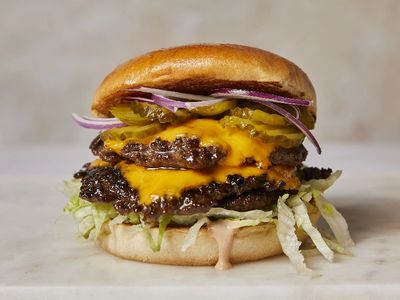
Smashburger
The smashburger is the American griddle cook's answer to a thick pub patty: take a loose ball of fatty ground beef, slap it onto a ripping hot flat-top, and press it paper thin so every square millimetre of meat hits the steel. What you get back is a patty with a brittle, almost potato-chip-like crust on the underside and a juicy, just-cooked interior, all in the space of ninety seconds. The technique came out of small Midwestern diners in the mid-twentieth century, but the modern revival is often credited to George Motz and the wave of regional burger documentation that followed. The Maillard reaction is the entire point here. A thick patty cooked rare on the inside has a thin band of seared flavour; a smashed patty is almost all crust. Pair that with cheap, salty American cheese that melts into the crags, a pillowy potato bun toasted in beef fat, and a sharp pickle, and you have one of the most satisfying things you can cook at home in under twenty minutes. Difficulty is low, but two details matter: the pan must be properly hot before the beef touches it, and you must only press once, in the first ten seconds. Anything more and you squeeze out the juices you worked to keep.
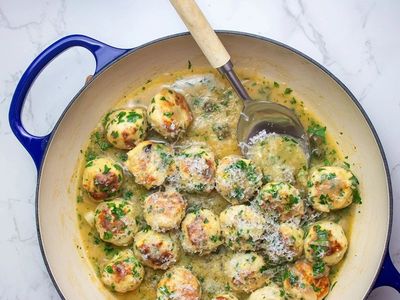
Chicken Piccata Meatballs
Chicken piccata, the Italian-American mid-century classic of pounded chicken cutlets in a lemon-butter-caper pan sauce, reshaped into meatball form, which trades the precise look of cutlets for a juicier, more forgiving texture. The flavour is unmistakably piccata: butter as the body of the sauce, lemon as the brightness, capers as the salty-vinegary punctuation. Underneath sits a chicken meatball lightened by ricotta (it keeps the lean ground chicken from going dry and dense) and parmesan, with parsley, garlic, smoked paprika and a pinch of red pepper flakes lifting the seasoning. The meatballs themselves stay tender because the mix isn't overworked and because they finish cooking in the sauce rather than the pan. Smell is melted butter, lemon and capers, the same smell every Italian-American restaurant kitchen has on a Tuesday lunch service. Easy enough for a weeknight, restrained enough not to feel like a stand-in dish; the technique is essentially "make meatballs, build pan sauce, return meatballs". Serves over pasta, rice or crusty bread to mop the sauce.
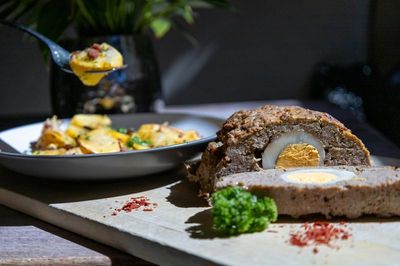
Meatloaf
The mid-century Sunday supper that every American household above a certain age has its own version of. You soften onion and garlic in butter and let them cool, soak breadcrumbs in milk to a soft panade (this is the structural trick that keeps the loaf from going dense and bricklike), then mix everything into the beef and pork with egg, Worcestershire, mustard and a handful of fresh herbs. The mix goes loosely packed into a tin so it stays tender rather than tight, brushed thickly with a glaze of ketchup, brown sugar and a touch more Worcestershire, and into a moderate oven for the best part of an hour. You glaze again at the end and let it tan in the heat for fifteen more minutes until the top has gone deep mahogany and slightly tacky. Slice thick and serve with mashed potato and a green vegetable on the side. The leftover slab cold the next day in a sandwich is the dish's quiet second life.
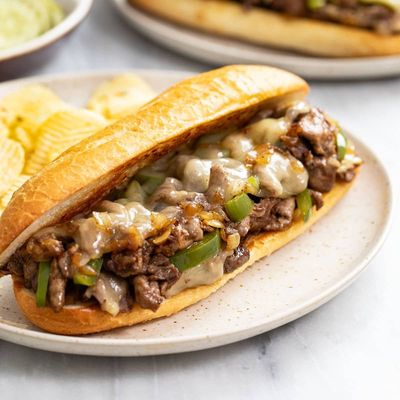
Philly Cheesesteak
Philadelphia's defining sandwich, and one of the few American dishes where the technique matters more than the recipe. You start by sticking a good ribeye in the freezer until it firms up, because the dish's identity is in the slicing: paper-thin shavings against the grain that you simply cannot get from room-temperature beef. On a wide hot griddle you sweat down onion (and bell pepper or mushrooms if your South Philly conscience allows them) until just past gold, push them to one side, and lay the shaved beef in a single layer on the cleared steel. Sixty seconds in, you start chopping the meat with the spatula edge as it cooks, folding the onions back in, hitting it with salt and pepper. Cheese goes over the top off the heat (provolone for the crowd-pleaser, American singles for the nostalgic drip, Cheez Whiz if you're going strictly by South Philly), and you cover for half a minute to melt. Scooped straight into a soft hoagie roll that's been toasted in the rendered fat. Wrap, fold in half, eat at the counter while the cheese is still hot.