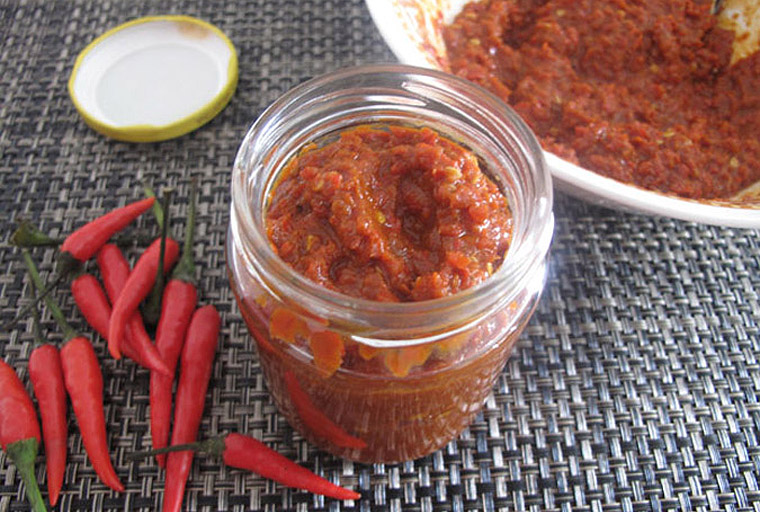
Sambal Belacan
Malaysia's everyday chilli paste: fresh red chillies pounded with toasted belacan (shrimp paste) and lime juice.
Overview
Sambal belacan represents the true umami heart of Southeast Asian cooking. Belacan, fermented shrimp paste, is a polarizing ingredient with a powerful aroma and intensely funky flavor. Combined with raw chillies and balanced with citrus juice, this sambal creates a complex flavor bomb meant to accompany rice, vegetables, and mild proteins where its intensity acts as a seasoning rather than a dish itself. The key is balance: the shrimp paste must be heated to mellow its raw funk while the citrus brightens and the chillies provide heat. Rice is essential for serving, nothing stands alone against this sambal's power.
Ingredients
Primary Ingredients
- 4-5 fresh red chillies (medium to large, depending on heat preference)
- 1-1 ½ cm cube of belacan (fermented shrimp paste, approximately 15-18 grams)
- ½ lime (or full lime, about 1 ½-2 tablespoons, to taste, juice)
- ¼ teaspoon fine sea salt (adjust to taste)
Optional Additions
- 1 garlic clove (crushed; for additional pungency)
- ½ teaspoon palm sugar (or regular sugar, to balance umami)
Method
Stage 1 - Toast the Shrimp Paste
- Measure your belacan cube (approximately 1-1 ½ cm cube).
- Option A (Gas Flame): Mold the paste onto the end of a metal skewer. Hold the skewer over a gas flame, rotating slowly for 1-2 minutes until the outside of the paste begins to look dry and slightly darkened. The aroma will intensify dramatically, this is good.
- Option B (Dry Pan): Wrap the belacan cube tightly in aluminum foil. Place in a dry skillet over medium heat. Dry-fry for 4-6 minutes, turning the foil packet occasionally. The belacan will smell pungent and slightly charred, correct.
- Option C (Toaster Oven): Wrap belacan in foil, place on a small baking sheet, and toast at 180°C (350°F) for 5-8 minutes. The aroma will mask others in your kitchen, warning given.
- Remove the toasted belacan and set aside to cool for 1-2 minutes.
- This toasting step mellows the raw fermentation funk while allowing you to handle the paste.
Stage 2 - Prepare Chillies
- Wash the fresh red chillies.
- Cut off the stem end.
- For less heat, slice the chilli in half lengthwise and remove the seeds and white membrane inside.
- For maximum heat and authentic preparation, leave seeds and membrane intact.
- Chop the chillies finely into small pieces.
Stage 3 - Pound Chillies
- Place the chopped chillies into a mortar.
- Add the fine sea salt (this helps release juices from the chillies).
- Using a heavy pestle, pound forcefully and deliberately.
- Continue pounding for 2-3 minutes until the chillies break down into a rough paste.
- The mortar and pestle is essential here, no food processor; this is traditional technique.
Stage 4 - Add Toasted Shrimp Paste
- Remove the foil from the cooled toasted belacan.
- Add the toasted belacan to the pounded chillies in the mortar.
- Continue pounding with the pestle, pressing the shrimp paste into the chillies.
- Pound for 1-2 minutes until the shrimp paste and chillies are thoroughly combined.
- The mixture should appear even in color and texture.
Stage 5 - Add Citrus Juice & Optional Ingredients
- Squeeze the lime juice directly into the mortar (start with 1 tablespoon).
- Stir well to combine.
- Taste and adjust:
- Add more lime juice if you want additional brightness (up to 2 tablespoons total)
- Add pinch of salt if the umami seems muted
- Add ½ teaspoon sugar if the fermentation flavor seems too intense
- If adding crushed garlic for additional pungency, add now and stir.
Stage 6 - Final Blending & Resting
- Pound or stir the mixture for another 30 seconds to fully integrate all flavors.
- The sambal should be a coarse, speckled paste where you can see chilli and shrimp paste particles.
- Transfer to a small bowl or serving spoon.
- Allow to rest for 5-10 minutes before serving, flavors will develop.
Notes
- Belacan Selection: This fermented shrimp paste is intensely pungent and an acquired taste. Brands like Malaysian belacan or Indonesian terasi are standard. The smell does not reflect the taste, trust the process.
- Toasting Essential: Never use raw belacan directly. The heating matures and mellows the fermentation funk while making the paste more manageable.
- Mortar & Pestle Only: The pounding action is critical, food processors won't achieve the proper coarse texture and flavor development.
- Citrus Balance: The lime juice is essential for cutting through the shrimp paste funk. Adjust to preference, but never use less than 1 tablespoon.
- Heat vs. Umami: The raw chillies provide heat; the belacan provides umami. Together they create complexity that both enhance each other.
- Small Batch Preparation: This sambal is best made fresh to order due to the powerful, volatile flavors of fresh chillies and just-toasted shrimp paste.
- Powerful Condiment: Never overeat this sambal. A teaspoon or two alongside a plate of rice and vegetables is the proper serving.
Variations
Milder Heat: Use fewer chillies (2-3 instead of 4-5); remove all seeds. With Garlic: Add 1 crushed garlic clove for additional pungency and depth. Sweeter Version: Add 1 teaspoon palm sugar or regular sugar to balance the fermentation intensity. Extra Citrus: Use lime juice exclusively (not lemon), the flavor is more authentic. Without Sugar: Traditional preparation uses no sugar, saltiness balances everything.
Serving
Use in: Rice dish accompaniment, vegetable tempering sauce, protein condiment, curry base Typical ratio: 1 small teaspoon per serving (this is powerful, respect its intensity) Temperature: Served at room temperature in small bowl alongside rice Application: A small spoonful or teaspoon portion served on the side of the plate; diners add to rice as they eat
Storage
- Refrigerate in sealed glass jar for up to 5-7 days maximum
- The fresh chillies have limited shelf-life; the belacan becomes increasingly pungent
- The sambal will separate slightly in the jar, stir before serving
- Can be frozen in ice-cube trays for 4-6 weeks; thaw in refrigerator before use
- In tropical climates, best consumed within 2-3 days for maximum chilli freshness
- Does not keep at room temperature due to fresh chilli content
- Check for any mold or musty smell before using
- Traditional practice: make fresh before serving, this is a fresh condiment, not meant for long storage
This is the sambal of champions, pungent, assertive shrimp paste tamed by heat and citrus, counterbalanced only by fiery chillies that match its intensity. Belacan, the fermented shrimp paste that gives this sambal its character, is not for the faint-hearted. In Southeast Asia, this powerful condiment is served in small quantities with rice dishes, the starch tempering both heat and umami fermentation.
More like this
Burmese Tea-Leaf Snack Mix
The older, more ceremonial form of lahpet, the version that predates the salad. Unlike lahpet thoke (the salad), there's no cabbage, no tomato, no fresh dressing - the fermented tea leaves stay pungent and concentrated, and the fried elements supply texture and salt. You keep all the components separate on a divided plate until they reach the table, so the crispy bits don't soften, and each guest builds their own bite from the spread. Eaten as an afternoon teashop snack with a small cup of green tea, or traditionally at the close of formal meals as a sign of welcome and reconciliation - a Burmese custom that dates back centuries and still turns up at weddings.
Go Bo Hoi an
Go Bo Hoi An is a piquant Vietnamese beef salad featuring thinly sliced seared beef tossed with crisp vegetables, fresh herbs, and a bright tamarind-lime dressing. This dish has delicate undertones of lime and garlic which carry through the tamarind flavours perfectly. The combination of tender beef, crunchy vegetables, aromatic herbs, and crispy rice papers creates a textural and flavourful celebration of Vietnamese cuisine. Quick to make but requires advance preparation, ensure the salad, dressing, and toppings are made and ready to use before cooking the beef.
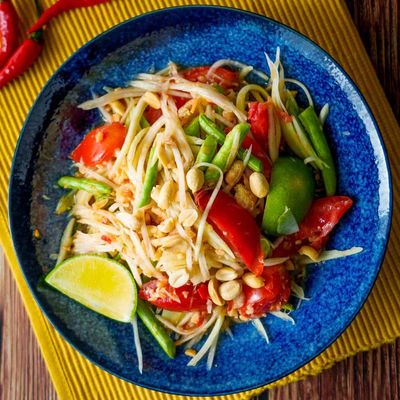
Green Papaya Salad
Famous Thai salad (som tum) with sour, sweet, savory, and spicy flavors. Pounded dressing coats crispy papaya and vegetables. Make ahead; won't wilt.
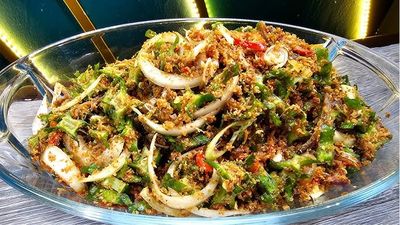
Kerabu Kacang Botol
Winged beans are sliced thin and tossed with kerisik (toasted grated coconut pounded to a fragrant paste), fresh herbs, dried shrimp and a sharp chilli-lime dressing. The kerisik is the heart of the dish, it gives the salad its smoky-sweet backbone and binds the dressing to the vegetables. Bright, crunchy, savoury and just lightly fiery.