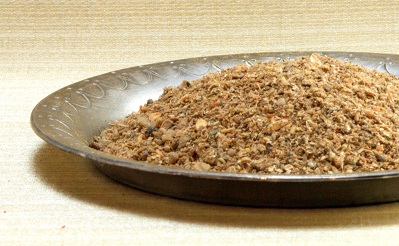
Sri Lankan Curry Powder
Sri Lanka's roasted curry powder: whole spices dry-toasted till deep coffee-coloured before grinding.
Overview
Sri Lankan curry powder is created through a completely different technique than Indian blends: each component roasts separately because they turn dark at different stages. The result is more complex and less likely to include burnt spices. Color and presentation are fundamental to Sri Lankan cuisine, red, yellow, and black curries artistically arranged around central bowls of rice. This powder creates the sophisticated dark curry bases that define Sri Lankan food.
Ingredients
Spices Roasted Separately
Set 1 - Rapid Roasting Spices:
- 6 tablespoons coriander seeds
- 3 tablespoons cumin seeds
- 1 tablespoon fennel seeds
- 1 teaspoon fenugreek seeds
Set 2 - Slow Roasting Aromatics:
- 1 cinnamon stick (broken into pieces)
- 1 teaspoon cloves
- 8 green cardamom pods
Other Ingredients
- 6 dried curry leaves
- 2 teaspoons chilli powder (added post-roasting, not toasted)
Method
Stage 1 - Prepare All Ingredients
- Break cinnamon stick into small pieces (1 cm each).
- Lightly crush cardamom pods to expose seeds.
- Measure rapid-roasting spices separately.
Stage 2 - Roast Rapid-Roasting Spices First
- Place a heavy-bottomed pan over medium heat with no oil.
- Add the coriander, cumin, fennel, and fenugreek seeds.
- Continuously stir and toss for 3-4 minutes as they heat.
- Watch carefully, these roast quickly and can burn. Do not let spices burn; remove as soon as rich aroma develops.
- Transfer to a bowl to cool.
Stage 3 - Roast Slow-Roasting Aromatics
- Return the same pan to medium heat (clean and dry).
- Add cinnamon pieces, cloves, and cardamom pods together.
- Roast for 3-4 minutes, stirring frequently, until they give off a pungent aroma.
- Transfer to the bowl with Set 1 spices; allow to cool completely.
Stage 4 - Cool Completely
- Allow all spices to reach room temperature (10-15 minutes).
Stage 5 - Extract Cardamom Seeds
- Once cool enough to handle, open the cooled cardamom pods.
- Extract the seeds inside and place them in the mortar.
- Discard the cardamom pods themselves.
Stage 6 - Grind to Powder
- Add all other roasted spices (coriander, cumin, fennel, fenugreek, cinnamon pieces, cloves) and curry leaves to the mortar.
- Grind thoroughly to a smooth, fine powder.
- The color should be noticeably darker than Indian curry powders due to the separate roasting.
- Sift; re-grind any larger pieces.
Stage 7 - Add Chilli Powder & Mix
- Stir in the chilli powder.
- Mix very thoroughly for 1-2 minutes and use immediately.
Notes
- Separate Roasting Critical: This technique prevents burning. Rapid-roasting spices (coriander, cumin) burn before aromatics (cloves, cinnamon) are fragrant. Roasting separately solves this.
- Cardamom Seed Extraction: Removing cardamom from the pod after roasting (rather than roasting seeds alone) preserves more flavor compounds.
- Darker Color: The separate roasting creates a naturally darker, richer color, this is authentic and indicates proper technique.
- Chilli Powder Late Addition: Adding chilli powder after roasting (not during) prevents burning and preserves heat intensity.
- Curry Leaves: These add subtle flavor complexity; don't omit them.
Variations
Hotter: Increase chilli powder to 3 teaspoons. Milder: Decrease chilli powder to 1 teaspoon. Earthier: Add ½ teaspoon additional cumin seeds to the rapid-roasting set. More Aromatic: Add 2 additional cloves to the slow-roasting set.
Serving
Use in: Sri Lankan red curries, yellow curries, meat dishes, poultry preparations, vegetable curries Typical ratio: 2-4 teaspoons per portion depending on sauce richness and protein type Application: Fry in hot oil with aromatics before adding liquid and main ingredients Color: The darker appearance is natural and indicates proper roasting technique
Storage
- Best used immediately; can store in airtight jar 4-5 months away from light and heat
- Does not require refrigeration
- Flavor remains stable longer than some blends due to separate roasting technique
- Check aroma after 4 months before using in important dishes
- Label with preparation date
- Make fresh quarterly for optimal aromatic quality
This distinctly different curry powder reflects Sri Lankan cooking traditions where spices are roasted separately to prevent burning, and presentation with vibrant colors matters as much as flavor. The result is a rich, dark curry powder ideal for all dishes, poultry, meat, and vegetables, with aromatic warmth rather than excessive heat.
More like this
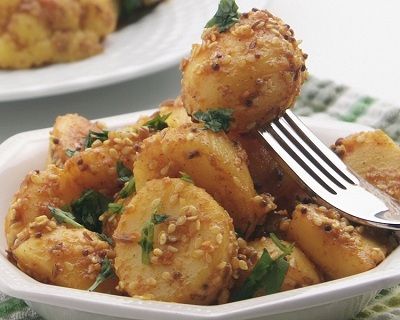
Bombay Potatoes
Bombay Potatoes is comfort food at its finest. Small potatoes are partially cooked, then coated in a richly spiced oil infused with seeds and aromatics. Some potatoes are mashed to create a creamy base, while others remain whole for texture. The result is a warm, golden, deeply spiced side dish that's utterly satisfying. This is a vegetarian staple of Indian home cooking.
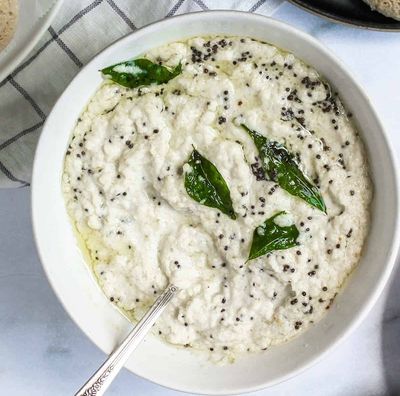
Coconut Chutney
Fresh coconut is ground with green chilli, ginger, roasted gram and a small splash of water into a smooth paste. The chutney is finished with a tempering of mustard seeds, dried red chilli, curry leaves and asafoetida in hot oil, poured over the white chutney for a striking visual and aromatic contrast.
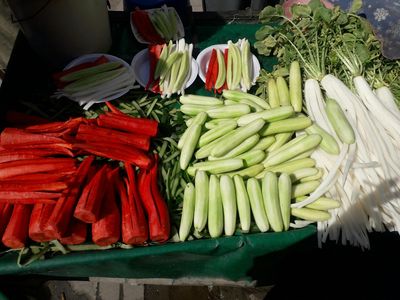
Goan Cucumber Salad
Cucumber is chopped, salted and rested briefly to draw out some of its water (the step that keeps a salad from going soggy). The drained cucumber is tossed with fresh grated coconut, finely chopped green chilli and coriander. A quick mustard-seed temper in coconut oil is poured over the top for the aroma and a faint heat. Eaten by the spoonful from a bowl, or alongside fish curry rice.
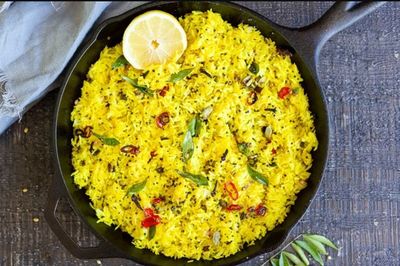
Lemon Rice
A temper of mustard seeds, chana dal, urad dal, peanuts, dried red chilli and curry leaves is bloomed in sesame oil. Turmeric is stirred in for colour. Cooked, cooled rice is tossed through off the heat, then lemon juice is added at the end so the heat doesn't dull the acidity. Bright lunchbox classic; the dish should taste fresh and tart, not muddled.