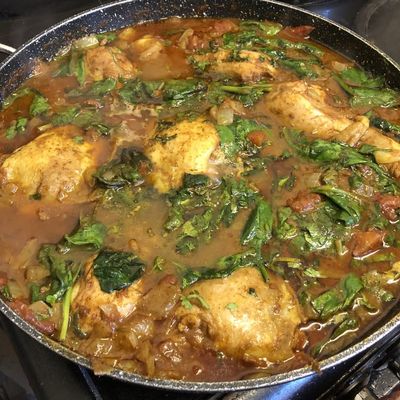
Agra Ginger Chicken
A light, cleansing chicken curry from Agra with fresh ginger, warm spices and bright tomato notes. This vibrant dish is designed to be accessible and fresh, with spinach and lime lifting the finished curry.
Indian
Tap a chip to add another filter, or use Clear all below.
Tap any item to find recipes that use it.
A light, cleansing chicken curry from Agra with fresh ginger, warm spices and bright tomato notes. This vibrant dish is designed to be accessible and fresh, with spinach and lime lifting the finished curry.
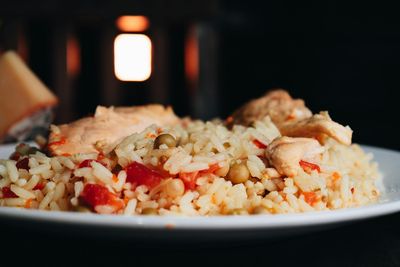
Rice is rinsed but not soaked (this is Portuguese-style rice, where short-grain is preferred for its slight starchiness). Goan chouriço is rendered in olive oil with garlic and bay, onion is softened, tomato is cooked down to a paste, and the rice is toasted briefly before stock is poured in for a covered steam. Peas are folded through in the final minutes. The dish has a faintly smoky paprika colour and a clear Portuguese DNA.
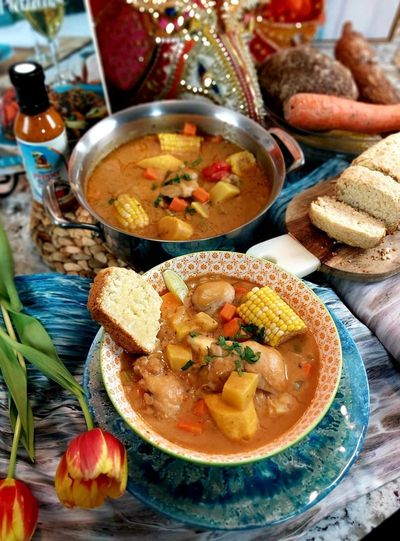
A dark, brown-roux-thickened stew that sits closer to Louisiana gumbo than to Jamaican brown stew chicken, a tell of how strong the Gulf Coast crossover is in Bahamian cooking. The dark roux is the defining step: flour cooked in oil until it goes the colour of cocoa or dark caramel, building toasted-nut depth that the rest of the dish leans on. The flavour profile is layered savoury: thyme as the dominant herb, smoked paprika for smoke, allspice (in the seasoned salt) for Caribbean lift, a single Scotch bonnet for fruity heat, lime juice at the end to wake everything up. The vegetables make it a complete dish, sweet potato, cassava, carrot, corn-on-the-cob pieces and yellow plantain, all hearty and starchy, all picking up the dark sauce. Smell is roasted flour, thyme, and slow-cooked tomato. Not hard but not quick, the roux needs unbroken attention for 5-8 minutes to avoid burning, and the rest is patient stewing. A Sunday-lunch staple across the Bahamas, traditionally served with rice and Johnny Cake (a Bahamian cornbread), and the kind of dish where the leftovers on day two are arguably better than day one.
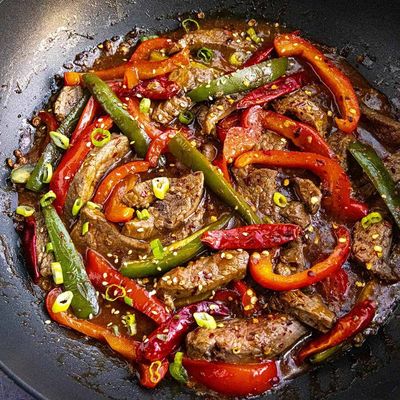
A Burmese curry from the country's Indian-origin community, sitting somewhere between a Madras and a Burmese ohn-no in spice profile. You marinate chunks of beef chuck or shin in turmeric, fish sauce and salt while you fry onions in oil until they're deep brown - that long onion fry is the foundation. The beef browns in the same oil, then ginger-garlic paste, paprika and chilli powder go in, then tomato and water turn it into a stew. Two hours of slow simmer until the meat falls apart at a fork. The signature finish is the see byan, a deep red-orange oil slick that rises to the top of the curry as it reduces, which is what the dish is named for. Eaten with rice or paratha, and a small bowl of pickled vegetable on the side.
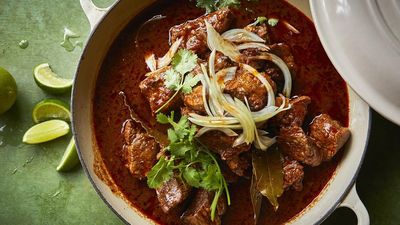
Birria is a Mexican braise of long, patient ambition. Originally a goat or lamb dish from Jalisco, it has long since adopted beef in much of Mexico and almost entirely in the popular taco version. The flavour comes from a layered chile base: guajillo for fruit and colour, ancho for raisin sweetness, pasilla for earthy depth, and a handful of arbol for a sharper heat. These are simmered with onion, garlic, cinnamon and peppercorns, blended smooth with chipotles in adobo and fire-roasted tomato, then poured over seared chuck and short rib for a long oven braise. Three hours later the meat is meltingly tender, sitting in a rust-red consomme that is the whole point: ladled over the shredded beef in a bowl, scattered with raw onion, cilantro and lime, or used to dip crisp taco shells for the now-iconic quesabirria. The recipe takes time but very little technique; almost everything happens unattended in the oven. Plan ahead and make it a day in advance so the flavours settle and the fat lifts cleanly off the top before you reheat.
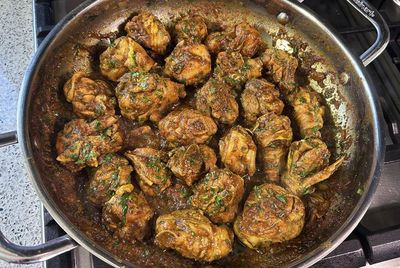
A dry curry rather than a saucy one, "bunjay" is Trinidadian patois for "fry-down", the technique of cooking meat in its own juices until the gravy completely disappears and the spices coat the surface of the meat in a sticky, glaze-like crust. The flavour is concentrated rather than diluted; nothing's been thinned with water or coconut milk, so what you taste is bone-in chicken, rendered chicken fat, and toasted spice. The spice mix is the East Indian Trinidadian signature: turmeric for colour and earth, roasted geera (toasted cumin, ground) for nuttiness, anchar masala for tang, regular curry powder for breadth. The pan oil splits and separates around the chicken at the end, which is the visual cue you're looking for. Smell when the curry powder hits hot oil is deeply aromatic, almost incense-like. Not difficult but it requires attention during the cook-down phase; if you walk away the curry burns onto the bottom of the pan. A Trinidadian household staple, eaten across the country with white rice and dhal, and a clean example of how Indian indentured labourers' descendants in the Caribbean evolved a distinct curry tradition over 150 years.
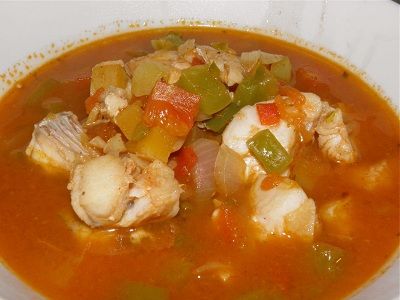
A vibrant Caribbean soup featuring fresh fish poached in a spicy tomato-based broth with sweet potatoes and aromatic vegetables. The scotch bonnet chilli adds authentic heat, balanced by fresh lime juice for a refreshing finish.
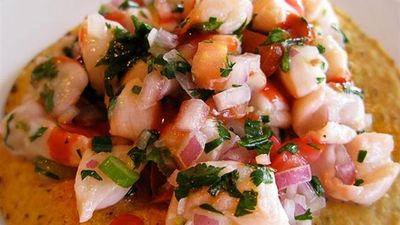
Ceviche is a vibrant, no-cook appetizer in which fresh seafood is "cooked" by the acidity of lime juice, taking on a firm, opaque texture while retaining a wonderfully fresh flavour. The addition of mango, citrus segments, and fresh chilli creates a bright, tropical balance of sweet, sharp, and heat.
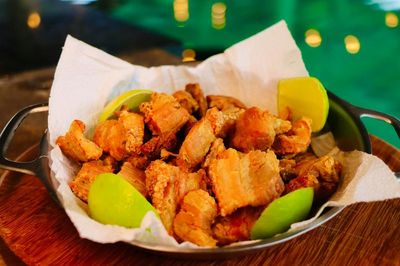
Pork belly cuts into thick strips (5 cm wide × 3 cm thick) with skin on. Simmers in water seasoned with cumin, salt, garlic and a bay leaf for 45 minutes, this tenderises the meat and renders some fat. Lifts out; pats dry. The same pan (with rendered fat) heats hot; strips return skin-side-down; fry for 15-20 minutes until the skin blisters and puffs into the crackling crust. Drains briefly. Eats hot.
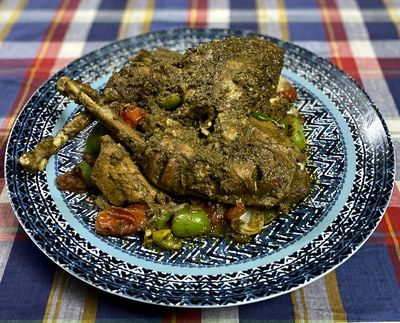
A vivid green masala is ground from coriander leaves, mint, green chilli, garlic, ginger, cumin, peppercorns and clove with palm vinegar. Chicken pieces are slashed and marinated for at least 4 hours (ideally overnight). The pieces are pan-fried in the marinade-paste over high heat until the herb crust dries out and chars at the edges, with a small splash of water added halfway through to keep the chicken juicy. Served with a wedge of lime and a salad of onion and tomato.

Yellow-corn masarepa hydrates with water, salt and a pinch of paprika for colour. Beef mince cooks with onion, tomato cumin and oregano; cooked potato dices fold in for body. The dough divides; each ball flattens between two pieces of cling film into thin discs; filling goes in the centre; folded into a half-moon, sealed with damp fingers, fried.
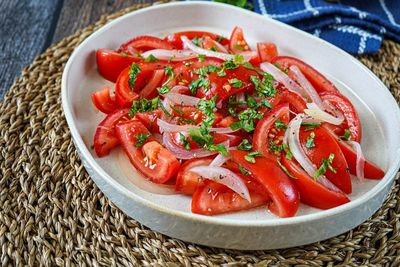
The Chilean table salad, three ingredients done properly. The defining technique is what you do with the onion: you slice sweet white onion thin and soak it in cold salted water for fifteen minutes, which draws out the harsh sulphurous bite and leaves a clean, mild allium that doesn't punish the rest of the salad. Ripe tomatoes slice into half-moons, everything tosses with olive oil, lime and salt, and a generous scatter of fresh coriander goes on top. That's it. Eaten alongside roast meat, empanadas, pastel de choclo, or anything off the grill. The soaked-onion technique is the difference between this and any other tomato salad.
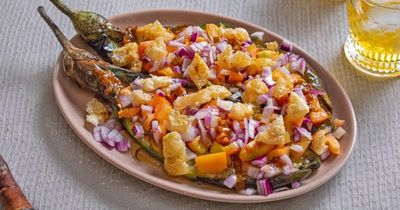
Long Asian aubergines char directly over a gas flame or hot grill until blackened all over and totally soft inside (poke through to test, no resistance). Cool for 10 minutes; peel away the charred skin (it slips off if cooked enough). Tear the flesh into 5 cm strips. Dress with diced tomato, thin-sliced red onion, fish sauce, white-cane vinegar and calamansi juice. Rest for 5 minutes to let the eggplant absorb the dressing. Serve room temperature.
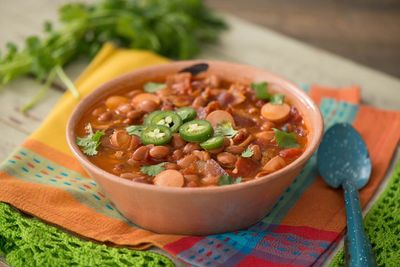
Pinto beans are soaked overnight, then simmered with onion and garlic until tender. A separate pan crisps the bacon, browns the chorizo and softens the onion, jalapeño and tomato into a thick base. The two are combined for a final simmer with coriander, and the broth turns smoky, salty and rich. Eaten by the spoonful from a bowl, or set out alongside grilled meats and tortillas.
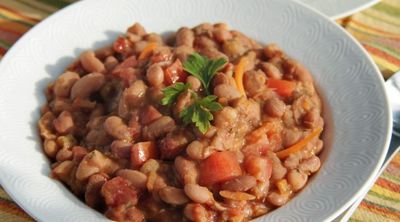
Dried red beans soak overnight. Bacon and chorizo render in a wide pot; aromatics build the base; soaked beans simmer with a chunk of green plantain (the trick, it dissolves over the cook and naturally thickens the broth) and pork belly for 2 hours. Hogao folds in at the end. Lime brightens.
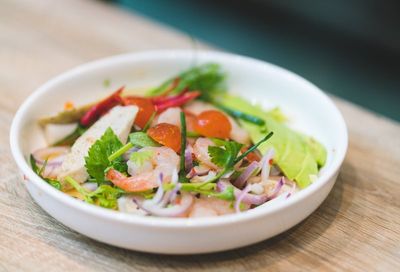
Spicy Thai salad with glass noodles, prawns, and pork. Nostalgic dish from Thai barbecues; serve hot or at room temperature.