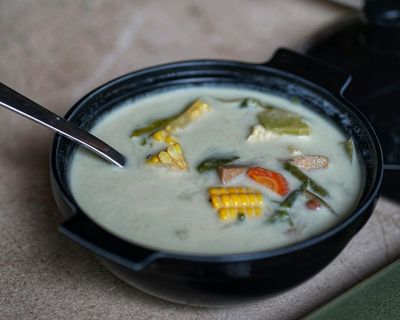
Shukto
Shukto is the dish that confuses newcomers and converts Bengalis for life. It is the first course of a traditional Bengali meal, served on the rice plate at the very start, before the dal, before the fish, before anything sweet. The logic is Ayurvedic: a small portion of something bitter eaten on an empty stomach is said to wake the digestion and tune the palate. The bitterness comes from korola (bitter gourd), but it is always counterweighted with the sweetness of milk, a little sugar, ripe banana plantain, sweet potato or radish, and the warm nuttiness of ground ginger and roasted radhuni (wild celery seed). The vegetables are cut to a uniform finger-shape (jhuri) and added in order of cooking time: bitter gourd first to mellow it, then plantain, drumstick, brinjal, sweet potato, with bori (sundried lentil dumplings) fried separately and stirred in at the end. The tempering is unusual: panch phoron or, more correctly for shukto, just radhuni and a pinch of mustard seeds in ghee. Milk is added towards the end and the dish is finished with a paste of ginger and a tablespoon of poppy seed or mustard ground with milk. It is mild, complex and unmistakably Bengali. A first-time cook should not be afraid of the bitterness; once the milk, ghee and sugar enter the pot it transforms into a balanced, almost soothing stew. Shukto is most associated with West Bengal and is served at every wedding, every shraddha (ancestral) feast and most Sunday lunches in a Bengali Hindu home.