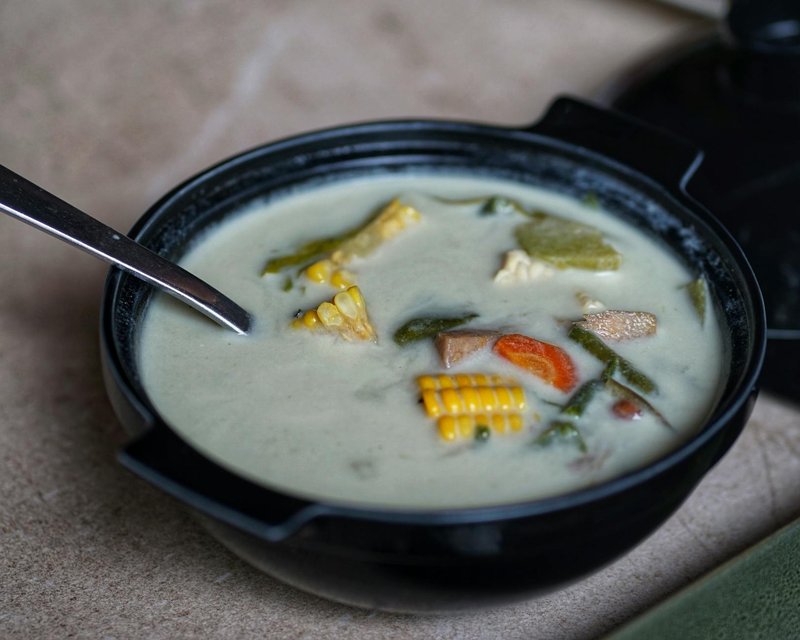
Shukto
A pale, faintly milky stew studded with bitter gourd, drumstick, plantain and aubergine, scented with bay leaves, ghee and a whisper of ground radhuni. Its first taste is bitter, the second sweet, the finish nutty: a deliberate awakening of the palate that opens every formal Bengali meal.
Overview
Shukto is the dish that confuses newcomers and converts Bengalis for life. It is the first course of a traditional Bengali meal, served on the rice plate at the very start, before the dal, before the fish, before anything sweet. The logic is Ayurvedic: a small portion of something bitter eaten on an empty stomach is said to wake the digestion and tune the palate. The bitterness comes from korola (bitter gourd), but it is always counterweighted with the sweetness of milk, a little sugar, ripe banana plantain, sweet potato or radish, and the warm nuttiness of ground ginger and roasted radhuni (wild celery seed). The vegetables are cut to a uniform finger-shape (jhuri) and added in order of cooking time: bitter gourd first to mellow it, then plantain, drumstick, brinjal, sweet potato, with bori (sundried lentil dumplings) fried separately and stirred in at the end. The tempering is unusual: panch phoron or, more correctly for shukto, just radhuni and a pinch of mustard seeds in ghee. Milk is added towards the end and the dish is finished with a paste of ginger and a tablespoon of poppy seed or mustard ground with milk. It is mild, complex and unmistakably Bengali. A first-time cook should not be afraid of the bitterness; once the milk, ghee and sugar enter the pot it transforms into a balanced, almost soothing stew. Shukto is most associated with West Bengal and is served at every wedding, every shraddha (ancestral) feast and most Sunday lunches in a Bengali Hindu home.
Ingredients
Vegetables (cut into 5 cm finger pieces)
- 1 bitter gourd (small, korola), about 100 g, deseeded and sliced thin
- 1 raw green plantain, peeled
- 1 sweet potato (small), peeled
- 1 aubergine (small)
- 1 drumstick (moringa pod), cut into 5 cm lengths
- 1 radish (small), peeled
- 100 g potato
Pastes and tempering
- 1 tbsp white poppy seeds (posto), soaked in 3 tbsp warm water
- 1 tsp yellow mustard seeds, soaked in 2 tbsp warm water
- 1 tbsp ginger, grated
- 2 tbsp mustard oil
- 2 tbsp ghee
- 2 bay leaves
- ½ tsp radhuni (or ajwain / wild celery seed as substitute)
- ½ tsp panch phoron
- 8 sundried lentil dumplings (bori), optional
To finish
- 250 ml whole milk
- 1 tsp sugar
- 1 tsp salt, or to taste
- ½ tsp ground roasted radhuni
- 1 tsp ghee
Method
Stage 1 - Prepare pastes and bori
- Grind the soaked poppy seeds with their water to a smooth paste.
- Grind the soaked mustard seeds with their water to a smooth paste; strain through a fine sieve to remove husks. (Mustard paste turns bitter if over-ground, so do this quickly.)
- Heat 1 tbsp of the mustard oil in a kadai and fry the bori until deep golden; lift out and set aside.
- Lightly fry the aubergine pieces in the same oil for 2 minutes; set aside with the bori.
Stage 2 - Cook the vegetables
- Add the remaining mustard oil and 1 tbsp ghee to the kadai.
- Drop in the bay leaves, radhuni and panch phoron; let them perfume for 15 seconds.
- Add the bitter gourd slices and fry for 3 minutes over medium heat until lightly browned.
- Add the plantain, sweet potato, radish, drumstick and potato. Stir for 2 minutes.
- Add 300 ml warm water, salt and sugar. Cover and simmer for 10 minutes.
Stage 3 - Add pastes and milk
- Stir in the ginger and the poppy seed paste; cook for 2 minutes.
- Add the fried aubergine and the mustard paste; simmer for 2 minutes more.
- Pour in the milk and bring just to a gentle simmer; do not let it boil hard or the milk will split.
- Cook uncovered for 5 minutes until the vegetables are tender and the gravy has thickened slightly.
- Return the fried bori to the pot, sprinkle the ground roasted radhuni and the finishing ghee, and rest off the heat for 5 minutes before serving with hot rice.
Notes
- Radhuni: This is the signature spice of shukto - a small relative of celery seed, native to Bengal. If unavailable, use ajwain (carom) sparingly, or a 50/50 mix of celery seed and a pinch of fenugreek.
- Bitterness balance: If your bitter gourd is very strong, rub the slices with salt and rest for 10 minutes, then squeeze gently before frying. Do not skip the gourd altogether; without it the dish is not shukto.
- Milk: Use whole milk only. Skimmed milk will not give the right texture and is more likely to split.
- Order matters: Bengali cooks add vegetables in a specific sequence so each is correctly cooked. The bitter gourd always goes in first.
Storage
- Best eaten the day it is cooked; the milk-based gravy thickens and dulls overnight.
- Refrigerate in a sealed container for up to 1 day. Reheat very gently.
- Not suitable for freezing.
More like this
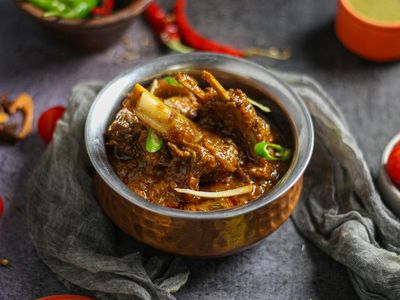
Kosha Mangsho
Kosha mangsho takes its name from the verb kosha, which in Bengali means to slow-cook a meat down, stirring patiently as the spices and onions caramelise and the gravy reduces until the oil floats free. There is no water in the early stages, only the meat's own juices, yoghurt and onion paste working under a closed lid. The result is intense, almost jammy, with a deep brown colour that comes not from food colouring but from honest bhuna technique and good mustard oil. In Hindu Bengali homes the dish is made with goat (khashi) on festive Sundays and at pujas; the Bangladeshi version is broadly similar but often uses a touch more garlic and sometimes finishes with a spoon of ghee instead of mustard oil. The cut matters: bone-in shoulder and leg pieces with marrow bones give the gravy its body. Mustard oil heated to smoke point, a whole garam masala tempering, slow-fried onions reduced to a near-paste, and yoghurt added in stages to prevent splitting are the technical demands. It is not difficult for a patient home cook, only long: rushing kosha mangsho is the surest way to ruin it. Serve with luchi (puffed flour breads), basanti pulao (sweet yellow rice with cashews and raisins) or simply steamed gobindobhog rice. A side of kasundi mustard and sliced onion makes it a feast.
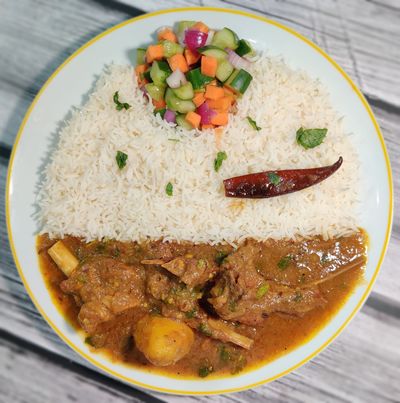
Mangshor Jhol
The wet-style mutton counterpart to the drier, slow-bhuna kosha mangsho - and the more everyday of the two. "Jhol" means a thin, soupy gravy and mangshor jhol is exactly that: bone-in goat or mutton cooked low and slow with potatoes in a light, aromatic broth that you ladle generously over rice. You heat mustard oil to smoking to take the raw edge off, temper whole bay and cinnamon in the hot fat, then brown the onions deeply and add a measured hand of turmeric to give the gravy its colour and weight. The bones contribute marrow to the broth as the meat tenderises over an hour or so, and the potatoes go in late enough that they soften without disintegrating. Eaten with a mound of plain steamed rice, a wedge of lime, and a thin slick of mustard oil scattered with raw onion on the side. A Sunday lunch dish for a Bengali household, served from the same pot it was cooked in.
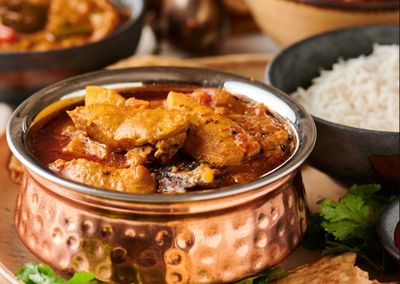
Murgir Jhol
The everyday Bengali household chicken curry, the antithesis of the heavy, cream-rich curry-house style. "Jhol" means a thin, soupy gravy, and that's exactly what murgir jhol is: bone-in chicken and chunky golden potatoes simmered in a fragrant amber broth you eat with steamed rice, mopping up every drop. You heat mustard oil to smoking point to take the raw edge off, then temper whole bay, cinnamon, cardamom and clove in the hot fat. Browned onions, freshly pounded ginger and a measured hand of turmeric give the gravy its colour and warmth; tomato goes in sparingly, just enough to round the edges without turning the broth red. The chicken and potatoes cook together gently for about thirty minutes, the meat falling tender as the broth concentrates. Steamed gobindobhog rice on the side, a wedge of lime, perhaps a green chilli on the rim of the bowl for whoever wants more heat.
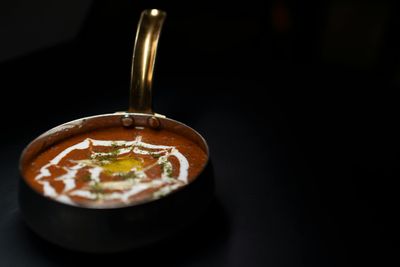
Dal Makhani
Whole black urad lentils and a small handful of red kidney beans are soaked overnight, then pressure-cooked or simmered until completely tender. A tomato-and-spice masala is built separately with onion, garlic, ginger and a careful hand with the spices. The lentils are folded into the masala and simmered, low and slow, for two hours, while butter and cream are stirred through in the final stage. The lentils break down into a glossy, almost-velvet finish.