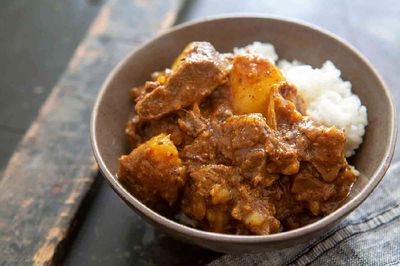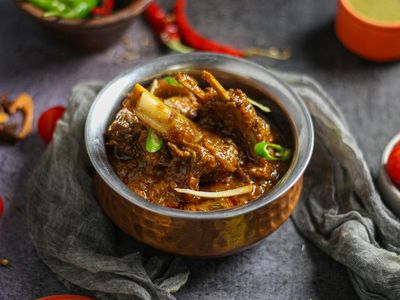
Kosha Mangsho
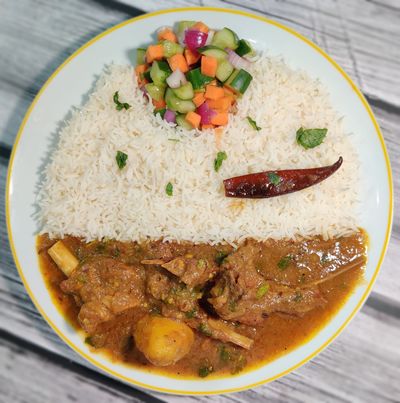
Kosha mangsho takes its name from the verb kosha, which in Bengali means to slow-cook a meat down, stirring patiently as the spices and onions caramelise and the gravy reduces until the oil floats free. There is no water in the early stages, only the meat's own juices, yoghurt and onion paste working under a closed lid. The result is intense, almost jammy, with a deep brown colour that comes not from food colouring but from honest bhuna technique and good mustard oil. In Hindu Bengali homes the dish is made with goat (khashi) on festive Sundays and at pujas; the Bangladeshi version is broadly similar but often uses a touch more garlic and sometimes finishes with a spoon of ghee instead of mustard oil. The cut matters: bone-in shoulder and leg pieces with marrow bones give the gravy its body. Mustard oil heated to smoke point, a whole garam masala tempering, slow-fried onions reduced to a near-paste, and yoghurt added in stages to prevent splitting are the technical demands. It is not difficult for a patient home cook, only long: rushing kosha mangsho is the surest way to ruin it. Serve with luchi (puffed flour breads), basanti pulao (sweet yellow rice with cashews and raisins) or simply steamed gobindobhog rice. A side of kasundi mustard and sliced onion makes it a feast.