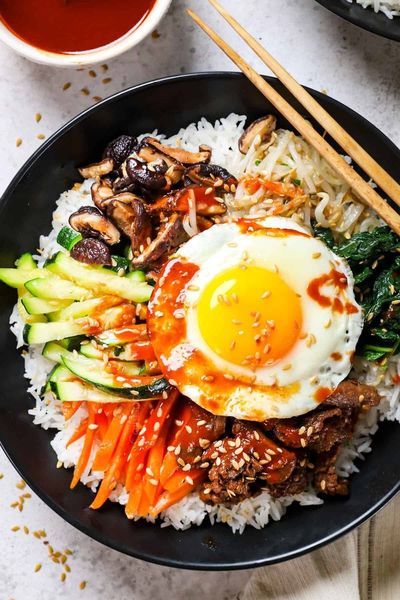
Bibimbap
Each vegetable cooks separately and gets dressed with sesame oil, garlic and soy. They arrange in colourful piles around a mound of rice; an egg fries on top. Gochujang sauce on the side. Diners mix vigorously before eating.
Korean
Tap a chip to add another filter, or use Clear all below.
Tap any item to find recipes that use it.
Each vegetable cooks separately and gets dressed with sesame oil, garlic and soy. They arrange in colourful piles around a mound of rice; an egg fries on top. Gochujang sauce on the side. Diners mix vigorously before eating.
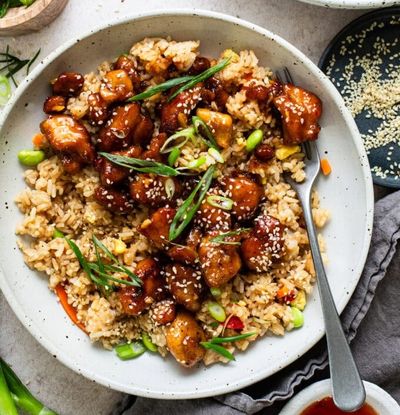
An Asian-American takeout standard reimagined for the home kitchen, with one specific upgrade: 10 cloves of garlic, chopped rather than minced, so the pieces stay visible and bite back. The flavour is the canonical sweet-salty-spicy balance of American Chinese cookery, honey for sweetness, soy for salt and umami, sweet chilli sauce (Mae Ploy or similar Thai bottled brand) for vinegared chilli warmth, garlic for sharpness across the back. Crisp comes from a cornstarch dust on the chicken, which gives a more even, lacier crust than flour does and stays crisp longer once the sauce hits it. The chicken thighs themselves stay juicy because they're cubed, not pounded; the small pieces cook fast and the seasoning penetrates. Smell when the chicken hits the sauce is honey-and-soy hitting hot oil, which is one of the more universally appealing kitchen smells. Easy and fast, active cooking under 20 minutes once the marinade has rested. The dish has no claim to traditional Chinese cookery; it's the product of decades of evolution in American Chinese restaurants and the home-cook adaptations that followed.
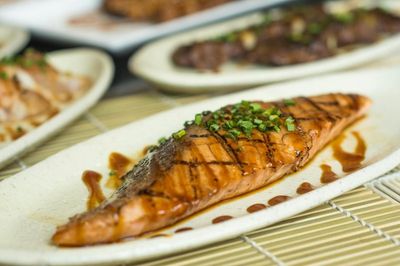
Salmon fillets sear skin-side down for crisp skin, then bathe in a quick honey-soy-mirin-ginger reduction that lacquers them. Broccoli or bok choy steams in the same pan with a splash of stock. Twenty minutes; one pan; serve over rice.
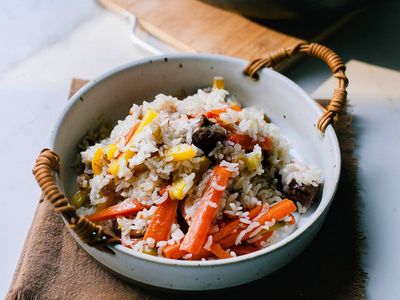
A dish entirely about lamb fat carried through rice. Each grain ends up glossy and orange-tinted from the rendering, with sweetness from caramelised yellow carrot, honey and raisins, and a savoury back-end from tender lamb cubes. White and black pepper give a quiet warmth; cumin doesn't appear here (unlike in most Uyghur lamb cookery), and that absence is deliberate, this pilaf is sweet-savoury rather than spice-driven. The aroma when the lid comes off is unmistakable Silk Road: lamb fat, sweet onions, honey, faintly resinous from the carrot. Not difficult but it requires confidence in the no-peek phase; the rice cooks by steam trapped under the lid, and lifting it sabotages the dish. Sits at the centre of a long Silk Road pilaf lineage that runs from Persian polo through Uzbek plov to Indian biryani, and a Xinjiang Uyghur celebration dish, the polo at every wedding, every Eid, every guests-coming-tonight household. Eaten with the hands, which is what zhuafan means.
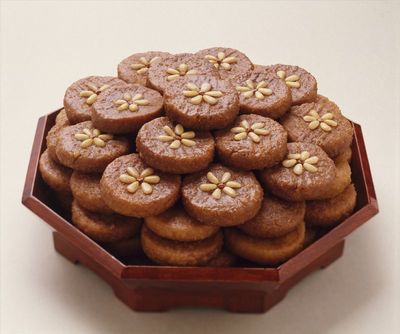
A dough of flour, sesame oil, honey, sugar, soju (Korean rice wine), and a pinch of cinnamon and ginger rubs together, yakgwa dough is sandy, not stretchy (no gluten development is desired). Rests for 30 minutes. Rolls 8 mm thick; cuts into 3 cm flower shapes with a cutter. Pricks each piece with a fork or knife (helps the syrup soak in). Fries in two stages: gentle 110°C heat first to swell the dough; then 160°C to crisp. While frying, syrup of honey, rice syrup (or maple/corn), water and ginger simmers briefly. Hot fried cookies dunk into warm syrup; rest for 1 hour to absorb; lift onto a rack to drain excess.