In season

May produce

Tap any item to find recipes that use it.

Asparagus 0Rhubarb 0Peas 0Broad beans 0Radish 0Lettuce 0New potato 0Spring onion 0Watercress 0Sorrel 0
Alur Chop

Alur Chop

Alur chop (alu meaning potato, chop being a Bengali loan-word for a fried cutlet, inherited from the British "chop") is the workhorse of Bengali street snacks: every tea stall, every train platform, every late-afternoon adda has a stack of these warming under a glass cover. The construction is two layers. The inner mash is heavily seasoned: boiled potato folded through fried onion, ginger, green chilli, roasted cumin and a measured punch of Bengali bhaja moshla (a dry-roasted spice blend of cumin, coriander and dried chilli). Some versions add a few peanuts or roasted chana dal for crunch; in Kolkata the mash often includes a slick of mustard oil for fragrance. The outer shell is a thin chickpea-flour batter, the same family as beguni and piyaju, fried hot so it sets into a thin crisp casing rather than a heavy crust. The trick is contrast: a shell crisp enough to crackle, a centre soft and yielding and a touch wet from the onion. They are sold individually wrapped in newspaper for a few rupees and eaten standing up, often with muri puffed rice and a small dollop of kasundi (Bengali fermented mustard sauce) on the side. A monsoon and winter snack above all, when the cold air makes the hot oil and the inside-warm chop feel particularly right.
Snacks 55 minutes Serves4
Beguni

Beguni

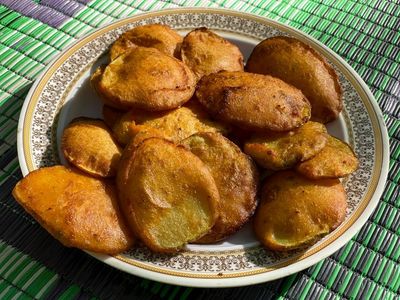
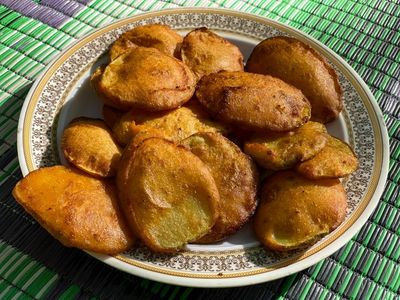
Beguni (from begun, the Bengali word for brinjal/eggplant) is the simplest of the great Bengali pakoras: long thin slices of aubergine, dipped in seasoned chickpea-flour batter and deep-fried. Done well, the contrast is everything, a shatteringly crisp shell with the lightly bitter, custard-soft eggplant inside. It is the defining iftar fritter across Bangladesh, where it appears every evening during Ramadan alongside piyaju (onion fritters) and chickpea ghugni; in West Bengal it is the tea-stall companion of muri and a monsoon-day comfort food. The technique is short on ingredients but particular: the eggplant must be salted first to draw out bitter water and prevent the slice from absorbing oil; the batter must be just thick enough to coat the back of a spoon, with the texture of double cream; and the oil must be hot enough (around 180 C) that the batter sets instantly into a crisp shell. The traditional fat is mustard oil heated until just smoking, then cooled briefly to take the raw edge off; this gives beguni its characteristic mustardy back-note. Nigella seeds (kalonji) in the batter are non-negotiable in Bangladesh, they pop slightly in the hot oil and give the fritter its distinctive aroma. Eat immediately, with a few slivers of raw onion, a green chilli and a wedge of lime.

Snacks 1 hour 5 minutes Serves4
Bessara

Bessara

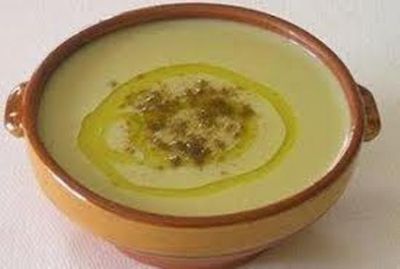
Dried split fava beans (foul mudammas) soak overnight with bicarbonate of soda. Simmer with garlic, bay, coriander seeds and water for 1 hour until completely soft. Blitzed (or mashed) with garlic, ground cumin, ground coriander, salt and lemon juice into a thick spoonable purée, looser than hummus but thicker than soup. Plated in a wide shallow bowl: a swirl in the centre, doused with the green oil (olive oil + paprika + cumin + chopped parsley), maybe a sprinkle of dukkah on top, served warm with hot baladi bread.

Snacks 1 hour 30 minutes Serves4
Burmese Samosa

Burmese Samosa

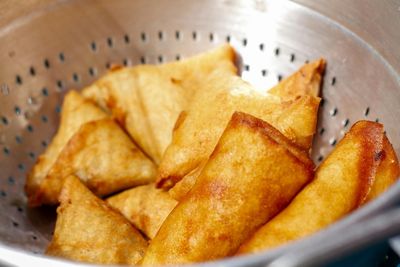
The Burmese take on the South Asian samosa, with a thinner, crisper pastry and a milder filling than its Indian cousin. You make a hot-water dough that rolls out very thin so the fried shell ends up glassy and crisp rather than bready. The filling is mild by Indian standards: turmeric, ginger, fried onion and a whisper of cumin folded into mashed potato and peas, finished with crushed peanuts for the nuttiness that marks the Burmese version. The triangles fry at moderate heat until amber and crackling, the pastry blistering as it goes. Eaten hot dipped in tamarind sauce, or torn into chunks for a samusa-thoke salad later.

Snacks 1 hour 5 minutes Serves4
Falafel Lebnani

Falafel Lebnani

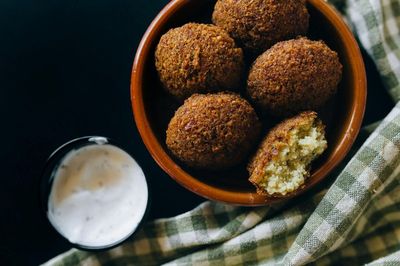
Dried chickpeas soak overnight (never cooked, chickpeas must remain raw). Drained, blitzed with onion, garlic, a heaped pile of fresh parsley and coriander, ground cumin, ground coriander, salt, black pepper and Aleppo pepper into a coarse green paste. Rested for 30 minutes. Baking soda mixed in just before frying. Shaped into small (3 cm) patties or balls, a falafel scoop (zalabia) gives the cleanest shape but two spoons work. Optionally rolled in sesame seeds. Deep-fried in oil at 175°C for 2-3 minutes per side until amber-gold and crisp. Stuffed into pita with tahini, salad and pickles.

Snacks 37 minutes Serves4
Falafel Palestinian

Falafel Palestinian

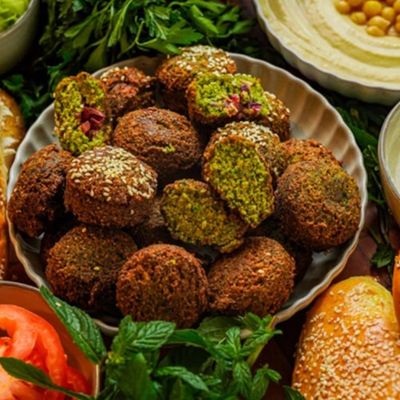
Dried chickpeas (or a chickpea-fava blend) soak overnight. Drained, blitzed with onion, leek, a heaped pile of fresh parsley AND coriander (the Palestinian style is herb-heavy and notably green), garlic, ground cumin, ground coriander, salt and Aleppo pepper. Left to rest. Baking soda mixed in right before frying. Shaped into small patties or balls; pressed into sesame seeds; deep-fried until amber. Stuffed into khobz with tahini sauce, salad and pickled vegetables.

Snacks 37 minutes Serves4
Ta'amia (Egyptian Broad-Bean Falafel)

Ta'amia (Egyptian Broad-Bean Falafel)

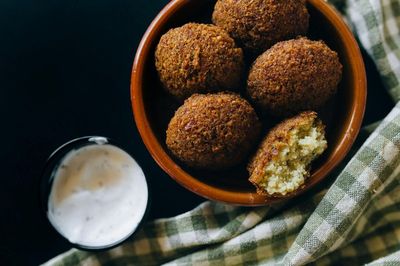
Falafel represents the apotheosis of vegetarian fried food: beans ground to a light, slightly grainy purée, bound minimally with herbs and spices, then deep-fried until the exterior shatters with crispness while the interior remains creamy and pale green. The key to success is never cooking the dried beans, using only dried, soaked varieties (never canned), which allows the texture to remain light and fluffy rather than becoming dense. The extended resting period before frying allows the mixture to firm up, holding its shape during cooking. These are best eaten absolutely fresh, while the interior is still steaming and the exterior crackles.

Snacks 8 hours Serves24-28
Tameya

Tameya

Dried split fava beans (sold as "split foul" or "ful asfar" at Egyptian or Middle Eastern shops) soak overnight (never cooked, that's the key). Once drained, the favas are blitzed with onion, garlic, parsley, coriander, dill, leek and a generous dose of cumin, coriander and chilli into a coarse green paste. Rested for 30 minutes; baking soda mixed in for fluffiness. Patties shape between palms; pressed into sesame seeds + crushed coriander seeds; deep-fried 175°C for 2-3 minutes per side until amber-crisp. Drained and stuffed into pita with tahini, salad and pickles.

Snacks 42 minutes Serves4
Vegetable Pakora

Vegetable Pakora

Gram (chickpea) flour combines with rice flour for extra crispness, with ajwain, chilli, turmeric and a pinch of baking soda for the airy texture. Cold water makes a thick coating batter (not pancake-thin). Mixed vegetables are tossed in the batter and dropped into hot oil in clusters; each one stays loose, with crisp tendrils of onion and the soft give of potato inside. Two batches: the second fry gives the deep-fried lacquered crunch.*

Snacks 40 minutes Serves6