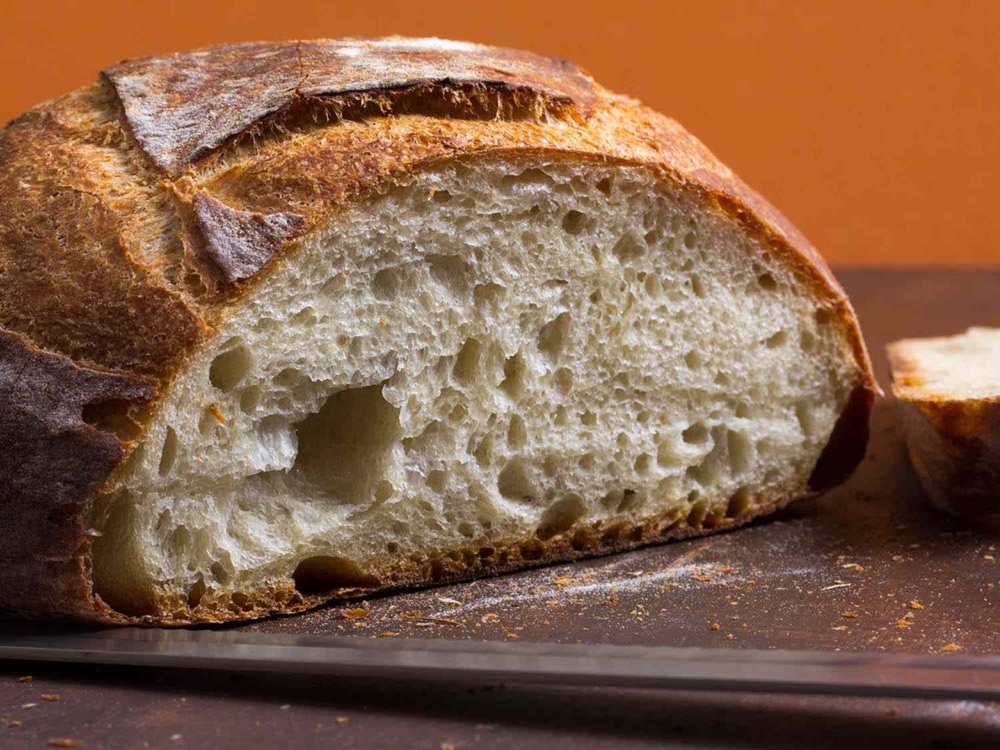
Standard Loaf
The standard loaf is the everyday rectangular sandwich loaf - dough shaped into a soft oval and dropped into a buttered tin to rise. It's the easiest shape in the whole course and the place to start if you've never baked bread before. The tin does most of the work; you just need to put dough in it.
What you're aiming for
A rectangular loaf with flat sides (from the tin walls) and a gently domed top (where the dough rose above the rim and had room to expand). Even crumb, slightly soft crust, sliceable for sandwiches or toast. Nothing flashy - and that's the point. Every other shape in the course assumes you can shape a tight ball or a tight cylinder; the standard loaf bypasses both requirements by relying on the tin.
What you need
A 900 g loaf tin (roughly 25 × 12 × 8 cm) - the standard British size. A bit of butter or oil for greasing. That's it.
The shaping
This barely qualifies as shaping. After bulk fermentation, turn the dough onto a lightly floured surface. Push and stretch it gently into a rough oval, roughly the length of the tin (20 to 25 cm) and about two-thirds the width. The dough will feel loose and a bit floppy - that's correct. You're not building surface tension here the way you would for a cob or a bloomer; you're just getting the dough into a shape that fits the tin.
Lightly grease the tin all over the interior with a fingertip-smear of butter or oil. Drop the oval-shaped dough into the centre. It should sit there relaxed, with about 1 to 2 cm of clearance on each side. Don't press it down or stretch it to the corners - it'll find its own shape during the prove.
If the dough has gone strange and irregular as you transferred it, push it gently back into an oval with your hand. The dough is generous and forgiving here.
Prove
Cover the tin with a damp tea towel and prove in a warm spot (20 to 25°C) for 45 to 60 minutes. The dough gradually rises and conforms to the tin. A gentle finger-poke should leave a slight indent that springs back slowly over a couple of seconds (see Proving).
The dough should be visibly puffy and have risen to roughly the top edge of the tin. If it's still flat in the bottom of the tin, give it another 15 minutes.
The bake
Preheat the oven to 200 to 220°C (lean doughs at 220, enriched doughs at 190 to 200). Place the tin on the middle rack and bake for 30 to 35 minutes until deeply golden on top.
To test doneness, lift the loaf out of the tin (using oven gloves - the tin is screaming hot) and tap the bottom with your knuckles. A hollow drum-like sound means it's done. A dull thud means another two or three minutes in the oven.
Cool the loaf on a wire rack - not in the tin, where trapped steam would make the crust soggy. Wait at least an hour before slicing. The crumb continues to set as it cools, and cutting too early traps steam in the slice and turns it gummy.
When you're ready for more
The standard loaf is the right place to start. Once you've baked a couple, the next steps in order of difficulty:
- Tin loaf - a variation that splits the loaf down the centre, either by joining two pieces side-by-side or with a single deep score. Same tin, slightly more presentation.
- Cob - your first round shape. Teaches the cup-and-rotate that underpins every domed bread.
- Bloomer - your first multi-cut scoring practice on a free-form loaf.
Where Next
- Tin Loaf: the moulded tin variant with a split top.
- Cob or Boule: the foundational round, the next shape up.
- Proving: the finger-poke test that says "bake now."
- Shape Gallery: back to the full shape list.
More like this

Acar Timun
Cucumber, carrot, shallot, chilli prep into thin slices or matchsticks. Salt rests for 10 minutes to draw moisture, drains. A simple dressing of vinegar, sugar, water and ginger whisks together. Vegetables toss with the dressing; rest for 1 hour at room temperature. Eats cool, never refrigerated cold; the texture suffers.
Adobong Sitaw
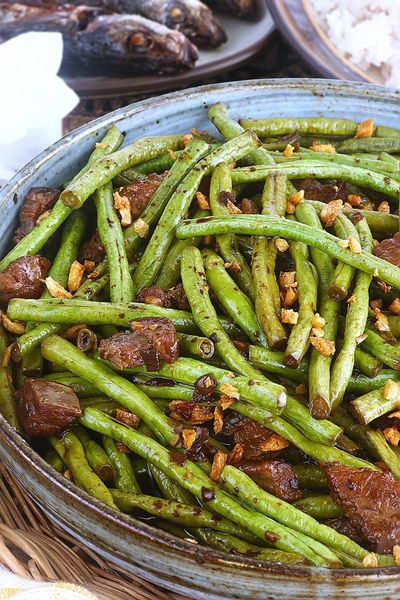
Garlic browns in oil; long beans toss in to colour briefly. Soy and vinegar pour in with bay and peppercorns; the beans braise covered until tender. Lid off; the liquid reduces to a glaze. Salt at the end, not the start, since soy is salty enough.
Ajad
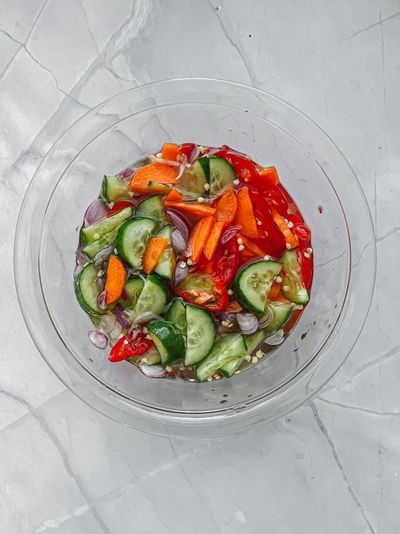
A simple syrup of rice vinegar, palm sugar, water and salt is brought to a gentle simmer to dissolve the sugar, then cooled. Cucumber, shallot and chilli are sliced thin and combined in a small bowl. The cooled syrup is poured over. Rested for 10-15 minutes for the vegetables to wilt slightly into the dressing. Served in small individual ramekins as a dip, OR in a larger bowl as a side, with peanuts sprinkled on top.
Akara
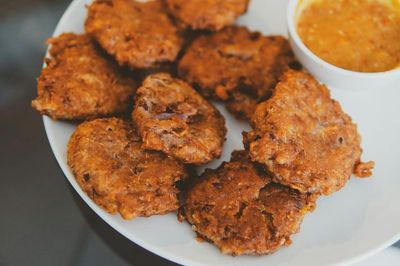
Dried black-eyed beans soak briefly to loosen the skins; the skins rub off (this is the key step, skin-on akara is bitter and grey). The peeled beans go into a blender with onion, Scotch bonnet and just enough water to make a thick batter (not a paste). The batter is whipped by hand or with a wooden spoon for 5 minutes until light and aerated, this is what makes akara fluffy rather than dense. Spoonfuls drop into 175°C oil and fry for 3-4 minutes per side until golden. Drained on paper. Eaten hot.