Mazondo
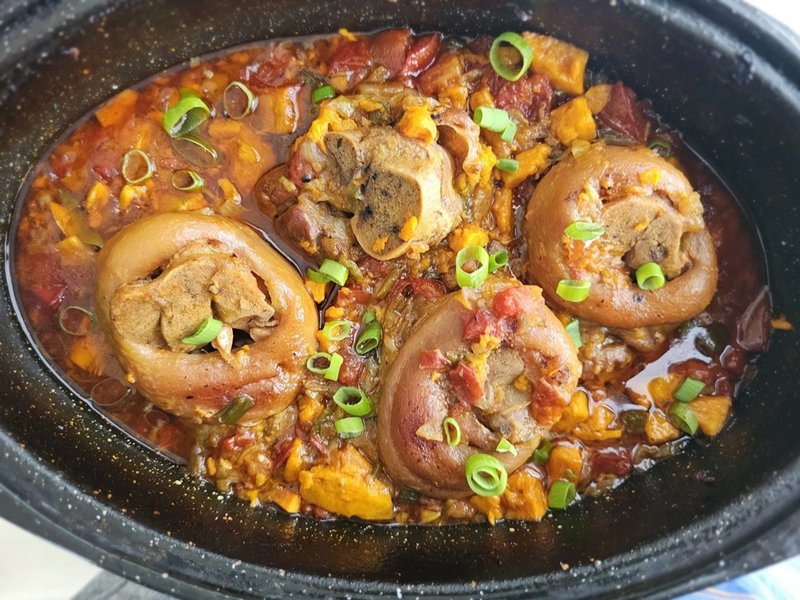
Zimbabwe's spicy stewed cow trotters: a sticky, gelatinous, deeply savoury sharing dish, simmered long with onion, tomato, garlic and chilli.
Overview
The trotters get a hard initial boil to set the meat and start releasing gelatin; the water is changed. Onion, tomato and spices build a hot, dense gravy; the trotters re-enter for a long slow simmer until the gelatin gives. The sauce thickens as it cools, glazing every piece. Heat is part of the point.
Ingredients
- 1 ½ kg cow trotters (cleaned, cut into pieces by the butcher - 4-6 cm chunks)
- 3 tablespoons vegetable oil
- 2 onions (large, chopped)
- 6 garlic cloves (crushed)
- 1 thumb fresh ginger (grated)
- 1 (400 g) tin chopped tomatoes
- 2 tablespoons tomato puree
- 2 tablespoons paprika (mix of sweet and smoked)
- 1 teaspoon ground black pepper
- 2 teaspoons chilli powder (or to taste)
- 2 beef stock cubes
- 2 bay leaves
- 2 fresh red chillies (split)
- 200 ml hot water
- Salt to taste
Method
Stage 1 - First boil
- Place the trotters in a large pot; cover with cold water.
- Bring to a hard boil; skim the heavy scum that rises. Boil 10 minutes.
- Drain; rinse the trotters; wash the pot.
Stage 2 - Slow cook
- Return the trotters to the pot; cover with fresh hot water by 3 cm; add 1 stock cube and 1 bay leaf.
- Simmer covered 2 hours until the meat is tender and pulls easily from the bone. Top up water as needed.
- Drain, reserving 300 ml of the cooking liquor.
Stage 3 - Sauce
- In another large pot, heat the oil; soften the onion 8 minutes.
- Add garlic, ginger, paprika, pepper and chilli powder; cook 1 minute.
- Stir in tinned tomato and tomato puree; reduce 6-7 minutes until thick.
- Crumble in the second stock cube. Add the remaining bay, fresh chillies, and the 300 ml reserved cooking liquor + 200 ml hot water.
Stage 4 - Combine
- Add the cooked trotters; stir to coat in the sauce.
- Simmer uncovered 45 minutes - the sauce reduces and glazes the trotters; the gelatin thickens it.
- Taste; adjust salt and chilli.
Stage 5 - Serve
- Tip onto a wide platter. Eat with sadza and a beer. The right hand is the right utensil.
Notes
- Ask the butcher to chop: Trotters are bone-heavy and impossible to cut at home. They should arrive in 4-6 cm pieces, split lengthwise where possible.
- First boil is for cleanliness: The skim that rises is alarming; the second boil is in clean water with the spices.
- Gelatin: The sauce thickens dramatically as it cools - this is the gelatin. Reheat gently with a splash of water to loosen.
Storage
- Refrigerate 3 days. The sauce sets like jelly cold - that's correct.
- Freezes 2 months.
More like this
Zimbabwean Oxtail Stew
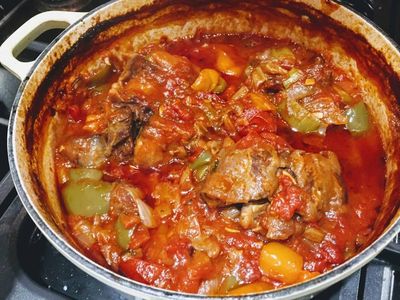
Oxtail browns hard in batches so the fond builds. Onion, garlic and tomato cook down in the same pot; stock, bay and a beef cube go in; the oxtail returns and braises covered on the lowest heat for three hours. The meat should slide off the bone with a fork. Skim the fat at the end, it's significant.
Beef Si Byan
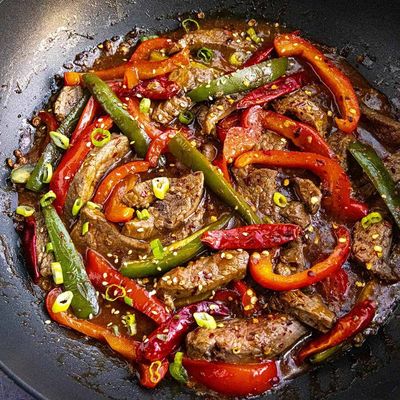
A Burmese curry from the country's Indian-origin community, sitting somewhere between a Madras and a Burmese ohn-no in spice profile. You marinate chunks of beef chuck or shin in turmeric, fish sauce and salt while you fry onions in oil until they're deep brown - that long onion fry is the foundation. The beef browns in the same oil, then ginger-garlic paste, paprika and chilli powder go in, then tomato and water turn it into a stew. Two hours of slow simmer until the meat falls apart at a fork. The signature finish is the see byan, a deep red-orange oil slick that rises to the top of the curry as it reduces, which is what the dish is named for. Eaten with rice or paratha, and a small bowl of pickled vegetable on the side.
Cari Poulet Et Pomme de Terre
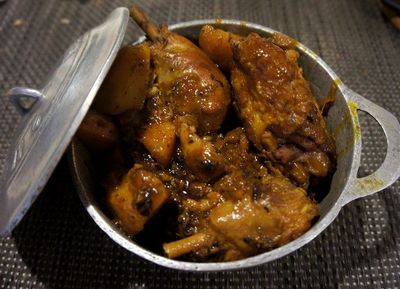
Mauritian cuisine is a layered conversation between Indian, African, Chinese and French traditions, and cari poulet is one of its clearest expressions. The Creole community took the Indian template of a wet curry and rebuilt it with local fresh herbs, particularly thyme and curry leaves grown in the yard, plus tomato, and a masala that is gentler and more aromatic than its mainland Indian cousins. Chicken on the bone is browned for fond, then potatoes are added and the whole pot is simmered in a curry-leaf and tomato gravy until the meat is falling off the bone and the potatoes are creamy on the outside but holding shape. The colour leans red-brown from paprika and turmeric rather than the bright yellow of a Punjabi-style curry. Heat is moderate, intended to complement rice and a chilli-based satini, not overwhelm them. For a home cook the difficulty is low to moderate; the only real demand is patience while the masala blooms in the oil at the start, which is what gives the dish its depth. Serve over plain steamed rice with a coriander satini and a spoon of green chilli pickle, the classic Mauritian Sunday plate.
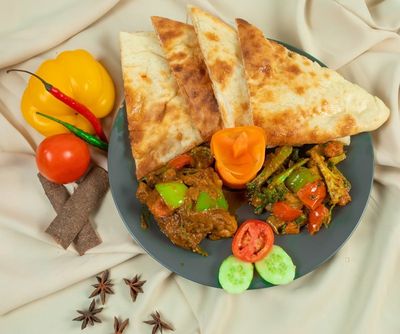
Chicken Jalfrezi
A curry-house jalfrezi inspired by a Balti House classic, featuring quick stir-fried peppers, chillies, onions and tender chicken in a light spiced sauce. It is traditionally dry and crisp, but can be adjusted for more sauce by adding extra base curry or stock.