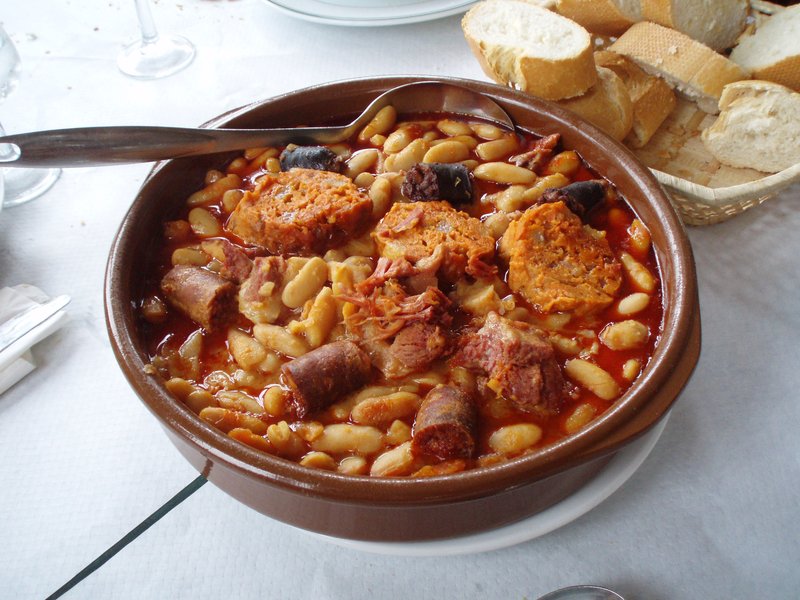
Fabada Asturiana
Asturian bean stew: large white fabes beans braised slow with chorizo, morcilla and pork shoulder until everything melts together into a rust-coloured, deeply savoury bowl. The Sunday-lunch-and-Monday-leftovers dish of northwest Spain.
Overview
Soaked fabes beans simmer with cooking chorizo, morcilla (Spanish blood sausage) and a piece of pork belly or shoulder, with a touch of saffron and smoked paprika. The whole thing braises slowly until the beans are soft and the broth is dark and unctuous.
Ingredients
- 500 g fabes (or large dried butter beans / cannellini), soaked overnight in cold water
- 200 g pork belly in one piece, or pork shoulder
- 2 cooking chorizo sausages (about 200 g)
- 2 morcilla sausages (about 200 g) (or substitute black pudding)
- 1 onion (whole)
- 1 head garlic (whole, top sliced off to expose cloves)
- 2 bay leaves
- 1 large pinch saffron threads
- 1 teaspoon sweet smoked paprika
- Salt
- Crusty bread, to serve
Method
Stage 1 - Start the stew
- Drain the soaked beans. Place in a large heavy pan with the pork, chorizo and morcilla.
- Add the whole onion, head of garlic, bay leaves and enough cold water to cover by 5 cm.
- Bring slowly to the boil; skim any scum.
Stage 2 - Slow simmer
- Reduce the heat so the surface barely shivers.
- Crumble in the saffron and stir in the smoked paprika.
- Cover loosely and cook 2 hours, scaring the surface occasionally with a wooden spoon to prevent sticking. The liquid should reduce slowly into a thick broth.
- Don't add salt until the beans are tender; salt before that toughens them.
Stage 3 - Finish
- After 2 hours, taste a bean; it should be soft and creamy. If still firm, simmer another 30 minutes.
- Lift out the meats, slice into chunks (chorizo into 2 cm rounds, morcilla into 2 cm rounds, pork into chunks).
- Discard the onion, bay and head of garlic. Return the meats to the beans.
- Season with salt; the broth should be glossy and slightly thickened.
Stage 4 - Serve
- Ladle into deep bowls. Crusty bread alongside; a chilled cider (Asturian sidra) is the traditional pairing.
Notes
- Don't salt the beans early: Salt before the beans soften causes them to seize and stay tough. Add only at the end.
- Authentic fabes are huge: Big white beans the size of broad beans. Large butter beans or cannellini work; lima beans are similar.
- Morcilla is the soul: If you can't find Spanish morcilla, black pudding from a butcher gives a similar effect.
Storage
- Improves overnight. Keeps 4 days refrigerated.
- Freezes 3 months.
More like this
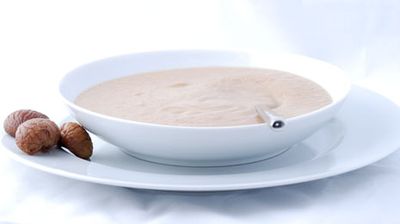
Chestnut and Chorizo Soup
A hearty Spanish soup featuring sweet chestnuts paired with spicy chorizo sausage, caramelized vegetables, and warming spices. The saffron adds a subtle earthiness, creating a comforting autumnal dish with rich, smoky flavors.
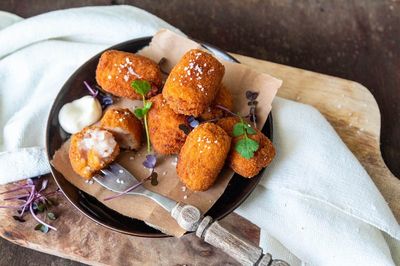
Croquetas de Jamón
A thick béchamel, three times the flour-to-milk ratio of standard béchamel, is studded with chopped jamón serrano, chilled until firm enough to shape, rolled into ovals, breaded with flour-egg-panko, and deep-fried at 180°C until deep golden. Eat hot.
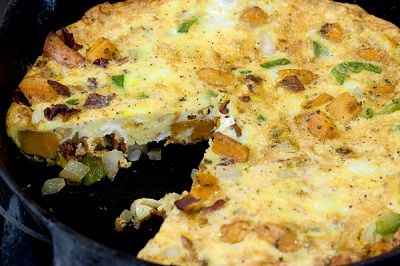
Spanish Omelette (Tortilla)
This classic Spanish omelette is a rustic, hearty dish featuring tender potatoes, caramelized onions, peppers, tomatoes, and spiced chorizo bound together with fluffy beaten eggs. The omelette is cooked slowly and gently, allowing the ingredients to meld while maintaining a creamy centre with a lightly golden exterior. Tortilla española is equally delicious served warm, at room temperature, or cold, making it versatile for any meal of the day.
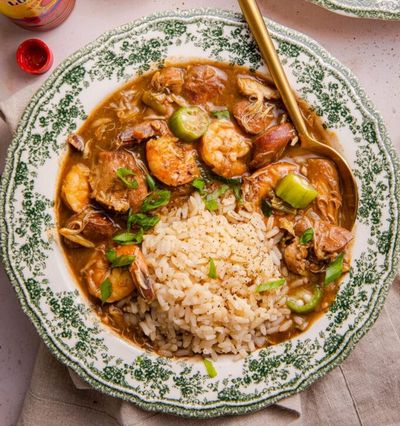
Authentic Cajun Gumbo
The "everything" Louisiana gumbo, chicken thighs, andouille, lump crab and shrimp all in one pot, and the dish where the technique matters more than the recipe. The roux is the single defining step and the line between Cajun gumbo and every other stew on earth: a full cup of oil and a full cup of flour cooked at medium-low for around 30 minutes, stirred without stopping, until the colour goes from blond to peanut butter to milk chocolate to dark chocolate. That's not flavour theatre; the long-cooked roux produces a deeply nutty, slightly bitter, profoundly savoury base that thickens the gumbo and gives it the distinctive almost-charred note no shortcut can replicate. Around the roux: the Cajun "holy trinity" of onion, bell pepper and celery; filé powder (ground sassafras leaves) added off heat as a second thickener; okra adding a third (and contributing its own slight slip); plus the four proteins, each adding a different layer. Flavour is dark, smoky, herbaceous, and slightly briny from the seafood. Smell is the roux toasting. Not difficult on technique but tremendously demanding on patience and attention; 30 minutes of unbroken stirring is the gateway, and if you walk away or rush it the roux burns and you start over. A dish that runs deep through Cajun and Creole Louisiana, with origins in the French settlers, the Choctaw (who contributed filé), West Africans (who contributed okra), and Spanish colonial traditions of Louisiana from the 1700s onwards.