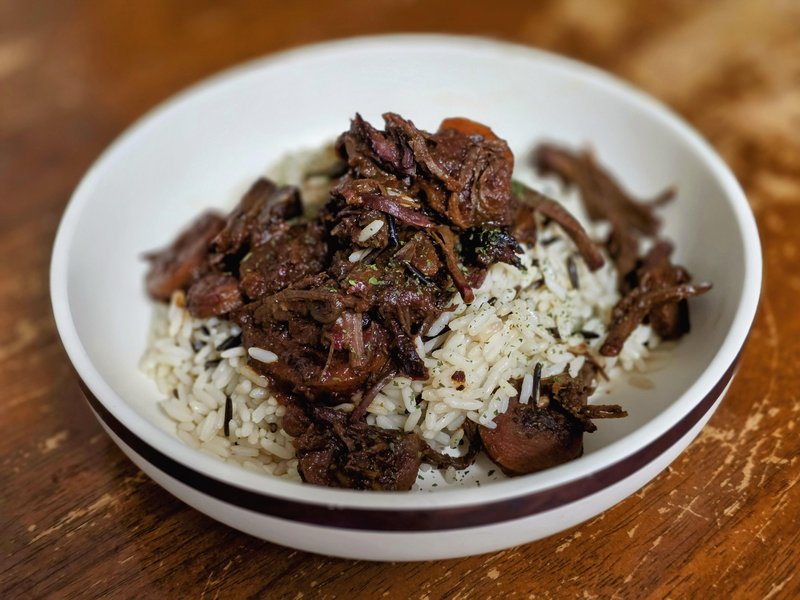
Wild Rice with Venison
A Great Lakes one-pot: hand-harvested wild rice stewed with venison shoulder, dried mushrooms, juniper and a final spoon of maple.
Overview
Venison shoulder is cut into 2 cm cubes and browned hard. Dried wild mushrooms (porcini, morel, or a mix) are hydrated in hot water, both the mushrooms and the soaking liquid become part of the dish. Onion is softened; the venison returns; wild rice is toasted in the pot for 1 minute; everything simmers in a mushroom-and-stock blend 45 minutes until the rice splits and curls. A splash of maple syrup at the end balances the savouriness. Fresh thyme and toasted pumpkin seeds finish.
Ingredients
- 400 g venison shoulder (cut into 2 cm cubes, substitute beef chuck if unavailable)
- 2 tablespoons sunflower oil
- 25 g dried wild mushrooms (porcini, morel or a mix)
- 400 ml water (just-boiled, for the mushrooms)
- 1 onion (large, diced)
- 3 garlic cloves (sliced)
- 200 g wild rice (the long black grain - not "wild rice blend" with brown rice mixed in)
- 1 teaspoon juniper berries (lightly crushed)
- 1 teaspoon dried thyme
- 600 ml game (or beef stock)
- 1 ½ teaspoons salt
- ½ teaspoon black pepper
- 1 tablespoon maple syrup
Garnish
- 2 tablespoons toasted pumpkin seeds
- 1 tablespoon fresh thyme leaves
- 2 spring onions (sliced)
Method
Stage 1 - Mushrooms
- Place dried mushrooms in a heatproof bowl; cover with the just-boiled water; soak 20 minutes.
- Lift out the mushrooms; squeeze; chop coarsely. Strain the soaking liquid through a paper-lined sieve into a measuring jug - it should be a dark mahogany liquor. Reserve.
Stage 2 - Brown the venison
- Heat oil in a wide heavy lidded pot over medium-high.
- Pat the venison dry; brown in two batches, 4 minutes per batch, deep crusty colour.
- Lift to a plate.
Stage 3 - Aromatics
- Reduce heat to medium; add onion to the same pot.
- Cook 8 minutes until soft.
- Add garlic, juniper, thyme and the chopped soaked mushrooms; cook 2 minutes.
Stage 4 - Toast the rice
- Add the wild rice to the pot; stir 1 minute - you'll smell the grass aroma intensify.
Stage 5 - Simmer
- Return the venison and any juices.
- Pour in the strained mushroom liquor and the stock; add salt and pepper.
- Bring to a boil; reduce to a low simmer; cover.
- Cook 45 minutes until the wild rice is tender and the grains have curled and split.
Stage 6 - Finish
- Off heat; let stand covered 10 minutes.
- Stir in the maple syrup.
- Taste; adjust salt.
Stage 7 - Serve
- Tip onto a wide platter; scatter toasted pumpkin seeds, fresh thyme and spring onion.
Notes
- Real wild rice, not a blend: Hand-harvested wild rice from the Great Lakes (or from First Nations producers in Ontario/Minnesota) has a parching step in its processing - a low smoke fire - that gives it a flavour you cannot get from cultivated paddy-grown wild rice. Both work; the hand-harvested is the dish.
- Maple at the end: A small amount of maple at the finish is traditional and balances the mineral grassiness. Don't use it like sugar - a tablespoon, not three.
- Venison vs beef: Venison gives the cleanest, most traditional flavour. Beef chuck makes a fine substitute but lacks the gamey edge.
Storage
- Refrigerate 4 days; reheat with a splash of stock.
- Freezes 2 months.
More like this
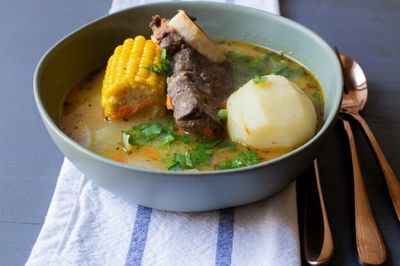
Cazuela de Vacuno
The Chilean Sunday-lunch one-pot, the soup-stew that turns up on every kitchen table from Santiago to Patagonia. You brown bone-in beef shin to colour, then drop it into a simple broth of onion, garlic, oregano and cumin and simmer slowly for ninety minutes until the meat is tender and the broth has built depth. The vegetables go in for the last twenty-five minutes - a thick chunk of pumpkin, a section of corn-on-the-cob, a whole potato, a handful of green beans - each piece kept whole because the cazuela is meant to arrive in the bowl looking like a still life. Rice or vermicelli cooks separately in a ladle of the broth and joins at the very end. Served in deep bowls with chopped coriander and a wedge of lime, the steam rising while you eat. Comfort food at its plainest and deepest.
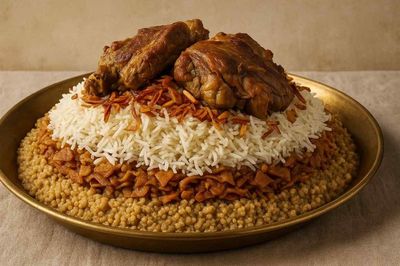
Mathloutha
The Saudi gathering platter built for the night when one cut of meat isn't enough. Three proteins share the same pot: lamb shoulder and beef chunks go in first with a kabsa-spiced tomato base for ninety minutes of slow simmer until they're meltingly tender, then chicken pieces drop in for the last thirty-five minutes (their cook time is shorter, so they go in later). The strained meat broth, deeply spiced from everything that has braised in it, becomes the cooking liquid for basmati scented with saffron and dried lime. At the end you arrange all three meats on top of the rice in the same platter and bring the whole thing to the centre of the table. The kind of dish you make for a wedding lunch, an Eid gathering, or the night the extended family arrives unannounced.
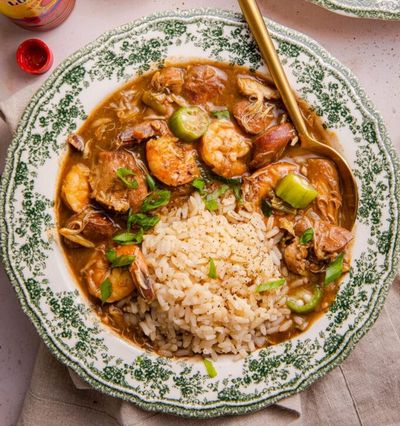
Authentic Cajun Gumbo
The "everything" Louisiana gumbo, chicken thighs, andouille, lump crab and shrimp all in one pot, and the dish where the technique matters more than the recipe. The roux is the single defining step and the line between Cajun gumbo and every other stew on earth: a full cup of oil and a full cup of flour cooked at medium-low for around 30 minutes, stirred without stopping, until the colour goes from blond to peanut butter to milk chocolate to dark chocolate. That's not flavour theatre; the long-cooked roux produces a deeply nutty, slightly bitter, profoundly savoury base that thickens the gumbo and gives it the distinctive almost-charred note no shortcut can replicate. Around the roux: the Cajun "holy trinity" of onion, bell pepper and celery; filé powder (ground sassafras leaves) added off heat as a second thickener; okra adding a third (and contributing its own slight slip); plus the four proteins, each adding a different layer. Flavour is dark, smoky, herbaceous, and slightly briny from the seafood. Smell is the roux toasting. Not difficult on technique but tremendously demanding on patience and attention; 30 minutes of unbroken stirring is the gateway, and if you walk away or rush it the roux burns and you start over. A dish that runs deep through Cajun and Creole Louisiana, with origins in the French settlers, the Choctaw (who contributed filé), West Africans (who contributed okra), and Spanish colonial traditions of Louisiana from the 1700s onwards.
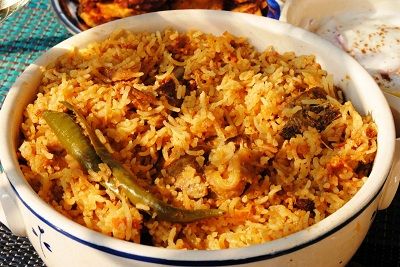
Biryani
Biryani represents the height of Indian culinary technique: multiple components prepared separately with precision, then assembled in layers where flavors permeate through steam cooking. This isn't a one-step rice dish; rather, it's an architectural construction where yogurt-marinated lamb develops tenderization and flavor, then cooks slowly with warm spices and tomato, while basmati rice is independently flavored with saffron infusion and whole spices. Upon assembly, the two elements marry through steam, creating a unified dish where lamb and rice are inseparable in flavor. Traditionally cooked during festivals and royal celebrations, biryani requires patience and multiple steps but rewards with sophistication.