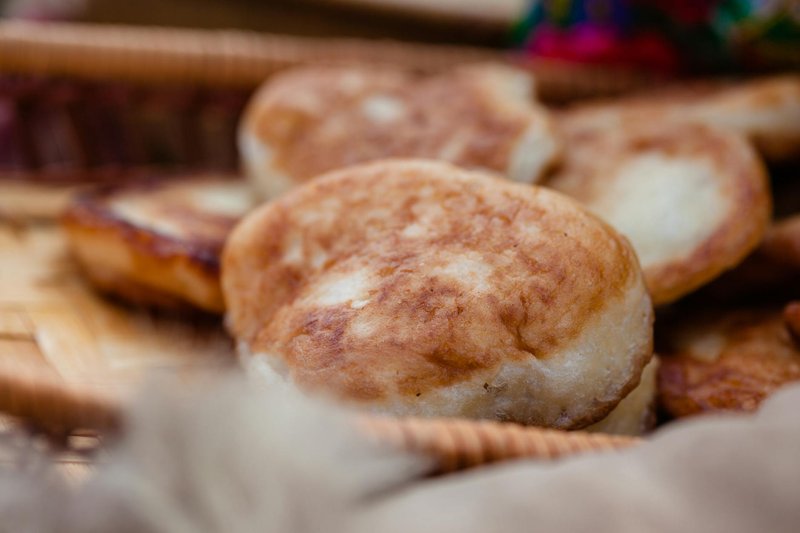
Frybread with Wojapi
Pillowy fried-bread disks served with a thick Lakota berry sauce of chokecherries and maple. A powwow plate.
Overview
A simple yeasted dough, flour, baking powder, milk, salt, a touch of sugar, rests until soft and pliable. Each portion stretches by hand into a 15 cm disc, then drops into hot oil for 90 seconds per side. Wojapi simmers berries, water and maple syrup to a thick sauce; thickens slightly with a small amount of cornflour. The hot frybread piles on a plate; warm wojapi spoons over.
Ingredients
Frybread
- 500 g plain flour (plus more for dusting)
- 1 tablespoon baking powder
- 1 teaspoon salt
- 2 teaspoons caster sugar
- 350 ml warm milk (or water)
- Vegetable oil for shallow frying
Wojapi
- 600 g mixed berries (blueberries, blackberries, raspberries - fresh or frozen)
- 200 ml water
- 4 tablespoons pure maple syrup
- 2 tablespoons brown sugar (adjust to fruit's natural sweetness)
- 1 tablespoon cornflour (mixed with 2 tablespoons cold water)
- ½ teaspoon vanilla extract
- A small pinch of salt
To finish
- Icing sugar for dusting
- Whipped cream (or vanilla ice cream, optional)
Method
Stage 1 - Wojapi
- Combine the berries, water, maple syrup, brown sugar and salt in a heavy saucepan.
- Bring to the boil; reduce to a steady simmer.
- Cook 12-15 minutes, mashing occasionally with a wooden spoon, until the berries break down and the mixture is jammy.
- Stir the cornflour slurry; pour in slowly, stirring constantly. The sauce thickens within seconds.
- Cook 1 minute more; off the heat, stir in the vanilla.
- Keep warm.
Stage 2 - Frybread dough
- Whisk the flour, baking powder, salt and sugar in a wide bowl.
- Add the warm milk gradually; mix to a soft, slightly tacky dough.
- Knead briefly - 2-3 minutes - until smooth.
- Cover; rest 30 minutes (lets the gluten relax for easier shaping).
Stage 3 - Heat the oil
- Pour 2 cm of oil into a wide heavy pan.
- Heat to 180°C (a small piece of dough should sizzle vigorously and float).
Stage 4 - Shape and fry
- Divide the dough into 6 equal pieces.
- On a floured surface, flatten each into a 15 cm disc, about 6 mm thick.
- Make a small hole in the centre with your finger (helps the bread cook evenly).
- Slide carefully into the hot oil; cook 60-90 seconds per side until each is deep golden and puffed.
- Lift onto kitchen paper.
Stage 5 - Serve
- Place each frybread on a plate; spoon warm wojapi generously on top.
- Dust with icing sugar.
- Add a scoop of whipped cream or ice cream if liked.
- Eat immediately while the frybread is still hot.
Notes
- Frybread's history: Worth knowing. It comes from a period of forced relocation and rationing - many Native cooks have a complicated relationship with it. Today it stands as a symbol of resilience and community.
- Hot oil, fast cook: Soft, undercooked frybread is heavy. Pull when it's deep golden; it cooks fast.
- Wojapi traditions: Lakota chokecherries are the original ingredient; the sauce was originally thickened with chokecherry pits or a cornflour-like starch. Modern recipes use whatever berries are available.
Storage
- Frybread is best fresh; reheat at 200°C for 4 minutes if needed.
- Wojapi keeps 5 days refrigerated; reheats gently.
More like this
Three Sisters Stew
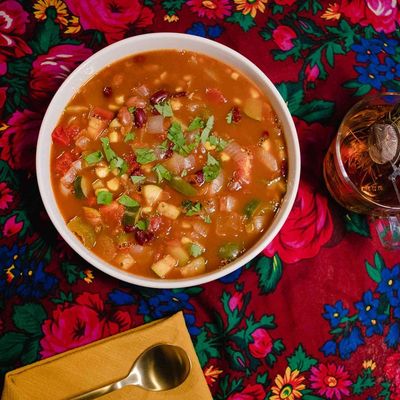
Diced onion and garlic sweat in sunflower oil. A whole butternut squash, peeled and cubed, browns briefly to caramelise the edges. Dried sage and ground sumac (or a squeeze of lemon) season. Stock and tomatoes go in; everything simmers for 30 minutes until the squash is collapsing. Drained pinto beans and hominy (or sweetcorn) join for the last 15 minutes. A splash of maple syrup at the end balances. Garnished with toasted pumpkin seeds and fresh sage.
Three Sisters Succotash
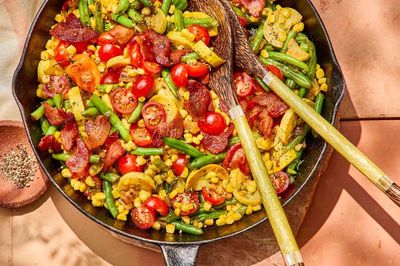
A small dice of butternut squash softens in butter with onion and garlic; corn kernels and pre-cooked beans (kidney, pinto or borlotti) join in. Stock loosens; sage and bay perfume; the lot simmers until the squash is tender and the broth has reduced to a glaze. Maple syrup and cider vinegar balance at the end.
Cedar-Planked Salmon
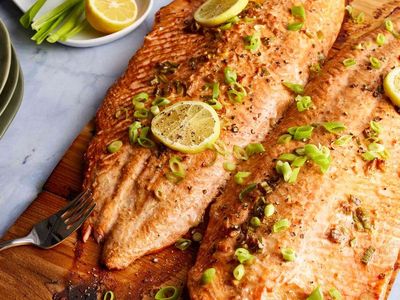
A food-safe cedar plank submerges in water for an hour. The salmon (skin on, one side) gets a brief dry cure of brown sugar, salt and crushed juniper. Maple syrup and lemon zest go on at the end of the cure. The hot grill cooks the plank from below while the salmon cooks from the slow heat radiating up, a steam-smoke method, neither pure grilling nor pure baking. The result is a salmon that tastes faintly of forest, cured-cured-not-curried.*
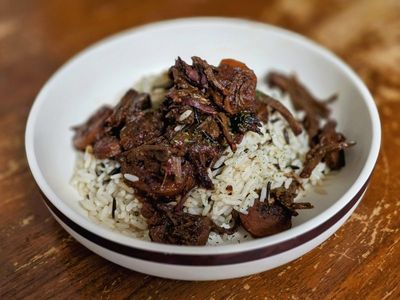
Wild Rice with Venison
Venison shoulder is cut into 2 cm cubes and browned hard. Dried wild mushrooms (porcini, morel, or a mix) are hydrated in hot water, both the mushrooms and the soaking liquid become part of the dish. Onion is softened; the venison returns; wild rice is toasted in the pot for 1 minute; everything simmers in a mushroom-and-stock blend 45 minutes until the rice splits and curls. A splash of maple syrup at the end balances the savouriness. Fresh thyme and toasted pumpkin seeds finish.