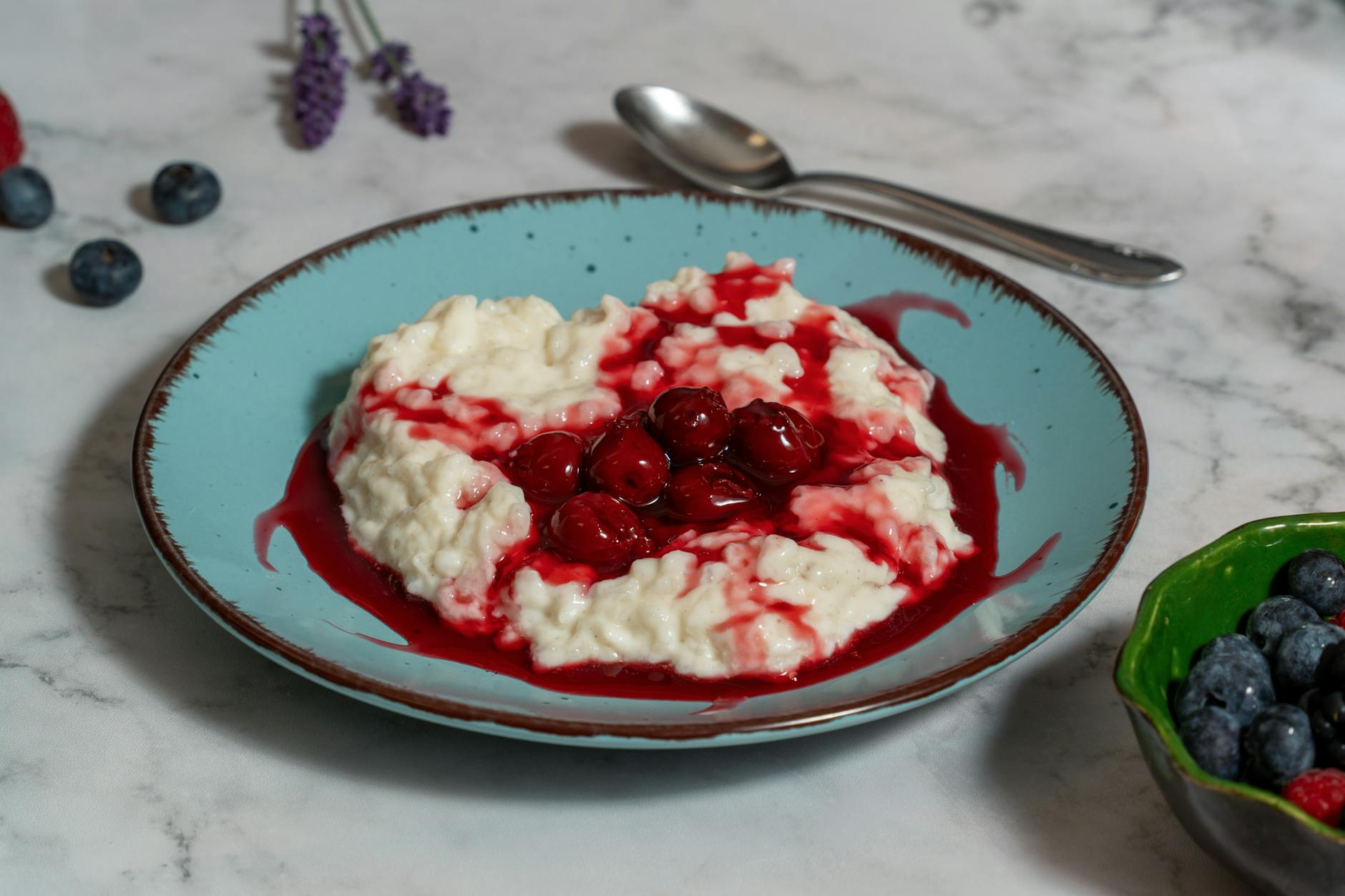
Lahori Firni
Rice-flour pudding: ground rice cooked slowly in cardamom-scented milk until thick, set in small earthenware bowls and chilled. The cooling Lahori Eid dessert; smoother than kheer, paler, ground-rice-fine.
Overview
Aged basmati rice is soaked briefly and ground to a coarse paste (the Lahori way; modern shortcut is rice flour). Milk is brought to a boil, the rice paste whisked in carefully to avoid lumps, and the mixture cooked over low heat for 25-30 minutes with constant stirring as it thickens to a custard. Sugar, cardamom, saffron and a hint of rose go in at the end. The firni is poured into small earthenware bowls (the traditional vessel; the porous clay draws moisture out and intensifies the flavour). Chilled, topped with nuts.
Ingredients
Firni
- 60 g aged basmati rice (rinsed; or 50 g rice flour if shortcut)
- 80 ml water (for soaking and grinding)
- 1 litre full-fat milk
- 100 g caster sugar (adjust to taste)
- ½ teaspoon ground cardamom (or seeds from 6 pods, finely ground)
- ¼ teaspoon saffron threads
- 2 tablespoons warm milk (for blooming the saffron)
- 1 tablespoon rose water (or kewra water; both are Lahori traditional)
- A pinch of salt
To finish
- 30 g blanched almonds (slivered)
- 30 g pistachios (slivered)
- 1-2 sheets of silver leaf (vark; optional)
- A few extra saffron threads
- 6 earthenware bowls (small, kulhars) or ramekins
Method
Stage 1 - Prep the rice
- Rinse the rice in cold water.
- Soak in 80 ml of water for 30 minutes.
- Drain (reserving the soaking water).
- Grind the soaked rice in a blender with 2-3 tablespoons of the reserved water to a coarse, gritty paste (not a smooth puree; you want the firni to have a bit of grain).
Stage 2 - Bloom the saffron
- Crumble the saffron into 2 tablespoons of warm milk.
- Rest for 10 minutes.
Stage 3 - Boil the milk
- Pour the milk into a wide, heavy-bottomed pan.
- Add a pinch of salt.
- Bring to a boil over medium heat, stirring once or twice.
Stage 4 - Add the rice paste
- Reduce the heat to medium-low.
- Slowly whisk the ground rice paste into the simmering milk (whisk constantly to avoid lumps).
- Continue stirring for 25-30 minutes, scraping the bottom of the pan with a wooden spoon every 2-3 minutes, until the mixture has thickened to a thin custard (it should coat the back of a spoon; it will thicken further as it cools).
Stage 5 - Sweeten
- Stir in the sugar; cook for 2 minutes until dissolved.
- Add the cardamom, the bloomed saffron and the rose water.
- Cook for 1 more minute; pull from the heat.
Stage 6 - Set
- Pour the firni into the earthenware bowls or ramekins, filling each three-quarters of the way.
- Cool to room temperature for 30 minutes (a skin will form on top; this is traditional).
- Refrigerate for at least 4 hours, ideally overnight, until set firm.
Stage 7 - Garnish and serve
- Scatter the slivered almonds and pistachios over the top.
- Lay a small piece of silver leaf on each (if using).
- Drop 2-3 saffron threads on top for the look.
- Serve cold, straight from the bowl.
Notes
- Ground rice, not rice flour: Hand-grinding the soaked rice gives a coarser, more texturally interesting firni than commercial rice flour. The shortcut works but the dish loses character.
- Stir constantly: Firni catches the bottom of the pan in seconds. The 25-30 minute cook is genuinely active.
- Earthenware matters: The porous clay draws moisture out as the firni chills, concentrating the flavour. Ramekins work but the firni stays softer.
Storage
- Refrigerate up to 3 days; the texture firms up further over time.
- Doesn't freeze (the texture turns grainy).
More like this
Lahori Gajar Halwa
Red winter carrots are grated coarsely on a box grater. The grated carrot is simmered with full-fat milk over medium heat, stirred frequently as the milk reduces and the carrots take on its colour and fat. After about 45 minutes the milk has cooked down to a thick paste with the carrots; sugar is added (which releases more water briefly), then ghee, cardamom and the dish is fried-dried over higher heat for the final 15 minutes until thick, dark and oily-glossy. Khoya (reduced milk solids) is the traditional finish; condensed milk is the modern shortcut.
Lahori Kulfi
A litre and a half of full-fat milk is brought to a boil and reduced over medium heat for about an hour, stirring every few minutes, until it has shrunk to a third of its volume and gone the colour of pale toffee. Sugar, cardamom, ground pistachios and a touch of saffron go in once the reduction is complete. The mixture is poured into small conical moulds (or paper cups) and frozen hard. No churning; no ice cream maker; the dense texture comes from the long reduction.
Chuối Nướng
Sticky rice is soaked, steamed and pressed around small Asian bananas (Chuối sứ), wrapped in banana leaves and grilled until the rice forms a chewy crust. A coconut cream sauce thickened with a little cornflour and salt is spooned over the split-open bundles, and toasted peanuts and sesame finish the top. The contrast of crisp-burnt outside, soft hot banana, and cool coconut sauce is the whole point.
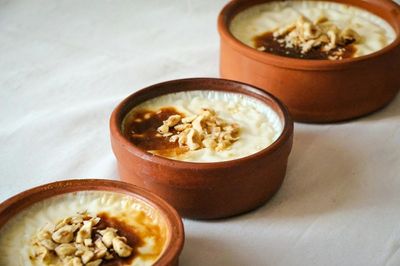
Firni
Firni is Afghanistan's set rice-flour pudding, served at Eid and at the end of long family lunches, scented with cardamom and rosewater and topped with crushed pistachios. The technique is simple but precise. Very finely ground rice flour (traditionally soaked basmati ground by hand, but shop-bought rice flour works well) whisks into cold milk to a slurry, gets stirred slowly into warming sweetened milk, and cooks until thick and creamy. Cardamom and rosewater at the end. Pour into shallow dishes (small individual ones, ideally) and chill until the surface sets to a light skin. Scatter with crushed pistachios or almonds and serve cold. Make it the day before so it has time to set properly.