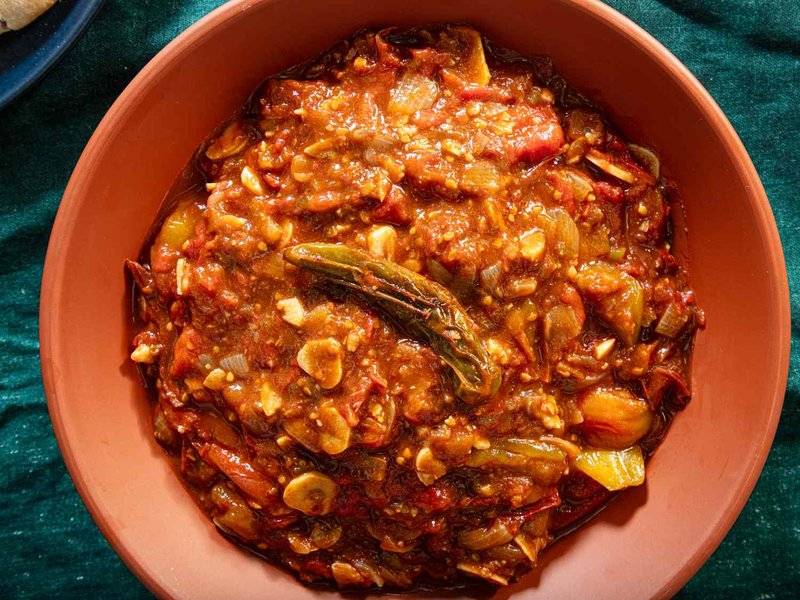
Galayet Bandora
Jordan's spiced tomato side: ripe tomatoes pan-fried with garlic, green chilli and olive oil into a rough, jammy stew, eaten with bread or as a side to grilled meats. Three ingredients plus a knife - but timing and good tomatoes are everything.
Overview
Whole peeled garlic cloves and chillies fry in a generous pour of olive oil until aromatic. Roughly chopped ripe tomatoes go in; they collapse, release their water, then thicken into a rough stew. Salt at the end; sometimes a sprinkle of dried mint. Eaten warm with khubz (Arabic flatbread) for scooping.
Ingredients
- 6 ripe tomatoes (large, around 800 g)
- 8 garlic cloves (peeled, lightly smashed)
- 2 long green chillies (or 1 jalapeño; sliced)
- 60 ml olive oil
- 1 teaspoon salt (or to taste)
- ½ teaspoon black pepper
- 1 teaspoon dried mint (optional)
- A small handful flat-leaf parsley (chopped)
To serve
- Warm flatbread (khubz)
Method
Stage 1 - Prep tomatoes
- Score a small X on the bottom of each tomato; dip into boiling water 20 seconds; lift into cold water; peel.
- Roughly chop into 2-3 cm chunks.
Stage 2 - Aromatics
- Heat the olive oil in a wide heavy pan over medium-high heat.
- Add the garlic cloves and chillies; cook 2-3 minutes, stirring, until the garlic just starts to colour and the chillies blister.
Stage 3 - Tomatoes
- Add the tomatoes; reduce the heat to medium.
- Cook 15-20 minutes, stirring occasionally, breaking the chunks up with a spoon. The tomatoes will release water, then reduce; the mixture will thicken into a rough stew.
Stage 4 - Finish
- Stir in the salt, black pepper and dried mint.
- Off the heat, scatter the parsley.
- Drizzle with extra olive oil before serving.
Stage 5 - Serve
- Pile into a wide bowl with warm flatbread to scoop. Eats well alongside grilled chicken or lamb, or simply with rice.
Notes
- Ripe tomatoes only: Pale, watery tomatoes give a thin, sour result. Use the ripest you can find; a tin of San Marzanos is the best winter substitute.
- Don't blend: The dish is rough and chunky; whole garlic cloves and visible tomato pieces. A blender turns it into a sauce, which it isn't.
- Generous oil: The pool of oil is the dish's character; don't reduce it.
Storage
- Keeps 3 days refrigerated; eats well at room temperature.
More like this
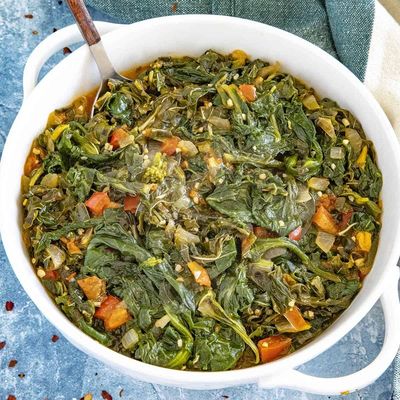
Callaloo
Onion, garlic and tomato cook in oil until softened. Callaloo (or spinach) goes in by the handful; thyme and scotch bonnet add. Everything covers and steam-cooks until the greens are tender. Salt, pepper, a splash of water if needed; finish quickly so the colour stays vivid.
Chakalaka
Onion is softened in oil; garlic, ginger and curry powder bloom. Carrots cook briefly to tender-crisp. Peppers (red and green) and chillies join. Tomatoes simmer everything down. Tinned baked beans go in last with a splash of vinegar to balance. Eaten warm or at room temperature; tastes better the next day.
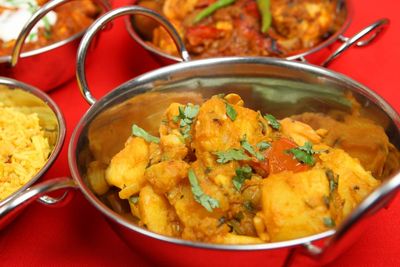
Easy Ugandan Curry Potatoes
Ugandan curry potatoes are one of those everyday dishes that say more about a country's cooking than the showpiece feast plates do. Curry powder reached Uganda via the Indian and Goan communities of the East African coast and the railway-building era, and was quickly absorbed into the local repertoire as a flavour for stews rather than as a separate cuisine. The result here is mild, fragrant and unmistakably Ugandan: small chunks of waxy potato cooked through in a sauce built on onions sweated until soft, fresh tomato simmered down, and a generous spoon of mild yellow curry powder bloomed in the oil. Garlic and ginger run quietly underneath; a single chopped chilli does the heat work if you want it. It is a vegetarian dish in most homes, though it sits happily alongside fried fish or chicken stew on a fuller plate. The difficulty for a home cook is low, it is almost foolproof, but watch the potatoes; the dish is best when they hold their shape and the sauce just hugs them rather than dissolving everything into a mash. Eat with chapati to mop up the gravy, or with steamed rice, posho, or matooke.
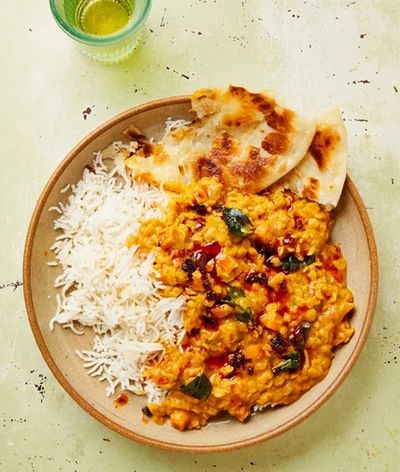
Malaysian Dhal Curry
Yellow split peas (chana dal) simmer with onion, turmeric and tomato until very soft. The lentils break down into a thick soup. Right at the end, a tempering of mustard seeds, curry leaves, dried red chillies, garlic and shallots is poured sizzling-hot over the surface. The aromatic oil seeps through; the dish transforms.