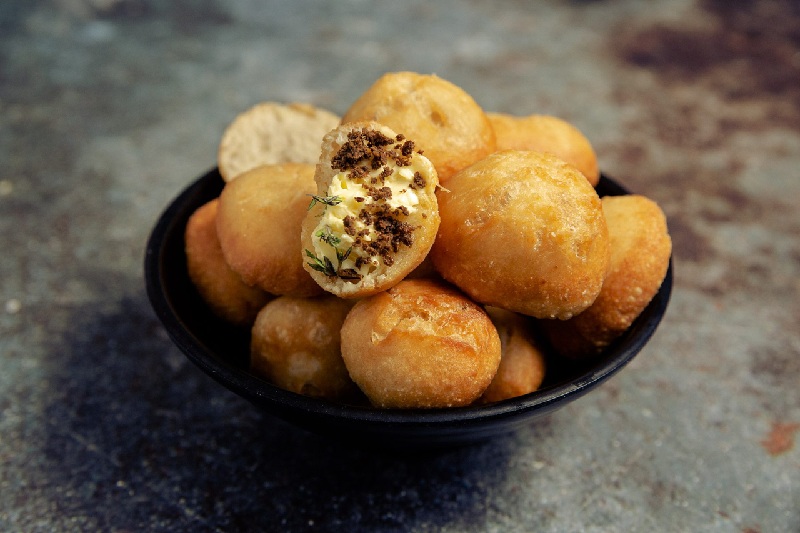
Fried Dumplings / Johnny Cakes
Jamaica's Johnny Cakes: golden, crisp-edged fried bread rounds with a soft chewy interior. The classic breakfast bread for ackee and saltfish.
Overview
A no-yeast quick dough: plain flour, baking powder, a touch of sugar, salt, and just enough water (or milk for richness) to bring it together. Rested briefly so the gluten relaxes, divided into balls, flattened slightly, and shallow-fried in hot oil until each side is deeply golden. The exterior crisps; the interior steams to a soft, pillowy crumb. Eaten with every Jamaican breakfast.
Ingredients
Dough
- 300 g plain flour
- 2 teaspoons baking powder
- 1 tablespoon caster sugar
- ½ teaspoon fine salt
- 30 g cold butter (or 2 tablespoons coconut oil), cubed
- 180 ml cold water (or whole milk for a richer dumpling)
For frying
- 250 ml vegetable oil (enough for shallow-frying)
Method
Stage 1 - Mix the dough
- In a large bowl, whisk together the flour, baking powder, sugar and salt.
- Rub the butter into the dry mix with your fingertips until it resembles coarse breadcrumbs.
- Add the water gradually, mixing with a fork, until a shaggy dough comes together.
- Tip onto a lightly floured surface and knead for 2 minutes until smooth (do not overwork - it should be soft, not tough).
- Cover with a damp cloth; rest 10 minutes.
Stage 2 - Shape
- Divide the dough into 8 equal pieces.
- Roll each into a smooth ball between your palms.
- Flatten each slightly to about 1 ½ cm thick and 6 cm wide.
Stage 3 - Fry
- Heat the oil in a deep frying pan or wide saucepan to 170°C (a small pinch of dough should sizzle steadily on contact, browning in about a minute).
- Lower 3-4 dumplings into the oil; do not crowd.
- Fry 3-4 minutes on the first side until deep golden.
- Turn and fry another 3-4 minutes on the second side.
- The dumplings should puff slightly and feel hollow-light when lifted.
- Drain on kitchen paper.
- Fry the remaining batch.
- Serve warm.
Notes
- Oil temperature matters: Too hot and the outside browns before the inside cooks; too cool and they absorb oil. Aim for a steady medium sizzle.
- Don't overknead: The dough should be soft and pliable. Heavy kneading develops too much gluten and gives tough dumplings.
- Milk vs water: Milk gives a richer, more brioche-like result. Water is the traditional, no-frills version.
Variations
Boiled dumplings: Same dough; simmered in salted water 15 minutes instead of frying. Served in soups and brown stews. Bammy-style: Replace some flour with cassava flour for a denser, traditional Maroon-influenced version.
Serving
Serve with: Ackee and saltfish, callaloo, brown stew chicken, escovitch fish, or split and buttered for breakfast with hot chocolate tea.
Storage
- Best eaten the day they're made.
- Keeps 1 day in an airtight container; reheat in a 160°C oven for 5 minutes to crisp the outside.
- Does not freeze well once fried.
Recipes mentioned here
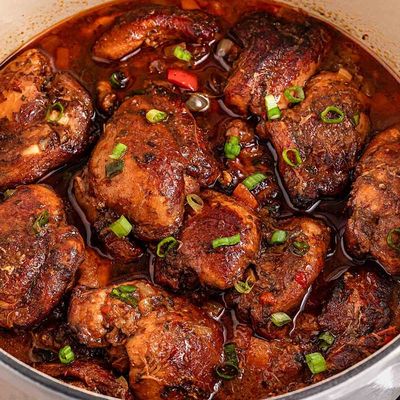
Brown Stew Chicken
The Sunday-lunch counterpart to goat curry across Jamaica; not curry-driven but built on a deep mahogany gravy that gets its colour from caramelised brown sugar and a few teaspoons of bottled "browning sauce" (Grace is the canonical brand, a concentrated burnt-sugar syrup that's a kitchen staple in every Jamaican household). The chicken is bone-in, marinated overnight in a wet rub of onion, bell pepper, scallions, allspice, ginger and thyme, then browned hard and slow-braised until the meat slips off the bone. Flavour is savoury and slightly sweet with a deep thyme back-note and a whisper of Scotch bonnet heat from the whole pierced fruit in the pot. The gravy is what you actually want; thick, dark, sweet-savoury, glossy with rendered chicken fat, the kind of gravy you'd happily eat over plain rice as its own meal. Smell is browning sugar, thyme, and the unmistakable allspice signature. Patient cooking but easy: marinate the day before, then 30 minutes of active prep and 2 hours of unattended braise. The pairing with [[rice-and-peas]] is non-negotiable across Jamaican households.
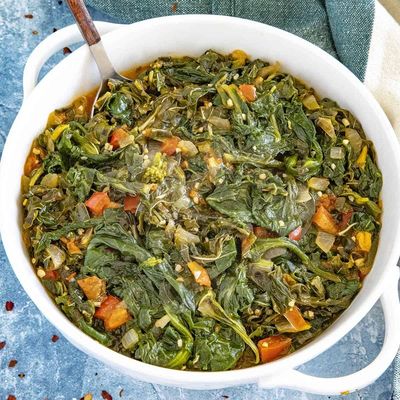
Callaloo
Onion, garlic and tomato cook in oil until softened. Callaloo (or spinach) goes in by the handful; thyme and scotch bonnet add. Everything covers and steam-cooks until the greens are tender. Salt, pepper, a splash of water if needed; finish quickly so the colour stays vivid.
More like this
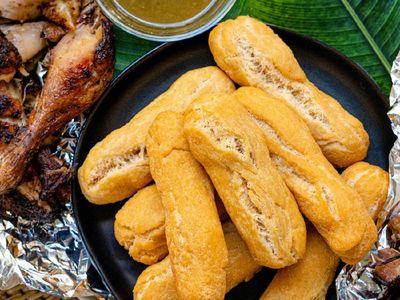
Festival
A simple dough of cornmeal, plain flour, sugar, baking powder, salt, vanilla and a hint of nutmeg, brought together with milk or water. Kneaded briefly, rested, then rolled into elongated finger shapes and fried in medium-hot oil until deep golden. The cornmeal gives a crunchy crust and an almost cakey interior. Sweet enough to eat as a snack, but the contrast with salty jerk or fried fish is the point.
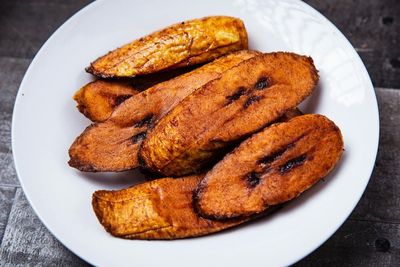
Fried Plantains
Ripe plantains (not the green ones used for tostones) are peeled, sliced thick on the bias, and fried gently in vegetable oil so the natural sugars caramelise without the outsides burning. The result is sweet, slightly chewy, with a soft interior. A light dusting of salt at the end lifts the sweetness. Don't rush the heat: medium-low is the rule.
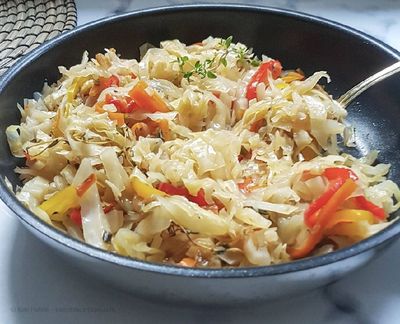
Steamed Cabbage with Carrot, Thyme and Scotch Bonnet
Vegetable oil bloomed with onion, garlic and a fresh thyme stripping. Shredded white or savoy cabbage and julienned carrot piled in, with a whole (unpierced) scotch bonnet on top for aromatic heat. A splash of water creates steam; the pot is covered and the cabbage softens in about 8 minutes. The scotch bonnet is removed before serving. Black pepper and salt to finish.
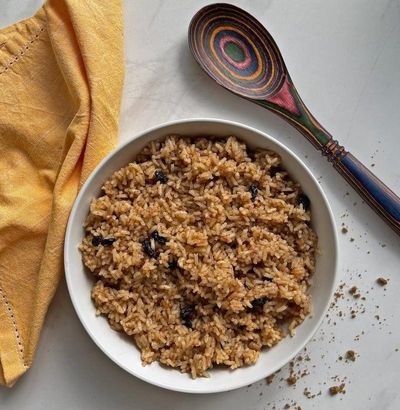
Arroz de Coco
The rice toasts briefly in oil with a chopped onion (optional), then cooks absorption-style in a mixture of coconut milk and water. Covered, undisturbed, 18 minutes; rest for 5 minutes covered off the heat; fluff with a fork. The coconut milk gives a soft sheen and a slight sweetness that balances the heat of piri-piri.