
Jerk Meatballs in Coconut Curry Sauce
Pork meatballs seasoned with jerk paste, ginger and scallion, seared and then simmered in a coconut-curry sauce built around bell peppers and Jamaican curry powder. Comes together in one pan in under an hour. Serves over plain white rice.
Overview
Two strong Caribbean flavours pulled into a single one-pan dinner: jerk on the inside (in the meatballs), curry on the outside (in the sauce). The meatballs are pork rather than the more common beef, which suits jerk better, pork carries the allspice-and-Scotch-bonnet seasoning the way it was historically intended (the Maroons of eastern Jamaica originally jerked wild boar, not chicken). Around them sits a coconut-curry sauce: shallot, garlic, sweet bell peppers, Jamaican curry powder bloomed briefly in butter, then full-fat coconut milk to mellow everything into something almost ice-cream-rich. The two flavours sit alongside each other rather than fighting, the jerk reads spicy-savoury, the curry reads sweet-aromatic, and a bite that includes both is genuinely better than either alone. Smell is curry powder bloomed in coconut milk, deeply Caribbean. One of the easier dishes here, 50 minutes start to finish, all in one pan, and a modern Black-American food-blogger creation rather than a traditional Jamaican dish; the cross-pollination is the point.
Ingredients
Meatballs
- 680 g (1 ½ lbs) ground pork
- 1 egg (large)
- ½ cup seasoned panko breadcrumbs
- 4 garlic cloves (finely minced)
- ¼ cup sliced scallions (plus more for garnish)
- 2 tablespoons jerk seasoning (Walkerswood)
- 1 teaspoon ginger paste (or 2 teaspoons grated fresh)
- salt
- pepper
- 2 tablespoons unsalted butter
- 1 tablespoon olive oil
Coconut curry sauce
- 1 tablespoon unsalted butter
- 1 shallot (finely chopped)
- 3 garlic cloves (minced)
- 1 green bell pepper (small, thinly sliced)
- 1 red bell pepper (small, thinly sliced)
- 3 teaspoons Jamaican curry powder
- 1 can (400 ml) full-fat coconut milk
- Rice and scallions, to serve
Method
Stage 1 - Mix the meatballs
- Combine pork, egg, panko, garlic, scallion, jerk seasoning, ginger paste, salt and pepper in a bowl.
- Mix gently with the hands until just combined - don't overwork.
- Shape into 20-22 meatballs using a tablespoon scoop, then roll smooth.
Stage 2 - Sear
- Heat 2 tablespoons butter + 1 tablespoon oil in a non-stick skillet over medium heat.
- Working in batches, brown the meatballs all over - about 3 minutes per side.
- Set aside on a plate.
Stage 3 - Sauce
- Wipe the pan; add the remaining tablespoon of butter.
- Sauté the shallot 2-3 minutes until tender.
- Add the garlic; 1 minute until fragrant.
- Add the bell peppers; cook 2-3 minutes until softened.
- Sprinkle the curry powder over; toast 1 minute.
- Pour in the coconut milk; bring to a brief boil.
Stage 4 - Simmer
- Reduce heat to low.
- Return the meatballs to the pan in a single layer; spoon the sauce over each.
- Cover; simmer 20-25 minutes until 71°C / 160°F internal.
Stage 5 - Serve
- Spoon over plain white rice in deep bowls.
- Scatter scallions and serve.
Notes
- Walkerswood jerk paste: dependable for spice level and flavour. AROY-D coconut milk is the standard for thickness and sweetness.
- Don't overwork: kneading the mix makes dense, rubbery meatballs. Mix just to combine.
- Sear, don't cook through: the meatballs finish in the sauce. Aim for colour, not done-ness, during the sear.
Storage
- Keeps 3 days refrigerated; reheats well.
- Freezes 2 months without the rice.
More like this
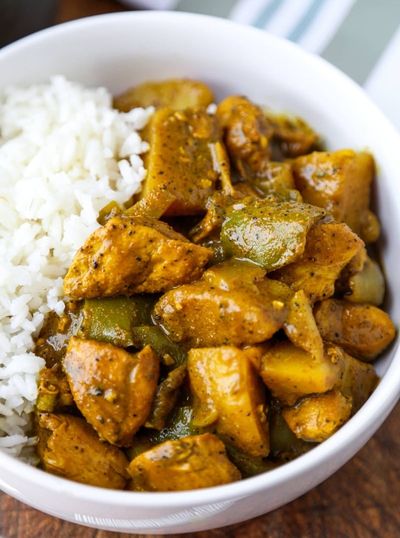
Authentic Jamaican Curry Chicken
Jamaican curry sits in its own corner of the global curry map: heavier on turmeric and allspice than Indian Madras, lighter on cumin, and built on a technique called "burning the curry" that gives the dish its character. The technique is exactly what it sounds like, dry curry powder hits hot oil and is stirred for 30 seconds until it darkens from yellow to deep gold and smells like toasted spice. That move concentrates the flavours and removes any raw edge. The finished stew is bright yellow stained slightly orange, savoury and aromatic rather than searingly hot, with thyme and a whole pierced Scotch bonnet scenting the gravy without flooring it. Smell: bloomed curry powder, allspice, browned chicken fat. Not difficult, but requires confidence in the 30-second bloom (under-do it and the dish is flat; over-do it and you have to start over). A Sunday-dinner staple across Jamaica and the diaspora, served over white rice with the gravy spooned generously over.
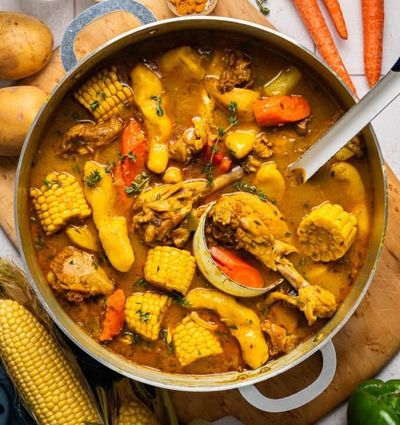
Caribbean Chicken Soup
Saturday-soup in Trinidad, Guyana and Jamaica is a category rather than a single recipe; the structure is always the same (curry-and-allspice-seasoned chicken, root vegetables, hand-rolled dumplings, a thickened broth), and the specifics vary household by household. This is the Jamaican lean: pumpkin in the broth as the thickening agent (Grace pumpkin soup mix is the household shortcut), coconut milk for richness, allspice and thyme for the Caribbean signature, and a single pot that's a complete meal. The dumplings are the soul, small hand-rolled cornmeal-and-flour batons that go in last and cook in the broth, slightly bouncy, slightly chewy, picking up the surrounding flavour. The broth is golden-orange from pumpkin and curry, rich without being heavy, with corn-on-the-cob rounds and chunks of Yukon Gold potato giving substance. Smell when you lift the lid is curry, allspice and sweet pumpkin. Easy if you've made stews before, with two hours of mostly-passive simmering. Eaten year-round in Caribbean households as the dependable one-pot meal; nominally a Saturday dish but no Caribbean grandmother would refuse you a bowl on a Tuesday.
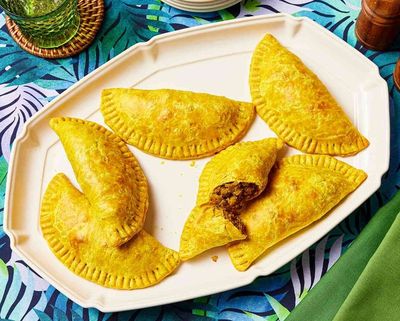
Jamaican Beef Patties
A handheld pastry that looks like a Cornish pasty but tastes nothing like one. The bright-yellow shell is the giveaway, turmeric and curry powder kneaded into the dough give it both colour and a faint, almost-savoury spiciness on the outside. Inside, the filling is highly seasoned ground beef: allspice, thyme, Scotch bonnet, ginger and scallions cooked into the meat, then loosened with stock and bound at the end with breadcrumbs and small cubes of butter so the filling stays juicy rather than dry-crumbly when it hits the pastry. The shatter on the pastry is the technical marker; flaky, layered, and slightly sweet from the sugar in the dough. Smell out of the oven is curry-powder-toasted butter. Not difficult, but it's a two-component dish (pastry + filling) and each component wants its own time, the dough chills, the filling cools, so plan for 90 minutes minimum. Sold from patty shops across Kingston, Toronto, London, Brooklyn and beyond; the Caribbean diaspora carried the patty further than just about any other Jamaican dish.
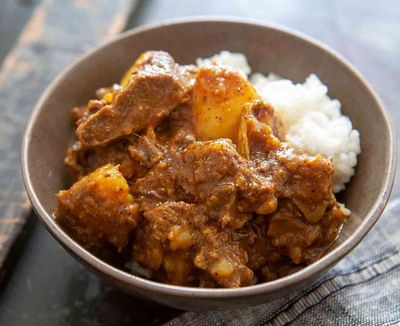
Jamaican Goat Curry
A deep, brick-yellow gravy stained with turmeric and allspice (called pimento in Jamaica, confusingly, nothing to do with the pepper of the same English name). The taste is layered: the curry powder hits first, then the slow heat of Scotch bonnet, then a sweet-piney back-note from allspice and thyme that's unmistakably Caribbean rather than Indian. The goat is the point; bone-in shoulder or leg, braised until the bones loosen and the connective tissue melts into the gravy and gives it body without any flour or roux. Patient cooking but not difficult: brown the meat, bloom the curry powder until it darkens to brown, then leave it alone for two hours. The whole pierced Scotch bonnet sits in the pot scenting the gravy and is fished out before it ruptures, so the heat stays controllable. Came to Jamaica via Indian indentured labourers in the 1840s, then got reshaped by what the island already had: thyme, pimento, scotch bonnet, and the Saturday-evening habit of putting a pot on to braise for Sunday lunch. Day-2 goat curry is better than day-1, which is why every Jamaican grandmother starts it on a Saturday.