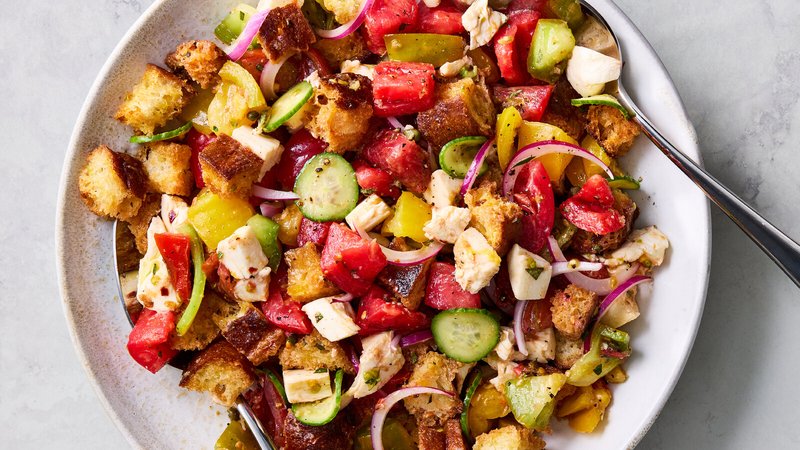
Panzanella
Tuscany's summer salad: torn day-old bread soaked in red wine vinegar and oil, tossed with ripe tomatoes, cucumber, onion and basil.
Overview
Day-old crusty bread is torn into rough pieces and briefly moistened with water-and-vinegar, just enough to soften without making mush. Ripe tomatoes are deseeded and cubed; juice is reserved for the dressing. Cucumber is peeled in stripes, deseeded and sliced. Red onion slices soak briefly in cold water to mellow. A dressing of red wine vinegar, good olive oil, the tomato juice, garlic and salt is whisked. Everything tosses together in a wide bowl; rests for 30 minutes at room temperature so the bread drinks in the juices; finished with torn basil and a final glug of olive oil at serving.
Ingredients
- 400 g day-old crusty country bread (sourdough, pugliese, or any rustic loaf - NOT fresh, NOT toasted)
- 4 tablespoons cold water (to moisten)
- 1 tablespoon red wine vinegar (to mix with the water)
Vegetables
- 700 g ripe summer tomatoes (the best you can find - mixed colours / shapes / sizes is ideal)
- 1 cucumber (large, peeled in alternating stripes, deseeded, sliced 5 mm)
- 1 red onion (small, sliced thin)
- 1 tablespoon vinegar (mixed into water for soaking onions)
Dressing
- 5 tablespoons good extra-virgin olive oil
- 3 tablespoons red wine vinegar
- 2 garlic cloves (crushed to a paste with ½ teaspoon salt)
- The juice the tomatoes released when chopped (about 100 ml)
- ½ teaspoon caster sugar (balances acidity if tomatoes are sharp)
- 1 teaspoon salt (to taste)
- ½ teaspoon black pepper
To finish
- 1 large bunch fresh basil (about 30 g, leaves torn)
- 2 tablespoons capers (rinsed and drained, optional)
- A handful of black olives (Taggiasche or Kalamata, pitted, optional)
- Extra-virgin olive oil to drizzle
- Flaky sea salt
Method
Stage 1 - Bread
- Tear the bread into rough 3-4 cm chunks (or cut with a serrated knife). Crusts in.
- Whisk the 4 tablespoons water with the 1 tablespoon vinegar in a small bowl.
- Sprinkle the bread chunks with this mixture - don't drench, just dampen each piece.
- Toss with hands; rest 10 minutes.
- The bread should be softening but not mush. If still very stiff, sprinkle a little more water.
Stage 2 - Tomatoes
- Halve the tomatoes; squeeze out the seeds and juice into a sieve set over a bowl.
- Reserve the strained juice (~100 ml).
- Roughly chop the deseeded tomato flesh into 2-3 cm pieces.
Stage 3 - Cucumber and onion
- Cucumber: peel in alternating stripes (for visual interest), halve lengthwise, scoop seeds with a teaspoon, slice 5 mm thick.
- Onion: slice as thinly as you can manage. Place in a small bowl with cold water and 1 tablespoon vinegar; soak 10 minutes (mellows the harsh raw bite). Drain.
Stage 4 - Dressing
- In a small bowl, whisk olive oil, red wine vinegar, garlic-salt paste, the reserved tomato juice, sugar (if using), salt and pepper.
- Taste; balance - the dressing should be sharp and bright.
Stage 5 - Combine
- In a wide bowl, combine the moistened bread, tomatoes, cucumber and drained onion.
- Pour the dressing over.
- Add capers and olives if using.
- Toss thoroughly with your hands or two big spoons - squish the tomatoes slightly as you toss so they release more juice into the bread.
Stage 6 - Rest
- Cover; let stand at room temperature 30 minutes.
- The bread drinks in the juices and dressing; the flavours marry.
- Toss again at the 15-minute mark to redistribute.
Stage 7 - Finish and serve
- Tear in the basil leaves (don't chop - tearing keeps the colour and aroma).
- Drizzle a generous final glug of extra-virgin olive oil.
- Sprinkle with flaky sea salt.
- Serve at room temperature. Don't refrigerate; it dulls the tomatoes.
Notes
- Stale bread is non-negotiable: Fresh bread becomes paste. Toasted bread stays crisp and doesn't drink the dressing. Two-day-old crusty bread, slightly stiff, is what panzanella needs. If you only have fresh bread, dry it: tear into pieces, spread on a tray, leave at room temperature overnight (or 1 hour in a 100°C oven).
- Tomatoes matter more than anything: This is a dish for late summer when tomatoes are at their peak. Out-of-season supermarket tomatoes give a sad panzanella. If your tomatoes aren't fragrant when you cut into them, save panzanella for another month.
- 30-minute rest is mandatory: Eating panzanella in the first 10 minutes is wrong - the bread is still hard chunks and the dressing hasn't married. After 30 minutes the bread is softly chewy, the tomatoes are wept-out, the dressing is everywhere. Eat within 2 hours after that; beyond, the bread turns to mush.
Storage
- Best within 2 hours of assembly.
- Refrigerated leftovers are still edible but the texture is gone; eat the next day cold as a tomato-bread mash.
- The undressed components (bread chunks, chopped tomato, prepped cucumber and onion, dressing) keep separately 24 hours and assemble in 5 minutes.
More like this
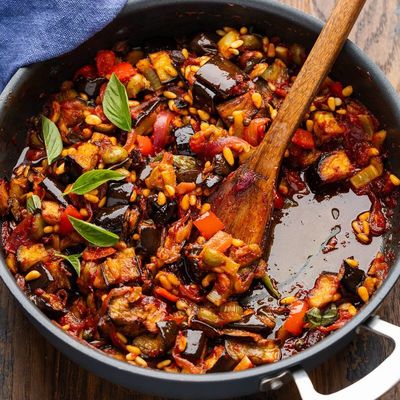
Caponata
Aubergine cubes are salted to weep, fried hard in olive oil to deep gold, and reserved. A separate pan is used to soften diced onion and sliced celery in olive oil; garlic joins briefly; chopped tomatoes simmer with red wine vinegar and sugar to make the agrodolce base. Green olives, capers, sultanas (optional) and toasted pine nuts are stirred in. The fried aubergine is returned and simmers for 10 minutes to meld. Off heat, fresh basil is scattered. Rested at least 2 hours (ideally overnight) before serving at room temperature.
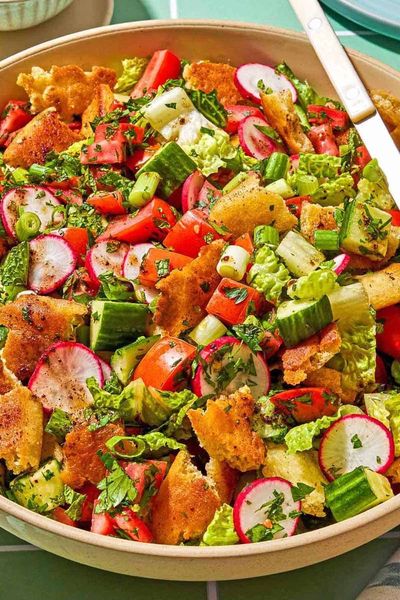
Fattoush
A torn pita is brushed with olive oil and grilled or fried until golden and crisp. Cucumber, tomato, radish, romaine, spring onion, parsley and mint are roughly chopped into a wide bowl. A dressing of lemon juice, pomegranate molasses, sumac, garlic, olive oil and salt is whisked. The salad is tossed with the dressing just before serving; the pita is scattered on top so it stays crisp.
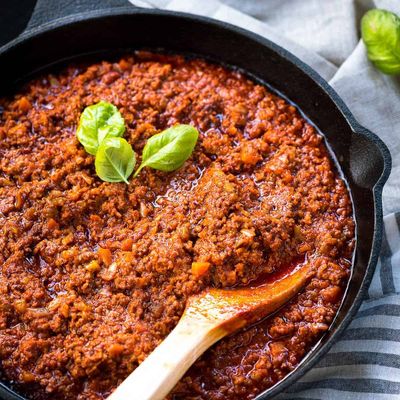
Restaurant-Style Ragù
True ragu demands patience, precision, and respect for the process. Ground beef (or a beef and pork mix) browns deeply in batches to build caramelization without steaming. Aromatic vegetables soften slowly until sweet. Tomato paste darkens and concentrates its flavor through caramelization. Red wine deglazes and cooks off. Then comes the long, gentle simmer, 1 hour 45 minutes to 2 hours, where flavors meld and deepen into something far greater than the sum of its parts. This is not a quick sauce; it is an investment in excellence.
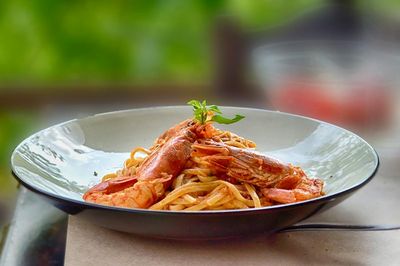
Spaghetti Marinara
True spaghetti alla marinara celebrates the bounty of Naples' harbor. A rich tomato base simmers gently whilst fresh shellfish and seafood are seared and simmered separately, then folded into the sauce at the last moment. Each component maintains its distinct texture and flavor while harmonizing on the plate. This is sophisticated Italian bistro cooking at its finest.