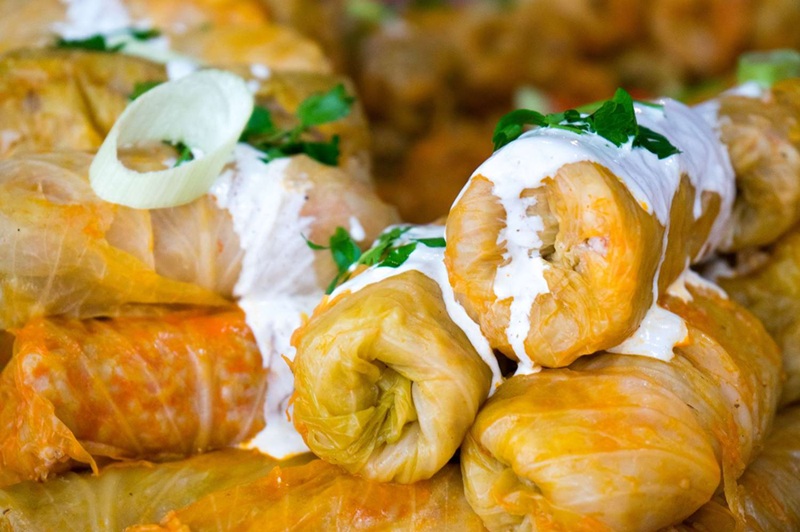
Káposzta
Hungarian braised cabbage: sweet white cabbage cooked down with onion, lard and sweet paprika until it slumps into a glossy, paprika-stained tangle. The standard winter side, eaten alongside roast pork, sausages, stuffed peppers, or piled onto buttered noodles.
Overview
Onion is softened in lard or oil, paprika blooms off the heat, then shredded cabbage goes in with a splash of stock and a pinch of sugar. The cabbage is cooked slow and covered until it has collapsed into something silky and savoury-sweet, sharpened at the end with a hit of vinegar. A spoonful of sour cream stirred through at the end is optional but traditional in many homes.
Ingredients
- 1 white cabbage (medium), about 1 kg (cored and finely shredded)
- 2 tablespoons lard (or sunflower oil)
- 2 onions (medium, finely sliced)
- 2 garlic cloves (crushed)
- 1 ½ tablespoons Hungarian sweet paprika
- ½ teaspoon caraway seeds (lightly crushed)
- 1 teaspoon sugar
- 150 ml chicken (or vegetable stock)
- 1 tablespoon white wine vinegar (or cider vinegar)
- salt
- pepper
- 2 tablespoons sour cream (optional, to finish)
Method
Stage 1 - Onions
- Heat the lard in a wide, heavy pan or casserole over medium heat.
- Add the onions with a pinch of salt; cook 10 minutes, stirring often, until soft and starting to turn golden.
- Add the garlic; cook 1 minute.
Stage 2 - Paprika
- Pull the pan off the heat (paprika scorches and turns bitter on direct heat).
- Stir in the paprika and caraway. The onions will turn deep orange-red.
- Return to medium heat for 20 seconds, no more.
Stage 3 - Braise
- Add the shredded cabbage in two or three handfuls, tossing to coat between additions. It will look like too much; it will collapse.
- Stir in the sugar, stock, salt and pepper.
- Cover and reduce the heat to low. Cook 25-30 minutes, stirring every 8-10 minutes, until the cabbage is completely soft and glossy. The volume halves.
- Uncover for the last 5 minutes if there's liquid left; you want a wet but not soupy braise.
Stage 4 - Finish
- Stir in the vinegar; taste and adjust salt, pepper or sugar. The balance should be sweet, savoury and slightly sharp.
- Off the heat, swirl in the sour cream if using.
- Serve hot.
Notes
- Hungarian sweet paprika: Generic supermarket paprika or smoked Spanish paprika both give the wrong flavour. Hungarian édes paprika is brighter and slightly sweeter; track it down for the proper colour and taste.
- Lard vs oil: Lard (zsír) is traditional and adds noticeable savoury depth. Sunflower oil works; butter goes brown too quickly.
- Don't burn the paprika: Off-the-heat addition is non-negotiable. Even 20 seconds at high heat ruins the dish.
- Caraway: A small amount; it's the background note, not the headline. Skip if you genuinely dislike it.
Variations
Sweet-sour (édes-savanyú káposzta): Double the vinegar and sugar for a more pronounced sweet-and-sour profile, closer to a sauerkraut-style side. With sausage: Add 200 g sliced smoked Hungarian sausage (kolbász) or Polish kielbasa at the start of the braise; turns it into a one-pan supper.
Serving
Serve with: Roast pork, pork chops, schnitzel, sausages, stuffed cabbage rolls (töltött káposzta), or piled onto buttered nokedli. Garnish with: A spoonful of sour cream, a dusting of extra paprika, chopped flat-leaf parsley.
Storage
- Keeps 4 days refrigerated; flavour deepens overnight.
- Freezes 2 months. Reheat slowly with a splash of stock.
More like this
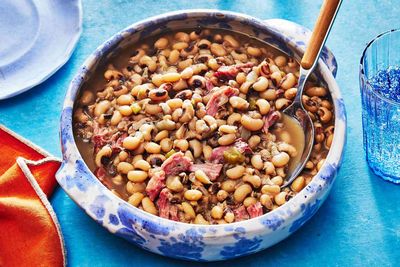
Black-Eyed Peas
Dried black-eyed peas, soaked overnight, simmered low and slow with a smoked ham hock and aromatics. The hock seasons the broth and gives up its meat at the end of the cook. Finished with a splash of cider vinegar to brighten and a pinch of cayenne for warmth. Eaten in shallow bowls with the broth, often spooned over rice.
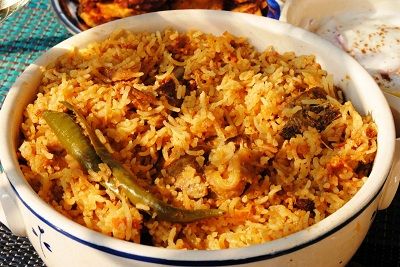
Biryani
Biryani represents the height of Indian culinary technique: multiple components prepared separately with precision, then assembled in layers where flavors permeate through steam cooking. This isn't a one-step rice dish; rather, it's an architectural construction where yogurt-marinated lamb develops tenderization and flavor, then cooks slowly with warm spices and tomato, while basmati rice is independently flavored with saffron infusion and whole spices. Upon assembly, the two elements marry through steam, creating a unified dish where lamb and rice are inseparable in flavor. Traditionally cooked during festivals and royal celebrations, biryani requires patience and multiple steps but rewards with sophistication.
Cheesy Jerk Chicken Nachos
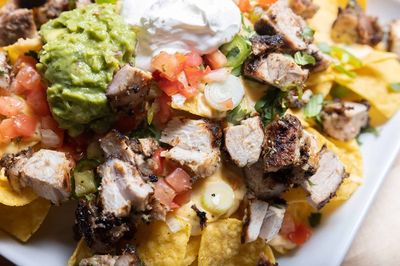
A Caribbean-American fusion that works because both food cultures speak the language of "everything on one tray". The base is American nachos: tortilla chips, melted cheese, black beans. On top sits jerk-marinated chicken thigh, which carries the dish's flavour, allspice, Scotch bonnet, nutmeg, cinnamon, thyme, soy and brown sugar blended into a wet jerk paste, marinated into the meat overnight, then oven-baked and sliced. The fresh element on top is a Trinidadian-style fruit chow: diced mango, pineapple, red bell pepper and red onion dressed with lime juice and cilantro. The chow is what makes this work; without it the nachos are just spicy meat-and-cheese, with it the dish has acid, crunch and sweetness to cut through the richness. Smell is melted cheese hitting jerk seasoning, with a citrus-tropical lift from the chow on top. Not difficult but it's three components running on different timelines, so plan ahead. A modern party-and-Super-Bowl-tray dish rather than something a Kingston grandmother makes, popularised by Caribbean-American food bloggers in the 2010s.
Chicken Liver Pâté
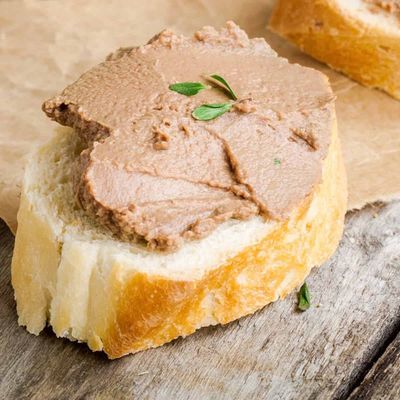
Chicken livers fry briefly with shallot and garlic, deglaze with brandy, finish with thyme and a splash of cream. The hot mixture blends with cubed cold butter into a silky paste, presses into a terrine, and sets cold under a layer of clarified butter. Eats best after a day in the fridge.