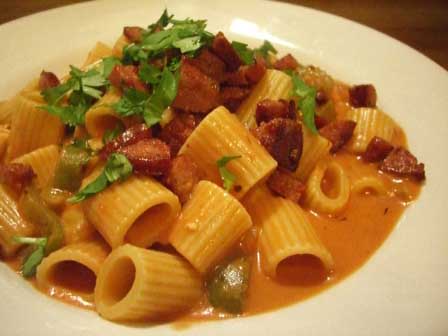
Jambalaya
Louisiana's one-pot rice dish: chicken, andouille and prawns cooked down with rice, the trinity and Cajun spice.
Overview
A modern pasta-twist on the Cajun one-pot classic, swapping the traditional rice for penne but keeping the layered Louisiana flavour intact. You brown andouille sausage hard in a heavy pot to render its smoky fat, then add chicken pieces and cook them through in the same fat. The Cajun trinity (onion, celery and sweet pepper) softens in next, Cajun seasoning blooms in the heat, and a tomato base goes in with cream to build a sauce that's rich, smoky and just-spicy. Cooked pasta tosses through at the end, with prawns going in for the last few minutes so they stay tender. Eaten in deep bowls with parsley scattered over and hot sauce on the table for whoever wants more heat. New Orleans rules adapted to a Tuesday-night kitchen.
Serves: 4 Prep Time: 25 minutes Cook Time: 17 minutes
Ingredients
Proteins
- 12 shrimp (large, peeled and deveined)
- 2 chicken breast fillets (cut into 1 cm cubes)
- 1 Andouille sausage (cut into 5 mm slices)
Pasta & Base
- 250 grams penne pasta
- 230 ml chicken stock
- 350 ml chopped tomatoes
- 230 ml double cream (optional)
Aromatics & Vegetables
- 3 tablespoons olive oil
- 1 onion (finely chopped)
- 1 red pepper (deseeded and chopped)
- 1 jalapeño (finely chopped)
- 2 garlic cloves (germ removed and finely chopped)
- 1 tablespoon fresh thyme (chopped)
- 3 tablespoons fresh basil (chopped)
Seasonings & Finish
- 3 teaspoons cajun (or creole spice mix)
- 75 grams Parmesan cheese (freshly grated)
- salt
- pepper
Method
Stage 1 - Prepare Pasta & Season Proteins
- Place the pasta in a large saucepan of salted boiling water and cook until al dente.
- Drain well, reserving 50 ml of the cooking water, and set aside.
- Season the shrimp and chicken with 2 teaspoons of creole seasoning and a pinch of salt.
Stage 2 - Cook Proteins
- Put 1 tablespoon of olive oil in a sauté pan over medium heat.
- Cook the shrimp for 1 minute on each side. Remove and set aside.
- Add the chicken pieces to the same pan and cook for 4-5 minutes until golden and cooked through. Remove and set aside.
- Add the andouille sausage and fry briefly (about 2 minutes) until warmed through. Remove and set aside.
Stage 3 - Build the Sauce
- Add the remaining 2 tablespoons of olive oil to the pan over medium heat.
- Add the chopped onion, red pepper, jalapeño, and garlic.
- Cook for 5-7 minutes, stirring frequently, until the vegetables are softened.
- Stir in the fresh thyme and remaining 1 teaspoon of creole seasoning.
- Add the chopped tomatoes and chicken stock, stirring well.
- Bring to a simmer and cook for 10 minutes to meld flavours.
- If using cream, stir it in now and simmer for another 2-3 minutes.
Stage 4 - Combine & Finish
- Return all the cooked proteins (shrimp, chicken, and sausage) to the pan.
- Add the cooked pasta and toss gently to coat in the sauce.
- Add the reserved pasta water as needed to achieve desired sauce consistency.
- Stir in the fresh basil.
- Cook for 1-2 minutes until everything is warmed through and well combined.
- Season with salt and pepper to taste.
- Serve immediately, topped with freshly grated Parmesan cheese.
Notes
- Cajun vs. Creole: Cajun cooking is rustic and country-style; Creole is more refined. This dish bridges both traditions.
- Andouille sausage: Smoked and spiced, it's essential to authentic jambalaya flavour. Chorizo can substitute if unavailable.
- Cream optional: Traditional jambalaya skips cream; add it for a richer, contemporary version.
- Spice heat: Adjust creole seasoning quantity to your heat preference.
- Pasta water: Essential for adjusting sauce consistency and helping flavours coat the pasta.
Variations
Traditional rice version: Replace penne with long-grain white rice (275g) cooked separately; combine at the end Seafood-only: Replace chicken with additional shrimp or scallops for all-seafood jambalaya Extra spicy: Add fresh cayenne pepper or hot sauce to the sauce during cooking Vegetarian: Omit all proteins and replace sausage with smoked paprika-seasoned mushrooms
Serving
Serve with: Crusty bread, hot sauce (Tabasco or Louisiana), and a green salad
Storage
- Keeps 2 days refrigerated
- Not recommended for freezing (cream sauce doesn't freeze well)
- Best enjoyed fresh
More like this
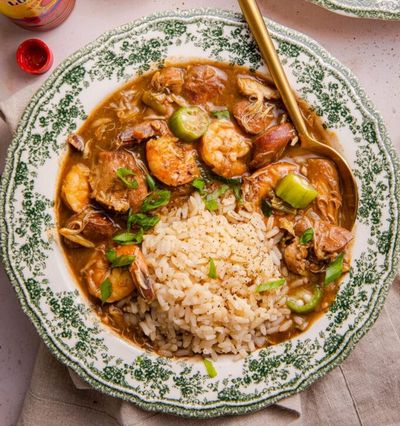
Authentic Cajun Gumbo
The "everything" Louisiana gumbo, chicken thighs, andouille, lump crab and shrimp all in one pot, and the dish where the technique matters more than the recipe. The roux is the single defining step and the line between Cajun gumbo and every other stew on earth: a full cup of oil and a full cup of flour cooked at medium-low for around 30 minutes, stirred without stopping, until the colour goes from blond to peanut butter to milk chocolate to dark chocolate. That's not flavour theatre; the long-cooked roux produces a deeply nutty, slightly bitter, profoundly savoury base that thickens the gumbo and gives it the distinctive almost-charred note no shortcut can replicate. Around the roux: the Cajun "holy trinity" of onion, bell pepper and celery; filé powder (ground sassafras leaves) added off heat as a second thickener; okra adding a third (and contributing its own slight slip); plus the four proteins, each adding a different layer. Flavour is dark, smoky, herbaceous, and slightly briny from the seafood. Smell is the roux toasting. Not difficult on technique but tremendously demanding on patience and attention; 30 minutes of unbroken stirring is the gateway, and if you walk away or rush it the roux burns and you start over. A dish that runs deep through Cajun and Creole Louisiana, with origins in the French settlers, the Choctaw (who contributed filé), West Africans (who contributed okra), and Spanish colonial traditions of Louisiana from the 1700s onwards.
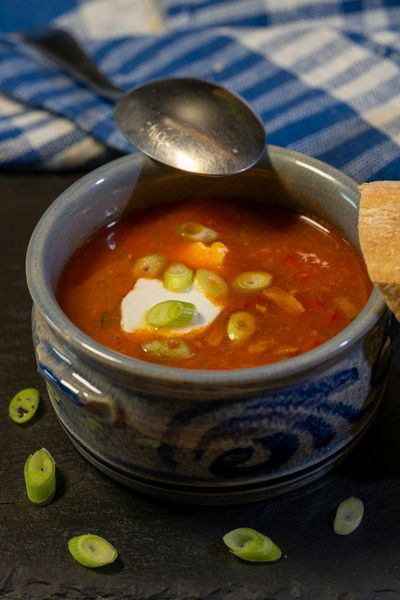
Shellfish Gumbo
A shellfish gumbo, lighter than the full Cajun "everything" version but built on the same foundations - a deep roux, the holy trinity of onion, celery and sweet pepper, and a slow-simmered broth that ties everything together. You cook a roux in oil until it goes to a peanut-butter brown (lighter than the full-Cajun chocolate roux but darker than blond), then soften the trinity in it before stock and herbs go in to build the soup. Mussels, prawns and crab go in towards the end and cook just briefly so they stay tender. A modern touch of fresh chilli lifts the heat across the back. Eaten over white rice in deep bowls, with hot sauce on the table and crusty bread to mop the last of the broth.
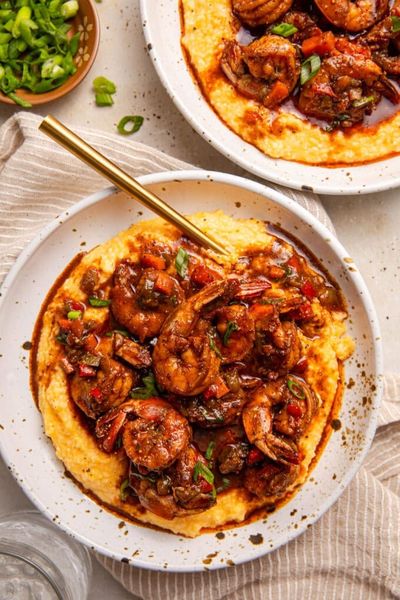
Brown Stew Shrimp and Sweet Potato Grits
A Caribbean-Southern crossover that works because both traditions cook in a similar register: butter, peppers, alliums, slow heat, savoury depth. The brown stew base on top of the dish is Jamaican, bell peppers, carrot, Scotch bonnet, ginger, browning sauce, that mahogany-coloured gravy with the unmistakable allspice-and-thyme signature, and the bed underneath is from Lowcountry Charleston, where sweet potato grits enriched with butter, half-and-half and gouda are a long-running modern Southern restaurant standard. The shrimp themselves are quick-cooked and sweet, picking up the brown stew sauce. Two textures stacked: silky-rich grits, brothy stew on top with bite from the diced peppers and carrot. Smell is sweet-onion-and-browning-sugar over the corn-sweet base of the grits. Not difficult but it's two pans running at once, so timing matters; the grits hold on a low warm setting while the shrimp cook quickly. A modern fusion rather than a traditional dish, popularised by Black American chefs in the 2010s exploring the points of overlap between Lowcountry and Caribbean cookery.
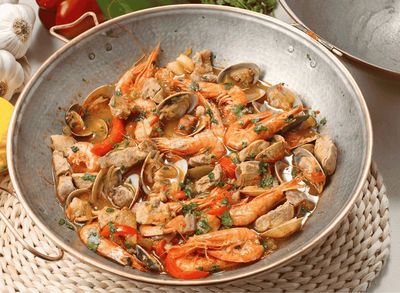
Cataplana de Marisco
A cataplana is a hinged copper clamshell pan, and the seafood stew named after it is one of those dishes where the cookware does the work. You build a base of onions, peppers, sliced chouriço, smoked paprika, tomato and white wine in the bottom of the cataplana, then layer clams, mussels, prawns and chunks of firm white fish on top, clamp the lid shut, and steam it all for less than ten minutes. The lid lifts at the table to release a cloud of paprika-and-wine-scented steam, which is the entire point of the dish. If you do not have a cataplana, any wide pan with a tight lid does the same job. Coriander and lemon at the end, crusty bread for the broth, and vinho verde for everything else.