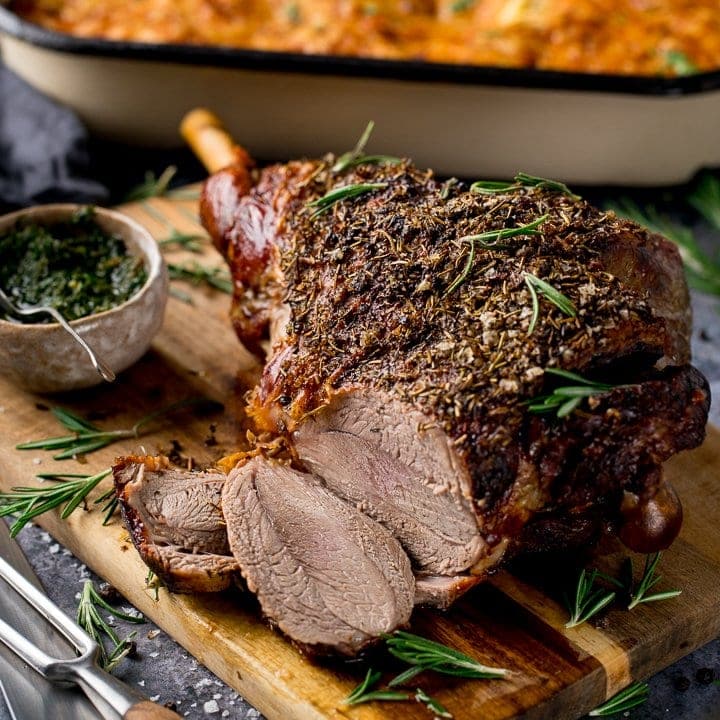
Roast Leg of Lamb
The Easter centrepiece. A whole leg of lamb studded with garlic and rosemary, roasted to pink at the bone, rested, sliced thick onto warm plates with the juices spooned over. The kind of roast that anchors a long table on a Sunday afternoon.
Overview
The Sunday lamb of the British table, the centrepiece of an Easter lunch and the dish a mother-in-law judges you on. You bring a 2-2.5 kg bone-in leg to room temperature first (essential - cold meat into a hot oven cooks unevenly), score the fat, then stud the leg with slivers of garlic and tuck rosemary tips into the cuts. Smear with oil, salt and a paste of crushed garlic. The lamb starts hot to colour the skin, then drops to a low roast and pulls when a probe in the thickest part reads 55°C for pink or 60°C for medium. A full twenty-minute rest is non-negotiable; this is when the juices settle back into the meat and the slices stay pink rather than weeping grey. While it rests you build a simple jus from the pan drippings, deglazed with wine and reduced down. Roast potatoes, mint sauce, peas; a glass of claret in your hand and the family gathered.
Ingredients
The lamb
- 1 bone-in leg of lamb (about 2.2 kg)
- 6 garlic cloves (3 cut into slivers, 3 crushed)
- 1 small bunch of rosemary (half cut into 2 cm sprigs for studding, half left whole)
- 3 tablespoons olive oil
- 2 teaspoons flaky sea salt
- A generous grind of black pepper
- 4 small onions (quartered, for the tray)
The jus
- 250 ml dry red wine
- 400 ml lamb or chicken stock
- 1 tablespoon redcurrant jelly
- A few sprigs of thyme
- A small knob of cold butter (about 20 g)
Method
Stage 1 - Prepare the leg
- Take the lamb out of the fridge 1 hour before cooking. A cold leg roasts unevenly.
- With the tip of a sharp knife, make 20-24 small slits all over the meat, about 1 cm deep. Push a garlic sliver and a rosemary sprig into each slit.
- In a small bowl, mash together the crushed garlic, olive oil, salt and pepper. Rub all over the lamb.
- Heat the oven to 220°C fan / 240°C / 475°F.
- Scatter the quartered onions and the whole rosemary stalks in the bottom of a large roasting tin. Set the lamb on top, fat-side up.
Stage 2 - Roast
- Roast at 220°C for 20 minutes to colour the skin.
- Drop the oven to 160°C fan / 180°C / 350°F. Continue roasting for 1 hour to 1 hour 10 minutes for medium-rare/pink (a meat thermometer pushed into the thickest part, not touching bone, should read 55°C). For medium, take it to 60°C, about 1 hour 20 minutes; for medium-well, 65°C, about 1 hour 30 minutes. The lamb continues to rise about 5°C during the rest.
- Lift the lamb onto a warm board, tent loosely with foil, and rest for 20 minutes. This is not optional: a hot leg loses its juice on the board; a rested leg holds it.
Stage 3 - Make the jus
- While the lamb rests, set the roasting tin over a medium-high heat on the stovetop. Pour in the wine. Scrape the dark stuck-on bits off the bottom with a wooden spoon.
- Boil hard for 3-4 minutes to reduce by half. Add the stock, redcurrant jelly and thyme.
- Strain into a small saucepan, pressing the onions to extract their flavour. Boil to reduce by half again, until it lightly coats the back of a spoon.
- Off the heat, whisk in the cold butter to gloss. Taste and season.
Stage 4 - Carve and serve
- Carve the lamb in thick slices, cutting across the grain. Start at the wide end (the knuckle end of the leg) and work down to the bone.
- Fan the slices across warm plates and spoon the jus over.
Notes
- A 2.2 kg leg serves 8 with a little for leftovers; for 6, look for a 1.7-1.9 kg leg and reduce the second-stage roast time by 10-15 minutes. The temperature read is the only honest measure.
- Anchovies, classical with lamb, slip into the studding slits in place of every second rosemary sprig: they melt into the meat and add depth without tasting fishy.
- A spoonful of harissa rubbed into the meat instead of salt-and-oil gives a North African slant for non-Easter cooks.
Serving
At the centre of the Easter table with mint sauce, roast potatoes, buttered carrots and peas. A glass of full-bodied red wine alongside.
Storage
Sliced lamb in a covered container in the fridge for up to 3 days. Reheats poorly without going dry; better eaten cold the next day in sandwiches with mint sauce.
More like this
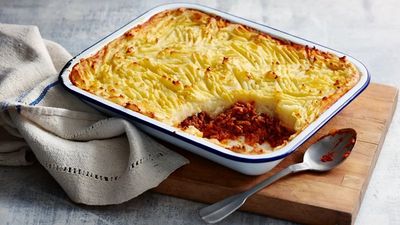
Shepherd's Pie
The lamb cousin of cottage pie, and the original of the two (cottage pie came later as a beef variant when lamb was harder to find). You brown lamb mince with onion, carrot and celery, then simmer with stock, tomato purée, Worcestershire and rosemary until the gravy is thick enough to hold a spoon upright. Top with garlic-butter mash piled in rough peaks that catch and crisp in the oven, and bake until the surface is deep gold. The lamb gives it a heavier, more savoury character than cottage pie's beef. That's what marks it as shepherd's rather than cottage. Eaten with peas, a spoonful of mint sauce on the side if you're being traditional, and a glass of bitter or a strong red.
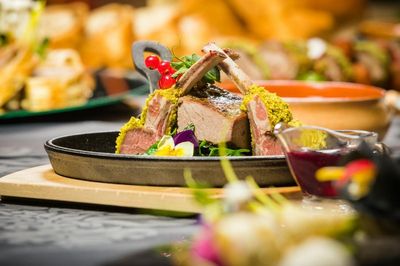
Breast of Lamb with Mustard and Herb Crust
This composed dish showcases lamb breast's rich potential: the trimmed meat is braised until tender in an herb-infused stock, then sliced and topped with a crispy herb and mustard breadcrumb crust. The braising liquid becomes an elegant sauce thickened with cream and sharpened with mustard, providing a sophisticated accompaniment that complements both the meat and crust.
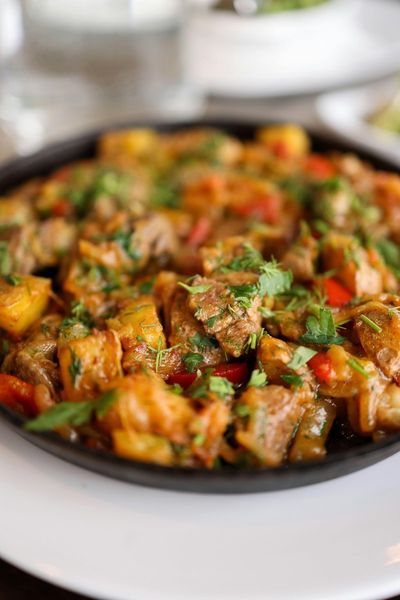
Lamb Stew (Navarin d'Agneau)
Navarin d'agneau is a classic French spring stew, combining three different cuts of lamb, shoulder, neck, and breast, for complex flavor and varied texture. The meat braises in a light tomato and stock base, enriched with aromatic vegetables and finished with glazed pearl onions and tender potatoes. The balance of tender vegetables and well-cooked lamb creates a rustic yet refined dish that exemplifies peasant cooking elevated to art.
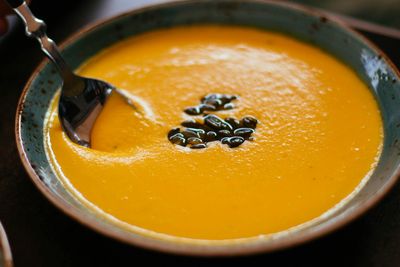
Pumpkin Soup
Pumpkin halves roasted cut-side down until the flesh collapses against the spoon. Onion and garlic sweated slow in butter, deglazed with stock. The roasted pumpkin scraped in, simmered together, and blitzed to a silken purée. Finished with a swirl of cream, a grate of nutmeg, and toasted pumpkin seeds for crunch. The roast deepens the flavour beyond what a stovetop simmer can manage; do not skip it.